 2 citations
,
January 2005 in “Journal of Cosmetic and Laser Therapy”
2 citations
,
January 2005 in “Journal of Cosmetic and Laser Therapy” New cosmetic treatments for acne, hair loss, cellulite, wrinkles, and skin resurfacing are effective.
January 2024 in “Defence life science journal” This review explores the potential of non-invasive photobiomodulation therapy for managing combat and traumatic soft tissue injuries, emphasizing its benefits, efficacy, and underlying mechanisms, but reports no new clinical results.
2 citations
,
October 2016 in “European Neuropsychopharmacology”  32 citations
,
March 2013 in “Journal of Pharmaceutical Sciences”
32 citations
,
March 2013 in “Journal of Pharmaceutical Sciences” This study observed that iontophoresis significantly improved the delivery of minoxidil sulfate to hair follicles compared to passive methods, suggesting potential benefits for alopecia treatment.
 March 2026 in “Zenodo (CERN European Organization for Nuclear Research)”
 This source discusses defensive publication regarding methods to treat androgenic alopecia and sexual dysfunction by restoring gap-junction-mediated connectivity, highlighting a unique mechanism independent of membrane voltage and not targeted by current treatments.

In this study, a pH-responsive microneedle patch was developed, showing potential in rat models for treating spinal cord injuries by reducing inflammation, promoting nerve regeneration, and supporting neurogenesis, which contributed to improved motor and neurological recovery.
 October 2022 in “Journal of ophthalmology”
 This review discusses the implementation and mechanisms of photobiomodulation therapy in various medical fields, including ophthalmology, and reports no new clinical results.
July 2026 in “Asian Journal of Pharmaceutical Sciences” The researchers designed a Janus microneedle system for treating vitiligo, which targets the skin’s layers to regulate the immune response, promote melanocyte regeneration, and enhance pigment transfer, offering a new precise treatment approach for this condition.
January 2026 in “SSRN Electronic Journal”  January 2023 in “Nanomedicine & nanotechnology open access”
 This review suggests that microneedling shows promise for improving hair quality, thickness, and density in treating androgenetic alopecia, but standardized treatment protocols are currently lacking.
17 citations
,
April 2023 in “ACS Biomaterials Science & Engineering” This study explored the potential of silk fibroin methacrylate hydrogel microneedles to deliver α-MSH directly to the epidermis in vitiligo patients, enhancing melanocyte protection and melanosome transfer, potentially offering a new treatment avenue for this challenging condition.
 January 2023 in “Surgical & Cosmetic Dermatology”
 This study examined the effectiveness of using intradermotherapy, with or without microneedling and topical solutions, in reducing hair loss among men with androgenetic alopecia, though results are not reported in the abstract.
In this study, calcium imaging in transgenic mice revealed that non-neuronal TRPV4 in the skin enhances afferent signaling during electrical stimulation, suggesting a role for neuroimmune interaction in acupuncture signal initiation.
 February 2023 in “International journal of research - granthaalayah”
 This article reviews a tabletop microscopy method for recording electromagnetic radiation from tissues, using hair follicles as a model, and presents no new clinical findings.
 March 2025 in “Stem Cell Research & Therapy”
 This study found that microneedles containing magnetic intracellular vesicles and tremella polysaccharide improved the hair microenvironment and accelerated hair regeneration in mice with androgenic alopecia.
 38 citations
,
January 2023 in “International Journal of Medical Sciences”
38 citations
,
January 2023 in “International Journal of Medical Sciences” This review discusses the potential of repeated low-level red-light therapy to inhibit myopia progression through metabolic effects, highlighting its molecular and cellular impact, but reports no new clinical results.
1 citations
,
November 2021 in “IntechOpen eBooks” This review covers red light Transcranial LED therapy for hippocampal memory impairment in aging and Alzheimer's but reports no clinical results, highlighting a need for further research into its mechanisms and effects.
11 citations
,
January 2023 in “Biophysics Reviews” This review discusses recent advancements in light-based bioelectronic devices for health monitoring and therapy, summarizing key technologies and highlighting challenges and opportunities without reporting new clinical results.
 2 citations
,
July 2023 in “Journal of Education Health and Sport”
2 citations
,
July 2023 in “Journal of Education Health and Sport” This review article summarizes potential side effects of microneedle mesotherapy, including both infectious and non-infectious complications such as bruises, swelling, anaphylaxis, and skin necrosis, emphasizing that awareness and proper technique may mitigate these risks.
3 citations
,
May 1994 in “Journal of Pharmacology and Experimental Therapeutics” This study found that minoxidil sulfate stimulates Cl channels, potentially depolarization-activated and outwardly rectifying, in eccrine clear cells, while minoxidil itself stimulates Ca-insensitive K currents.
 December 2023 in “LA Referencia (Red Federada de Repositorios Institucionales de Publicaciones Científicas)”
 Both photobiomodulation and low-frequency treatments effectively reduce body measurements.
December 2025 in “eScience” This study presents a new wireless bioelectronic system powered by ambient Wi-Fi signals that enhances wound healing by providing electrical stimulation and real-time monitoring, offering a promising solution for at-home treatment and regenerative therapy.
 34 citations
,
December 2012 in “Indian Journal of Dermatology, Venereology and Leprology”
34 citations
,
December 2012 in “Indian Journal of Dermatology, Venereology and Leprology” Mesotherapy shows promise for cellulite and facial rejuvenation but has mixed results for body sculpting and hair loss, with more research needed for safety and effectiveness.
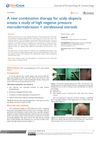 February 2018 in “Journal of dermatology & cosmetology”
 This study investigated a combination of high negative pressure microdermabrasion with intralesional steroid injections for treating alopecia areata, comparing its effectiveness to steroid injections alone.
This study found that low-level laser therapy may enhance wound healing and reduce pain, swelling, and inflammation by increasing mitochondrial activity and oxidative stress, leading to greater protein synthesis and cell proliferation.
 September 2024 in “Journal of Skin and Stem Cell”
 In this study, a combination treatment of microinfusion (MMP®) and topical minoxidil showed a modest increase in hair density in a 28-year-old woman with chronic telogen effluvium, particularly in the parieto-vertex region, suggesting potential benefits but underscoring the need for larger trials to confirm efficacy.
 December 2023 in “Regenerative therapy”
 In this review, the authors reported that exosomal miRNA-based therapies showed promising therapeutic effects on nine skin diseases in animal models, with enhanced outcomes observed when using miRNA-overexpressing exosomes compared to natural ones; however, no comparisons to standard treatments were available.
 February 2009 in “Journal of The American Academy of Dermatology”
 Fractional infrared technology is effective and safe for treating cervical laxity.
17 citations
,
February 2023 in “Cosmetics” This study explores the use of bioinspired 3D printed hollow microneedles, which may offer improved delivery of anti-wrinkle formulations, and reviews the current landscape and challenges of existing wrinkle treatments and microneedle technology.
 April 2024 in “Nano research”
 This study on androgenetic alopecia in mice introduced a novel therapy combining microneedle patches and cold atmospheric plasma to enhance minoxidil delivery, leading to improved hair regeneration by boosting vascular growth and reshaping the hair follicle microenvironment.