April 2025 in “Indian Journal of Paediatric Dermatology” This case report describes an 8-year-old male with tinea capitis and Trichorrhexis invaginata, who showed significant improvement after treatment with oral micronized griseofulvin.
1 citations
,
January 1997 in “Skin Pharmacology and Physiology” In this study, researchers found a significant decrease in the modulus of elasticity of hair shafts in premature neonates compared to full-term ones, potentially due to differences in disulphide bonds or microfibril arrangement.
15 citations
,
March 2009 in “Pediatric dermatology” This case report documents a novel occurrence of bilateral trichomegaly with alopecia areata in a healthy 3-year-old girl, without known underlying health conditions or medication use.
3 citations
,
January 1985 in “Acta Obstetricia Et Gynecologica Scandinavica” This case study describes a rare instance of a Granulosa‐Theca cell tumor causing sexual precocity in a 12-month-old infant, with significantly reduced estradiol levels following tumor removal.
19 citations
,
July 2004 in “Journal of Medical Primatology” In this study, zinc toxicosis in infant baboons was attributed to excessive environmental exposure, highlighting the importance of cage design in captivity and potential use of baboons as a developmental model.
 13 citations
,
December 2020 in “PLoS ONE”
13 citations
,
December 2020 in “PLoS ONE” This study found dependencies between genetic variants and various phenotypes related to fetal and early childhood growth and neurological development in healthy infants, suggesting significant gene candidates for further investigation.
 19 citations
,
May 2004 in “The American Journal of Dermatopathology”
19 citations
,
May 2004 in “The American Journal of Dermatopathology” In this study, scalp biopsies from HJMD patients revealed histological similarities to chronic telogen effluvium and highlighted the role of CDH3 mutations disrupting normal hair cycles.
10 citations
,
January 1985 in “PubMed” This study observed that hair zinc concentration in normal infants decreased from birth to eight months before rising again at twelve months, with lower levels associated with hair loss and diaper rash.
 33 citations
,
December 2013 in “Journal of cutaneous pathology”
33 citations
,
December 2013 in “Journal of cutaneous pathology” A fungal infection can look like a different scalp condition in teens, leading to wrong treatment until proper tests are done.
2 citations
,
October 1931 in “Archives of Dermatology and Syphilology” This report describes a rare case of scalp kerion due to microsporosis in a Portuguese child, noting the unusual combination with other microsporid features and treatment details.
 May 2014 in “JAMA Dermatology”
 Mother and son diagnosed with a rare genetic hair loss condition with no effective treatment.
 2 citations
,
June 2012 in “Journal of Dermatological Science”
2 citations
,
June 2012 in “Journal of Dermatological Science” This study found that histidine decarboxylase is crucial for the hair-inducing ability of newborn mouse dermal cells, with its expression significantly decreasing in the first few days after birth.
33 citations
,
January 2014 in “Pediatric Research” October 2013 in “International Journal of Pediatric Endocrinology/International journal of pediatric endocrinology” This case report describes a boy with hypothalamic hamartoma experiencing pubertas precox and gelastic seizures, where leuprorelin therapy's effect on pubertas precox was controversial, but valproic acid effectively managed gelastic seizures.
 29 citations
,
April 2013 in “Mycoses”
29 citations
,
April 2013 in “Mycoses” This case report describes a rare instance of tinea capitis in a 19-year-old male, initially misdiagnosed as dissecting cellulitis, highlighting the need for accurate diagnosis to prevent scarring alopecia.
June 2020 in “Journal of Investigative Dermatology” Hair shaft malformation contributes to Central Centrifugal Cicatricial Alopecia.
9 citations
,
June 2017 in “American journal of ophthalmology. Case reports” This case report identifies a novel CDH3 gene mutation associated with hypotrichosis with juvenile macular dystrophy in a 13-year-old Turkish girl, highlighting implications for future genetic analysis and counseling.
1 citations
,
January 2024 in “Journal of clinical medicine” This literature review highlights the changing epidemiology of tinea capitis due to global migration and underscores the importance of early recognition and treatment of atypical variants in immunocompetent children to minimize prolonged systemic antifungal therapy and prevent adverse events, especially regarding liver health.
3 citations
,
November 2010 in “The Journal of Dermatology” This case report details a rare instance of a giant cellular blue nevus on the scalp, highlighting its potential to damage underlying bone and hair follicles, alongside a separate alopecia areata lesion successfully treated with topical corticosteroid.
April 2017 in “The journal of investigative dermatology/Journal of investigative dermatology” This case report identified a 6-month-old girl with congenital generalized hypertrichosis and gingival hyperplasia, where a de novo CNV on chromosome 17q24.2-24.3 was associated with reduced expression of ABCA5 and SOX9.
26 citations
,
September 2005 in “Pharmacology Biochemistry and Behavior” This study found that inhibiting the 5alpha-reductase 2 pathway in male rats affects brain sexual differentiation and leads to reproductive changes, including increased pre-implantation loss despite unchanged copulatory potential.
 June 2023 in “British journal of dermatology/British journal of dermatology, Supplement”
 This case report describes a rare instance of dissecting cellulitis of the scalp in a White child, which is uncommon in pediatric cases and presented challenges in diagnosis and treatment.
April 2020 in “Journal of the Endocrine Society” This case report describes a rare and atypical presentation of primary hypothyroidism with myxedema in a two-year-old boy, highlighting the importance of recognizing unusual symptoms for timely treatment.
 January 2021 in “Skin appendage disorders”
 This review discusses atypical presentations of Brauer nevus, particularly in occipital and mid-frontal areas, and reports a higher occurrence in males, with detection usually at birth.
 59 citations
,
February 2021 in “BMJ”
59 citations
,
February 2021 in “BMJ” This study found a strong dose-related increase in the risk of intracranial meningiomas associated with high doses of cyproterone acetate, with some reduction in risk after stopping the treatment.
January 1983 in “Archives of Dermatology” This case report suggests that a Penicillium species might have been the causative agent of tinea capitis in a 3-year-old boy.
March 2024 in “Clinical Case Reports” In this study, the authors emphasize the importance of not ignoring the partial presence of comma or harpin hairs and black spots when identifying early lesions of tinea capitis, which may initially be overlooked due to their small size.
 July 2023 in “Developmental medicine and child neurology/Developmental medicine & child neurology”
 This study found that patients with Bachmann-Bupp syndrome treated with DFMO showed improvements in hair growth, muscle tone, and development.
 March 2026 in “Open MIND”
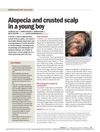
 Early treatment of scalp infections can prevent permanent hair loss.
In this study, young adult male albino rats treated with finasteride showed a 10% reduction in thickness of the CA1 layer of the hippocampus, suggesting that this atrophy may contribute to memory impairments linked to Post-Finasteride Syndrome.