 6 citations
,
August 2021 in “International Journal of Pharmaceutics”
6 citations
,
August 2021 in “International Journal of Pharmaceutics” This study demonstrated that finasteride-loaded PLGA microspheres created using a novel microfluidic device exhibit extended drug release in beagle dogs, with modifications allowing for release up to 3 months.
 January 2024 in “LA Referencia (Red Federada de Repositorios Institucionales de Publicaciones Científicas)”
 This study found that Carbon Quantum Dots effectively detected and quantified Co²⁺ ions and methylcobalamin in tap water with high sensitivity and recovery rates between 95% and 105%.
 10 citations
,
January 2001 in “ACTA HISTOCHEMICA ET CYTOCHEMICA”
10 citations
,
January 2001 in “ACTA HISTOCHEMICA ET CYTOCHEMICA” In this study, autophagy was commonly observed during keratinization in neonate rat hair follicles, suggesting lysosomal proteases and cytoplasmic enzymes may coordinate in hair follicle cell differentiation.
18 citations
,
January 2021 in “Theranostics” This study found that actively targeted AN2728-loaded nanocarriers reduced inflammation and improved skin condition in a mouse model of psoriasiform inflammation compared to free drug and non-targeted nanoparticles.
 1 citations
,
April 2021 in “Aesthetic Cosmetology and Medicine”
1 citations
,
April 2021 in “Aesthetic Cosmetology and Medicine” This article reviews various applications and substances in mesotherapy for skin conditions and discusses the benefits of series treatments, reporting no new clinical results.
20 citations
,
February 2017 in “European journal of pharmaceutical sciences” This study found that the cocrystal of mycophenolic acid with isonicotinamide significantly improved solubility and dissolution rate, while two other cocrystals showed decreased performance in these areas.
This pilot study employed in-vivo multiphoton microscopy to visualize pigment-producing melanocytes in vitiligo patients, aiming to enhance understanding of treatment impacts and potentially improve transplantation therapies.
 4 citations
,
January 2009 in “Indian Journal of Dermatology, Venereology and Leprology”
4 citations
,
January 2009 in “Indian Journal of Dermatology, Venereology and Leprology” This archived website overview discusses Bioline International's role in reducing the knowledge gap by hosting peer-reviewed journals from developing countries but presents no new research findings.
September 1990 in “Journal of Dermatological Science”  January 2025 in “PLoS ONE”
 This study found that aligned electrospinning membranes enhance skin wound healing by upregulating MMP12 expression and inhibiting fibroblast migration, which results in reduced scar formation, providing valuable insights for developing more effective biological dressings.
 September 2022 in “Anais Brasileiros de Dermatologia”
 This case study reports a female adult patient with annular elastolytic giant cell granuloma on the scalp, observed through dermoscopy showing multiple yellowish/orange follicular dots against an erythemato-whitish background.
August 2026 in “Fabad Journal of Pharmaceutical Sciences” This study developed a Neusilin® US2-based solid self-nanoemulsifying drug delivery system for finasteride that showed improved stability and drug delivery, with complete dissolution comparable to standard Propecia® tablets.
July 2026 in “Journal of Investigative Dermatology” Tanshinone Capsule may help regrow hair by boosting specific cell signals.
 March 2025 in “Asian Journal of Beauty and Cosmetology”
 This study found that microspicule cosmetics with low-molecular-weight peptide complexes significantly improved skin whitening, pore condition, and skin barrier function over four weeks compared to a non-microspicule formulation.
22 citations
,
September 2022 in “Materials & Design” This study found that bioactive glass-based camouflage composite particles enhanced the coagulation effects in bleeding models by forming a fibrin network and activating coagulation pathways, suggesting potential use as an emergency hemostasis biomaterial.
 3 citations
,
June 2023 in “MedComm”
3 citations
,
June 2023 in “MedComm” This study summarizes the role and potential applications of stem cell exosomes in skin and bone healing, highlighting their regenerative capabilities and suggesting innovative delivery methods like nanoliposomes and hydrogels to improve bioavailability and therapeutic outcomes.
2 citations
,
September 2025 in “Antioxidants” This review highlights that nano-antioxidants show promise as a treatment strategy for immune-mediated inflammatory diseases, like autoimmune and chronic inflammatory conditions, due to their improved stability and targeted delivery, but notes that further research is necessary to optimize their use and assess long-term safety.
 July 2026 in “Research Data Repository, Duke University”
 This study observed that DMAP scaffolds in a full-thickness wound model promote dermal appendage regeneration by activating humoral immunity, specifically through B cell activation and antibody production, even when adaptive immune cells' infiltration is restricted.
November 2025 in “OPAL (Open@LaTrobe) (La Trobe University)” In this study, gentamicin-loaded exosomes from a bovine leukocyte spleen extract were found to enhance tissue regeneration and antimicrobial activity, offering a promising therapeutic approach for infected diabetic foot ulcers by promoting wound healing and modulating inflammation in a diabetic mouse model.
 17 citations
,
June 2021 in “Molecules”
17 citations
,
June 2021 in “Molecules” This review summarizes the promising role of melatonin combined with nanosized carriers in drug delivery, suggesting enhanced effectiveness in treating various diseases compared to free melatonin.
13 citations
,
September 2023 in “Molecules” This study found that encapsulating coffee berry extract in nanoliposomes improved its stability, reduced toxicity, and enhanced its anti-aging effects on skin elasticity and lightening more than free extract.
 February 2025 in “Advanced Composites and Hybrid Materials”
 This study reported that in animal studies of androgenetic alopecia, a biodegradable microneedle patch releasing glutamic acid promoted hair regeneration more effectively than daily minoxidil, with higher hair follicle counts and less frequent dosing, showing the potential for clinical application.
 2 citations
,
March 2019 in “Plastic and Reconstructive Surgery”
2 citations
,
March 2019 in “Plastic and Reconstructive Surgery” This review discusses various mechanical isolation procedures for tissue-like stromal vascular fraction, such as the nanofat procedure, and highlights the need for controlled trials to assess their regenerative effectiveness.
 December 2023 in “International Journal of Biological Macromolecules”
 This study found that MCS nanoparticles improved Minoxidil's hair growth effects in an animal model compared to the commercial formulation, but they were less effective than CS nanoparticles despite showing better solubility with minimal side effects.
1 citations
,
April 2025 in “Drug Delivery and Translational Research”  17 citations
,
June 2018 in “Frontiers in Physiology”
17 citations
,
June 2018 in “Frontiers in Physiology” This study found that acellular dermal matrix scaffolds may facilitate full-thickness skin wound healing by promoting a pro-regenerative immune response through M2 macrophage polarization via the Lamtor1 pathway.
 January 2025 in “International Journal of Research and Innovation in Applied Science”
 This study aimed to enhance the skin penetration of minoxidil by encapsulating it in glycerosomal vesicles, offering a potential improvement in transdermal drug delivery for treating androgenetic alopecia. Results of the investigation were not reported.
 January 2025 in “Journal of Materials Chemistry B”
 This abstract discusses androgenetic alopecia treatments like oral finasteride and topical minoxidil, reporting limited treatment efficacy and no new findings, and emphasizes the psychological impact on patients.
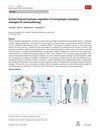
This review highlights that surface mechanical regulation can program macrophage behavior through specific mechanical cues on material surfaces, potentially advancing immunotherapies and regenerative medicine by enabling precise control over macrophage functions.
 8 citations
,
February 2019 in “Scientific Reports”
8 citations
,
February 2019 in “Scientific Reports” This article describes the immunofluorescence tomography method to achieve high-resolution 3-D reconstruction of epithelial tissues and reports no clinical results.