 1 citations
,
August 2022 in “Chemical engineering journal advances”
1 citations
,
August 2022 in “Chemical engineering journal advances” This study demonstrated that human hair can be coated with Fe3O4 nanoparticles, allowing it to be oriented and moved by a magnetic field, which may enhance drug delivery and hair care applications.
 August 2023 in “Research Square (Research Square)”
 This study found that two microRNAs, oar-miR-23b and oar-miR-133, inhibit the development of hair follicles in superfine wool sheep by targeting genes involved in key signaling pathways, suggesting their potential use as molecular markers for breeding fine wool sheep.
21 citations
,
February 2006 in “Clinical Cancer Research” This commentary discusses how microphthalmic-associated transcription factor levels in circulating tumor cells correlate with melanoma progression and suggests the factor may be up-regulated in vivo, but it reports no new clinical results.
 September 2013 in “Science”
 This study found that single-crystal magnesium samples smaller than 100 nm exhibited increased plastic deformation due to greater activation of nonbasal planes as local flow stresses approached 2 GPa.
137 citations
,
December 2006 in “Arthritis Research & Therapy” This study found that mycophenolate mofetil was associated with higher response rates and lower rates of serious side effects, including a lower mortality rate, compared to cyclophosphamide in lupus nephritis treatment.
 1 citations
,
October 2010 in “Series in cosmetic and laser therapy”
1 citations
,
October 2010 in “Series in cosmetic and laser therapy” Mesotherapy is a minimally invasive treatment with potential benefits and risks, requiring standardized practices and further investigation.
1 citations
,
July 2025 in “Journal of Investigative Dermatology” Increasing m6A levels can improve skin cell growth and wound healing.
April 2023 in “Journal of Drug Delivery Science and Technology” This study reported that optimized transfersomes and their gel form significantly improved transdermal delivery and hair growth promotion of minoxidil in C57BL/6 mice compared to commercial formulations.
This study found that fibroblast growth factor 20 (Fgf20) orchestrates the movement and behavior of dermal fibroblasts, directing their formation into dermal condensates during hair follicle development in mice.
 43 citations
,
July 2018 in “Journal of The European Academy of Dermatology and Venereology”
43 citations
,
July 2018 in “Journal of The European Academy of Dermatology and Venereology” This study found that a topical solution combining 0.25% finasteride with 3% minoxidil significantly improved hair growth, as measured by hair density, diameter, and global assessment, in men with androgenetic alopecia, compared to 3% minoxidil alone, over 24 weeks without systemic adverse effects reported.
 September 2024 in “Journal of Skin and Stem Cell”
 In this study, a combination treatment of microinfusion (MMP®) and topical minoxidil showed a modest increase in hair density in a 28-year-old woman with chronic telogen effluvium, particularly in the parieto-vertex region, suggesting potential benefits but underscoring the need for larger trials to confirm efficacy.
August 2019 in “Carolina Digital Repository (University of North Carolina at Chapel Hill)” This study indicates that MAGE-11 modulates androgen receptor transcriptional activity through F-box interactions, independent of the activation function 2 pathway, revealing a novel mechanism for androgen receptor regulation.
 8 citations
,
July 1990 in “Archives of Dermatology”
8 citations
,
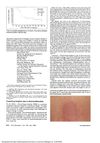
July 1990 in “Archives of Dermatology” This case report details a fixed-drug eruption in a woman linked to the use of dextromethorphan, marking it as a previously unreported skin reaction to this medication.
 27 citations
,
February 2017 in “Clinical, Cosmetic and Investigational Dermatology”
27 citations
,
February 2017 in “Clinical, Cosmetic and Investigational Dermatology” In this study, a topical formulation with compounds from the monoterpenoid family significantly improved hair growth indicators like anagen:telogen ratio, hair fall, and visual hair density in men and women with pattern hair loss.
 1 citations
,
July 2009 in “Journal of dermatology”
1 citations
,
July 2009 in “Journal of dermatology” This case report describes a 29-year-old Japanese man with follicular mucinosis, suggesting nestin-positive, multipotent hair follicle stem cells may be involved in reticular epithelial degeneration of the outer root sheath.
March 2026 in “ACS Applied Materials & Interfaces” This study introduced an innovative nanozyme system called MCP@G, which was shown to improve diabetic wound healing in rats by alleviating mitochondrial oxidative stress, enhancing fibroblast migration, and promoting blood vessel and hair follicle regeneration, offering a promising approach for treating challenging diabetic wounds.
 1 citations
,
December 2018 in “Journal of cutaneous pathology”
1 citations
,
December 2018 in “Journal of cutaneous pathology” This study found that 11% of cutaneous focal mucinosis lesions demonstrated follicular induction, which can mimic basal cell carcinoma histologically and complicate diagnosis.
October 2012 in “한국미용학회지” This study reported that stress in early life negatively impacted hair growth in mice at older ages, while Tremella fuciformis Berk extracts partially protected against these effects.
15 citations
,
November 2024 in “Journal of Advanced Research” In this study, researchers found that miR-3606-3p is significantly downregulated in skin fibrosis and correlates with disease severity, with its ability to inhibit key signaling pathways suggesting potential therapeutic applications for conditions like systemic sclerosis and keloids.

This study found that testosterone and finasteride were significantly associated with reports of male-factor infertility based on FDA pharmacovigilance data from 2010 to 2020.
 24 citations
,
October 2022 in “Revista Brasileira de Farmacognosia”
24 citations
,
October 2022 in “Revista Brasileira de Farmacognosia” This review discusses the pharmacological actions of mangiferin and the potential of delivery carriers to overcome its limitations, but reports no new clinical results.
 June 2023 in “Brazilian Journal of Case Reports”
 In this case report, a patient with early-stage Frontal Fibrosing Alopecia showed substantial improvement in follicular density and inflammation control after three monthly sessions of Botulinum Toxin Type A administered via microinfusion.
 October 2025 in “Frontiers in Medicine”
 This meta-analysis found that the combination of topical minoxidil-finasteride was more effective than minoxidil alone in improving hair density, hair diameter, and global photographic assessment for male androgenetic alopecia, though larger standardized trials are needed to confirm long-term outcomes.
149 citations
,
June 2010 in “The FASEB journal” In this study, miR-31 was found to play a significant role in hair cycle regulation in mice by controlling key gene expressions involved in hair growth and differentiation.
 178 citations
,
May 2006 in “Developmental Dynamics”
178 citations
,
May 2006 in “Developmental Dynamics” This review discusses the role of jumonji family proteins in chromatin regulation and development, highlighting their involvement in transcriptional repression and histone demethylation, but reports no new experimental findings.
January 2006 in “Linchuang pifuke zazhi” This study found that stem cell factor combined with fibronectin and type IV collagen promotes migration of amelanotic melanocytes, which may help explain their movement during vitiligo repigmentation.
This study suggests that PDRN may enhance wound healing by reducing MIR135b expression, which in turn increases FOXO1 expression in keratinocytes.
3 citations
,
July 2023 in “Cells” This study found that topical application of recombinant human MG53 protein mitigated nitrogen mustard-induced skin injuries in mice by preserving epidermal integrity and hair follicle structure.
2 citations
,
December 2021 in “Pharmaceutics” This study demonstrated that a finasteride-loaded proniosome significantly enhanced transfollicular delivery and hair growth in mice without causing skin irritation, with effects comparable to a 2% minoxidil solution.
January 2022 in “Wiadomości lekarskie (Warsaw Poland)” This study found that Methylsulfonylmethane significantly reduced hair loss and enhanced hair growth and follicle number in male mice, attributed to its antioxidant and anti-inflammatory properties.