21 citations
,
October 2017 in “Cell death and disease” This study found that the absence of the stress-responsive protein Sesn2 increased hair cell susceptibility to gentamicin in the inner ear, indicating Sesn2's potential protective role against aminoglycoside-induced damage.
116 citations
,
August 2021 in “Stem Cell Research & Therapy” This paper reviews the emerging potential of menstrual blood-derived mesenchymal stem cell extracellular vesicles in regenerative medicine, highlighting their promise for treating several diseases without providing new clinical results.

This study found that the transcription factor Meis2 is crucial for the maturation and innervation of sensory neurons responsible for light touch in mice, with its absence leading to reduced touch sensitivity.
July 2026 in “Organoid Research” This review focuses on hydrogel microsphere-mediated strategies to improve organoid culture by addressing deficiencies in extracellular matrix organization, potentially enhancing the physiological accuracy and clinical translatability of osteomuscular in vitro models as reported in this study.
 4 citations
,
July 2012 in “Genesis”
4 citations
,
July 2012 in “Genesis” This study reported that a Megsin-Cre transgene enables genetic manipulation primarily in skin, forestomach, and esophagus tissues, offering a new tool for studying development and diseases in these areas.
 May 2026 in “Nature Communications”
 In this study, a self-adaptive nanozyme embedded in a madecassoside-enriched hydrogel demonstrated strong antibacterial efficacy and accelerated healing in wounds infected with drug-resistant bacteria, as evidenced by improved repair and regeneration in MRSA-infected mice and preclinical pig models.
 119 citations
,
March 2020 in “Frontiers in Bioengineering and Biotechnology”
119 citations
,
March 2020 in “Frontiers in Bioengineering and Biotechnology” This review provides an overview of recent tissue engineering and regenerative medicine developments in Asia, highlighting significant advances, representative research achievements, and discussing future directions, without presenting new research results.
 239 citations
,
December 2013 in “Scientific Reports”
239 citations
,
December 2013 in “Scientific Reports” In this study, researchers developed a microfluidics-based method for creating uniform, size-controlled stem cell spheroids that enhance osteogenic differentiation when encapsulated in alginate-RGD microgels.
 April 2026 in “Experimental & Molecular Medicine”
 This study used integrated single-cell chromatin and transcriptomic analyses in developing mouse skin to uncover gene networks involved in skin lineage specification and identified Mef2c+ upper fibroblasts as potential precursors to certain muscle-like structures, with cross-species findings in human skin.
13 citations
,
June 2014 in “Molecular therapy” This study found that a lentiviral array of reporters can identify lineage-specific promoters and pathways in mesenchymal stem cell differentiation, aiding in the prediction of signaling pathway effects.
39 citations
,
September 2019 in “Materials & Design” This study developed a new mask-free method using digital micromirror and microfluidic systems to create multicellular heterospheroids for drug screening, finding that heterospheroids exhibit higher drug resistance and combinatorial drugs are more effective than single drugs in cancer therapeutic applications.
18 citations
,
June 2011 in “Cell stem cell” Two studies in Cell Stem Cell reported that human and mouse somatic cells can be reprogrammed into induced pluripotent stem cells using microRNAs, eliminating the need for ectopic protein expression.
1 citations
,
November 2024 in “eLife” This study in mice found that MEIS2 expression in mesenchymal dermal cells is crucial for the formation of whiskers and the initial steps of epithelial placode development, independently of sensory nerve innervation or Foxd1 expression.
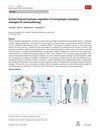
This review highlights that surface mechanical regulation can program macrophage behavior through specific mechanical cues on material surfaces, potentially advancing immunotherapies and regenerative medicine by enabling precise control over macrophage functions.
 4 citations
,
January 2022 in “Current pharmaceutical design”
4 citations
,
January 2022 in “Current pharmaceutical design” This review discusses the benefits and applications of microsponges delivery systems in drug delivery, particularly for topical treatments, and reports no new clinical findings.
 3 citations
,
January 2024 in “Materials advances”
3 citations
,
January 2024 in “Materials advances” This article reviews the properties of cellulose nanocrystals for sustainable development but presents no new experimental results.
This study found that fibroblasts from Emery-Dreifuss muscular dystrophy patients with certain genetic mutations overexpress markers of fibrosis, and gene correction techniques reduced fibrogenic molecule expression in cell models, suggesting potential therapeutic applications.
 January 2024 in “Research Square (Research Square)”
 This study reports that adjusting the valence states of Mo in Pluronic F127-coated MoO3-x nanozymes enhances their selective H2O2-related catalytic activity, showing promise in acute kidney injury treatment and enabling real-time monitoring of therapy effectiveness through ROS-responsive photoacoustic imaging.
2 citations
,
December 2022 in “Bio-Design and Manufacturing” This study demonstrates that the newly developed portable reflectance confocal microscope (PRCM) offers real-time, noninvasive monitoring of wound healing processes by visualizing skin morphology in both mice and humans.
1036 citations
,
August 2019 in “Cells” This article provides an overview of mesenchymal stem cells, highlighting their extraction methods, differentiation potential, and applications in regenerative medicine, but reports no new clinical findings.
3 citations
,
July 2025 in “Gels” This review explores how recombinant protein hydrogels, employing molecular engineering and crosslinking strategies, offer advanced applications in regenerative medicine by mimicking extracellular matrix dynamics and providing enhanced mechanical, environmental, and biological properties.
55 citations
,
September 2020 in “Frontiers in Bioengineering and Biotechnology” This review discusses surface engineered metal-organic frameworks for wound healing and reports no new clinical results; it highlights their potential as antibacterial agents, therapeutic delivery systems, and wound dressings.
18 citations
,
June 2018 in “Journal of Dental Research” This study found that during amelogenesis in Msx2 null mice, a dysfunctional enamel organ developed due to abnormal epithelial transformation and lacked proper enamel formation.
 December 2023 in “Aggregate”
 In this review, it is discussed how mesenchymal stem cell aggregation plays a crucial role in organ development and has potential applications in organ regeneration through tissue engineering.
March 2019 in “SLAS TECHNOLOGY” This study found that MSN-ceria nanomaterial accelerates cutaneous wound healing in rat models by reducing ROS levels and promoting collagen deposition, leading to improved tissue regeneration without significant scarring.
26 citations
,
May 2011 in “Tissue Engineering Part A” This study found that mouse embryoid bodies adhered quickly and differentiated efficiently into cardiomyocytes on negatively charged poly(sodium p-styrene sulfonate) hydrogels, similar to their behavior on gelatin-coated polystyrene.
 28 citations
,
January 2017 in “Critical Reviews in Therapeutic Drug Carrier Systems”
28 citations
,
January 2017 in “Critical Reviews in Therapeutic Drug Carrier Systems” This review classifies engineered nanomaterials by composition and application in biomedicine, highlighting diverse uses like regenerative medicine and potential occupational side effects, but reports no new clinical results.
1 citations
,
February 2026 in “ACS Omega” This review highlights the potential of self-powered nanogenerators in revolutionizing biomedical devices by using biomechanical or environmental energy, focusing on applications like regenerative hair growth, drug release patches, and electronic skin while evaluating challenges such as energy efficiency and biocompatibility.
December 2023 in “bioRxiv (Cold Spring Harbor Laboratory)” This study observed that in live rodents, actin filaments adjust their structure to facilitate membrane transfer between cellular compartments; linear filaments stabilize fused membranes, while branched filaments, connected by the protein Ezrin, drive integration, demonstrating actin's role in adapting to membrane biophysical changes.
December 2022 in “Nature Communications” This study found that a new "bead-jet" printing system for mesenchymal stem cells in Matrigel beads improved skeletal muscle regeneration and skin healing in a high-density, sparse pattern.