 8 citations
,
April 2019 in “ACS Biomaterials Science & Engineering”
8 citations
,
April 2019 in “ACS Biomaterials Science & Engineering” This study found that a new SIS-PEG sponge promoted rapid skin defect healing in mice and showed potential for reconstructing reconstituted skin with regenerated hair.
6 citations
,
June 2024 in “Gels” In this study, researchers used 3D printing combined with cryogenic crosslinking to develop gelatin/oxidized alginate scaffolds and found that adding 5% hydroxyapatite improved mechanical properties and osteogenic effects, enhancing bone tissue regeneration, though 10% hydroxyapatite offered no additional osteogenic benefits and reduced shape fidelity.
 6 citations
,
January 2000 in “Dermatology”
6 citations
,
January 2000 in “Dermatology” A girl's severely tangled hair couldn't be fixed and had to be cut due to a rare condition called plica neuropathica.
3 citations
,
July 2025 in “Gels” This review explores how recombinant protein hydrogels, employing molecular engineering and crosslinking strategies, offer advanced applications in regenerative medicine by mimicking extracellular matrix dynamics and providing enhanced mechanical, environmental, and biological properties.
 1 citations
,
February 2024 in “Journal of nanobiotechnology”
1 citations
,
February 2024 in “Journal of nanobiotechnology” This review explores how combining extracellular vesicles with hydrogels and utilizing 3D bioprinting technologies creates innovative composite systems for wound healing, offering advanced mechanical and biological support, while addressing challenges like degradation and regulatory issues in clinical applications.
 1 citations
,
November 2020 in “Biochemical Society transactions”
1 citations
,
November 2020 in “Biochemical Society transactions” This narrative review discusses the discovery of plasticity in epidermal stem cells using single-cell transcriptomics, but reports no new results; it highlights the potential implications for regenerative medicine.

This review investigates how the chirality of peptides affects their ability to form hydrogels, comparing the structural and mechanical properties of hydrogels made from homochiral and heterochiral peptides, and discussing their potential biological applications.
 May 2022 in “Голова и шея.”
 In this study, managing laryngectomy patients during the COVID-19 pandemic requires special precautions due to their unique respiratory challenges, emphasizing the need for protective equipment and postponement of non-essential procedures to reduce infection risks for patients and health care providers.
 25 citations
,
August 2010 in “Acta Biomaterialia”
25 citations
,
August 2010 in “Acta Biomaterialia” This study achieved a first by successfully forming large quantities of dermal papilla spheroidal microtissues, which retained their hair induction potential, using a micropatterned culture system.
 18 citations
,
January 2006 in “Analytical Sciences”
18 citations
,
January 2006 in “Analytical Sciences” This study found that the FIA-amperometric method for minoxidil quantification in pharmaceutical preparations provided accurate results comparable to the conventional UV technique, indicating no systematic errors.
 101 citations
,
July 2021 in “Nature Communications”
101 citations
,
July 2021 in “Nature Communications” This study reported that 4D-printed, aliphatic polycarbonate-based scaffolds supported adipose tissue engineering by allowing adipocyte infiltration and neovascularization in vivo, indicating potential for effective adipose tissue repair.
 87 citations
,
August 2017 in “Scientific Reports”
87 citations
,
August 2017 in “Scientific Reports” This study found that PCL-based nanofiber scaffolds enhanced cell proliferation and extracellular matrix deposition, suggesting they show promise as a cell delivery system for improving skin wound healing.
 79 citations
,
January 2015 in “Journal of Materials Chemistry B”
79 citations
,
January 2015 in “Journal of Materials Chemistry B” This review discusses the development and future prospects of biomaterials for in situ tissue regeneration but reports no new research results; it underscores the importance of biomaterials in addressing tissue defects.
 69 citations
,
December 2016 in “Facial plastic surgery”
69 citations
,
December 2016 in “Facial plastic surgery” This review discusses the anatomical and histological characteristics of facial fat compartments and reports no new clinical results, emphasizing a need for further research on their role in facial aging.
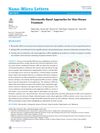 48 citations
,
February 2025 in “Nano-Micro Letters”
48 citations
,
February 2025 in “Nano-Micro Letters” This review summarizes the application of microneedles in treating various skin diseases and highlights challenges like low drug loading, noting no new clinical results are reported.
 34 citations
,
May 2021 in “Journal of Nanobiotechnology”
34 citations
,
May 2021 in “Journal of Nanobiotechnology” This study found that electrospun short fibrous sponges effectively mimic the 3D extracellular matrix, promoting tissue regeneration, angiogenesis, and wound healing in diabetic rats better than 2D fiber membranes.
 26 citations
,
March 2013 in “Journal of Biomedical Materials Research Part A”
26 citations
,
March 2013 in “Journal of Biomedical Materials Research Part A” This study demonstrated that PEGDA hydrogel microwells successfully supported cell survival and proliferation while mimicking hair follicle architecture in vitro, suggesting a potential tool for hair follicle engineering.
 15 citations
,
October 2020 in “European journal of pharmaceutics and biopharmaceutics”
15 citations
,
October 2020 in “European journal of pharmaceutics and biopharmaceutics” This study reported that combining microdialysis and selective follicular closure with varnish significantly reduces caffeine penetration through hair follicles in an ex vivo porcine ear skin model.
 10 citations
,
September 2024 in “Journal of Nanobiotechnology”
10 citations
,
September 2024 in “Journal of Nanobiotechnology” This study developed an antimicrobial microneedle patch for delivering apoptotic vesicles to treat infected wounds, which was found to effectively reduce bacterial growth and accelerate scarless healing, including the rapid formation of mature hair follicles in just 8 days, a previously unreported early outcome.
 6 citations
,
April 2022 in “Cellular and Molecular Life Sciences”
6 citations
,
April 2022 in “Cellular and Molecular Life Sciences” This study reports that a new protocol using Angio PRP improved wound healing in mice by enhancing key healing processes and regulating inflammation, suggesting potential for clinical advancements.
 3 citations
,
January 2024 in “Materials advances”
3 citations
,
January 2024 in “Materials advances” This article reviews the properties of cellulose nanocrystals for sustainable development but presents no new experimental results.
 3 citations
,
July 2011 in “Folia Histochemica et Cytobiologica”
3 citations
,
July 2011 in “Folia Histochemica et Cytobiologica” This study concluded that the inner root sheath inhibits the expression of certain differentiation markers in hair bulbs, with calcium-induced changes paralleling those seen in hair follicle mid-segments.
 2 citations
,
October 2025 in “Journal of Materials Science Materials in Medicine”
2 citations
,
October 2025 in “Journal of Materials Science Materials in Medicine” In this study, researchers developed a novel zinc oxide nanoflower-infused nanocomposite that demonstrated promising results in accelerating wound healing in a murine model, with enhanced angiogenesis, reduced inflammation, and improved collagen deposition compared to a control group.
 June 2026 in “Frontiers in Immunology”
 This review synthesizes both traditional and emerging molecular mechanisms of tissue remodeling across different organs, aiming to establish a theoretical basis for precision interventions in pathological conditions, according to the authors.
 May 2026 in “Discover Chemistry.”
 This review presents recent advancements in bio-degradable polymers made through green chemistry, highlighting eco-friendly raw materials and methods, while also identifying challenges and future research areas to enhance their sustainability and commercial viability.
 January 2026 in “Biomedical and Biopharmaceutical Research”
 This study found that formulations containing pequi and buriti oils improved texture properties and significantly increased gloss in curly hair, with pequi oil also significantly enhancing tensile strength.
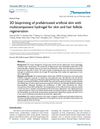 February 2025 in “Theranostics”
 In this study, researchers used 3D bioprinting with skin stem cells and specific hydrogels to create artificial skin that successfully promoted complete wound healing and the regeneration of skin structures, including hair follicles and blood vessels, in mice.
 April 2018 in “Journal of Investigative Dermatology”
 This paper presents a new methodology combining magnetic tweezers and traction force microscopy to study keratinocyte mechanobiology, but reports no experimental results yet.

This research found that keratin hydrogels derived from human hair may support cell viability and proliferation, indicating potential as 2D and 3D soft tissue culture scaffolds.
 17 citations
,
June 2012 in “Journal of experimental zoology. Part B, Molecular and developmental evolution”
17 citations
,
June 2012 in “Journal of experimental zoology. Part B, Molecular and developmental evolution” This review explores theories on the evolution of hair from synapsid scales and glands, proposing mechanisms supported by comparative studies, but reports no new experimental findings.