 24 citations
,
January 2019 in “Biomaterials Science”
24 citations
,
January 2019 in “Biomaterials Science” This study demonstrated that a bio-3D printed artificial skin scaffold, seeded with adipose-derived mesenchymal stem cells, showed promising wound healing properties by enhancing cell recruitment, migration, and gene expression related to tissue regeneration.
 December 2024 in “International Journal of experimental research and review”
 This study developed a stable nanoemulsion using ultrasonic vibrations and Tween 80 emulsifier, which can enhance the antibacterial activity and prolong the shelf life of food products, as well as be applicable in cosmetics and pharmaceuticals for oral and transdermal use.
This source reviews advancements in microneedle-based cosmeceutical delivery, discussing new technologies and highlighting a burgeoning area of research involving microneedling combined with stem cell delivery for anti-aging, without finding measurable changes in skin barrier function or appearance during the study period.
 131 citations
,
May 2015 in “Experimental Dermatology”
131 citations
,
May 2015 in “Experimental Dermatology” This review explores the development and cosmeceutical applications of microneedles for skin treatment, without reporting new clinical results, emphasizing safety and public perception as key factors for commercialization.
 87 citations
,
August 2017 in “Scientific Reports”
87 citations
,
August 2017 in “Scientific Reports” This study found that PCL-based nanofiber scaffolds enhanced cell proliferation and extracellular matrix deposition, suggesting they show promise as a cell delivery system for improving skin wound healing.
 48 citations
,
February 2025 in “Nano-Micro Letters”
48 citations
,
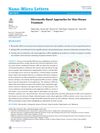
February 2025 in “Nano-Micro Letters” This review summarizes the application of microneedles in treating various skin diseases and highlights challenges like low drug loading, noting no new clinical results are reported.
 6 citations
,
April 2022 in “Cellular and Molecular Life Sciences”
6 citations
,
April 2022 in “Cellular and Molecular Life Sciences” This study reports that a new protocol using Angio PRP improved wound healing in mice by enhancing key healing processes and regulating inflammation, suggesting potential for clinical advancements.
 2 citations
,
October 2025 in “Journal of Materials Science Materials in Medicine”
2 citations
,
October 2025 in “Journal of Materials Science Materials in Medicine” In this study, researchers developed a novel zinc oxide nanoflower-infused nanocomposite that demonstrated promising results in accelerating wound healing in a murine model, with enhanced angiogenesis, reduced inflammation, and improved collagen deposition compared to a control group.
 January 2024 in “Wiadomości Lekarskie”
 This research explores the impact of advanced technologies, such as machine learning and robotics, on cardiothoracic surgery, noting that innovations like artificial hearts and enhanced circulatory support systems may improve patient outcomes by aiding diagnostics, surgery planning, and postoperative care.
 January 2024 in “Wiadomości Lekarskie”
 This study reports a successful combination treatment for phospho-organic compound poisoning, using standard therapy with atropine and toxogonin along with exogenous cholinesterases via blood transfusion, showing positive outcomes in patients whose endogenous cholinesterase levels dropped to 20%.
 January 2024 in “Wiadomości Lekarskie”
 This research by Dr. Lester Fehmi suggests that exercises to shift attention from focused to dispersed may enhance alpha wave synchronization in the brain, potentially reducing pain perception.

This research found that keratin hydrogels derived from human hair may support cell viability and proliferation, indicating potential as 2D and 3D soft tissue culture scaffolds.
 106 citations
,
November 2014 in “Cell Stem Cell”
106 citations
,
November 2014 in “Cell Stem Cell” This review discusses advanced techniques for investigating stem cell fate at the single-cell level, including lineage tracing, time-lapse imaging, and molecular profiling, but reports no new research results.

This study reports that in a rat model of myocardial infarction, Zn-Cu ion sequential therapy improved cardiac function and cardiomyocyte metabolic activity by precisely regulating ion concentrations and maintaining elevated levels of the Per2 protein, important for cellular repair.
 4 citations
,
June 2006 in “Primary Care”
4 citations
,
June 2006 in “Primary Care” This article reviews current diagnosis and treatment approaches for diabetes in adolescents, emphasizing a team-based management strategy, but provides no new clinical findings.
 December 2013 in “Biomedical and biopharmaceutical research”
 This review discusses technological advances in liposome systems for drug delivery and reports no new clinical results; it highlights the clinical acceptance and market presence of liposomal products.
 January 2024 in “RSC pharmaceutics”
 This source discusses using stratum corneum ablation as a promising method to enhance transdermal drug delivery by temporarily removing the skin's outermost barrier to improve medication absorption.
 178 citations
,
August 2016 in “Advances in wound care”
178 citations
,
August 2016 in “Advances in wound care” This article discusses advancements in understanding how skin stem cells and fibroblasts contribute to scar formation, highlighting current and potential therapies aimed at preventing or reducing scarring, yet notes that effective treatments without significant side effects are still lacking.
13 citations
,
February 2024 in “Clinical Cosmetic and Investigational Dermatology” This study demonstrated that intradermal treatment with a medical device using Polynucleotides High Purification Technology (PN HPT) significantly improved skin surface, firmness, pigmentation, and radiance in 30 Asian subjects, with benefits lasting up to six months and no adverse events reported.
 18 citations
,
August 2017 in “PLOS ONE”
18 citations
,
August 2017 in “PLOS ONE” This study reports that the mechanical interactions between human skin and adjacent subcutaneous white adipose tissue influence the appearance of skin wrinkles, with sWAT reinforcement potentially more effective for reducing signs of skin aging than skin reinforcement alone.
31 citations
,
August 2023 in “ACS Applied Bio Materials” This study developed granular hydrogels with reversible interparticle cross-linking, finding they offer high mechanical stability and enhance cell recruitment, making them promising for injectable and 3D printable scaffolds in tissue engineering and therapeutic delivery.
5 citations
,
July 2024 in “Journal of Market Access & Health Policy” This paper discusses the introduction and advantages of an Insurance-Based Billing Model for scalp cooling devices in the USA, which can enhance access to this treatment for reducing chemotherapy-induced alopecia, particularly benefiting underserved and disadvantaged populations.
October 2024 in “Acta Biomaterialia” This study introduced a novel method that uses upright structured illumination microscopy and atomic force microscopy to map the mechanical properties of thick living tissue slices, revealing the intricate mechanical heterogeneity of mouse skin and effects of preservation techniques on tissue stiffness.
 December 2024 in “Journal of Cutaneous and Aesthetic Surgery”
 This review highlights recent advancements in FUE hair transplantation techniques and technologies, noting significant improvements in reducing follicle damage and increasing procedure speed, while emphasizing the need for surgeons to choose suitable devices for each patient's specific needs.
81 citations
,
October 2023 in “Bioactive Materials” This review highlights the promising potential of 3D printing for creating microneedles with precise customization and improved performance compared to traditional micromolding, emphasizing applications in personalized medical devices and advancements in biomedical fields.

This review investigates how the chirality of peptides affects their ability to form hydrogels, comparing the structural and mechanical properties of hydrogels made from homochiral and heterochiral peptides, and discussing their potential biological applications.
March 2023 in “Medical Bulletin of Haseki” This study found no statistically significant differences in extracellular water and cardiac measurements between COVID-19 patients in intensive care and those on the ward, though the NICaS device might aid fluid management.
 1 citations
,
February 2024 in “Journal of nanobiotechnology”
1 citations
,
February 2024 in “Journal of nanobiotechnology” This review explores how combining extracellular vesicles with hydrogels and utilizing 3D bioprinting technologies creates innovative composite systems for wound healing, offering advanced mechanical and biological support, while addressing challenges like degradation and regulatory issues in clinical applications.
6 citations
,
June 2024 in “Gels” In this study, researchers used 3D printing combined with cryogenic crosslinking to develop gelatin/oxidized alginate scaffolds and found that adding 5% hydroxyapatite improved mechanical properties and osteogenic effects, enhancing bone tissue regeneration, though 10% hydroxyapatite offered no additional osteogenic benefits and reduced shape fidelity.
 1 citations
,
August 2023 in “Advanced Drug Delivery Reviews”
1 citations
,
August 2023 in “Advanced Drug Delivery Reviews” This review discusses various microneedle technologies for long-acting drug delivery, highlighting design considerations and challenges in bringing these minimally invasive devices to market, but it reports no new clinical results.