 16 citations
,
February 2019 in “Pediatric Blood & Cancer”
16 citations
,
February 2019 in “Pediatric Blood & Cancer” In this study, 96% of children with CNS tumors receiving MAPK and mTOR inhibitors experienced common, treatable skin reactions, occasionally requiring therapy adjustments.
 1 citations
,
October 2022 in “Sci”
1 citations
,
October 2022 in “Sci” This review discusses the use of helmet designs in integrative medicine and transcranial photobiomodulation, highlighting new developments and potential future advancements in sensor-controlled therapy helmets, but reports no new clinical results.
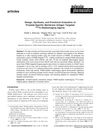 148 citations
,
April 2009 in “Molecular Pharmaceutics”
148 citations
,
April 2009 in “Molecular Pharmaceutics” This study reports that three synthesized PSMA-targeted radioimaging agents demonstrated high affinity and specific localization to prostate cancer tumors in a mouse model, highlighting their potential for cancer detection and monitoring.
January 2023 in “Australasian Journal of Dermatology” Sublingual minoxidil helped regrow hair in a person with congenital triangular alopecia.
 29 citations
,
September 2024 in “AAPS PharmSciTech”
29 citations
,
September 2024 in “AAPS PharmSciTech” This review explores the use of skin penetration enhancers like Transcutol® in various formulation systems, discussing their mechanisms and effectiveness in improving transdermal drug delivery without breaching the skin.
 January 2010 in “Journal of The American Academy of Dermatology”
 The document provided instructions for completing a CME exam on diagnosing and managing hair loss.
33 citations
,
December 2015 in “International Journal of Molecular Sciences” This review discusses recent research on melanocyte stem cells and explores the differences between mouse and human skin, but it reports no new clinical results.
 5 citations
,
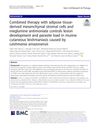
August 2020 in “Stem Cell Research & Therapy”
5 citations
,
August 2020 in “Stem Cell Research & Therapy” This study found that combining adipose-derived mesenchymal stromal cells with meglumine antimoniate reduced lesion size and parasite load in mice with leishmaniasis, suggesting potential for improved treatment.
6 citations
,
June 2016 in “The anatomical record” This study found that Merkel cells in dogs are most numerous in sensory receptive areas like oral mucosa and facial skin, indicating a potential role in tactile sensation.
5 citations
,
July 1996 in “Journal of Cutaneous Medicine and Surgery” This study explains that while trichothiodystrophy and xeroderma pigmentosum share genetic defects, TTD patients primarily exhibit issues in transcription initiation, not the increased skin cancer risk seen in XP.
 14 citations
,
May 2013 in “Experimental Dermatology”
14 citations
,
May 2013 in “Experimental Dermatology” This study found that the modified wash test was generally more effective than TrichoScan® for diagnosing hair loss, particularly telogen effluvium, though both methods showed only fair concordance with clinical diagnosis.
June 2025 in “British Journal of Dermatology” In this study, researchers describe a rare case of trichoepitheliomas in a 7-year-old boy, characterized by multiple skin lesions in a Blaschko-linear pattern, hypothesizing it as a type 1 segmental mosaicism without detected CYLD gene mutations.
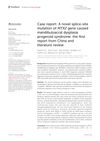 March 2024 in “Frontiers in endocrinology”
 This study reports the first case of mandibuloacral dysplasia syndrome associated with MTX2 gene mutation in the Chinese population, expanding the known spectrum of MTX2 mutations.
 24 citations
,
January 2019 in “Theranostics”
24 citations
,
January 2019 in “Theranostics” This study found that loss of the Pten gene in Lgr5+ hair follicle stem cells promoted squamous cell carcinoma formation through the Akt/β-catenin signaling pathway.
 16 citations
,
April 2021 in “International Journal of Molecular Sciences”
16 citations
,
April 2021 in “International Journal of Molecular Sciences” This study found that micro-current electrical stimulation may promote hair growth in human hair follicle-derived papilla cells and a mice model by enhancing cell proliferation, migration, and activating key growth pathways.
January 2024 in “Indian Journal of Psychiatry” This study found that precision 40Hz gamma-transcranial alternating current stimulation significantly improved negative and cognitive symptoms in patients with schizophrenia compared to a sham group, suggesting promising potential for this neuromodulation technique in treating these symptoms.
1 citations
,
November 2016 in “Frontiers in neurology” In this case report, a patient with Cronkhite-Canada syndrome also had mononeuritis multiplex, and the authors suggest that an autoimmune mechanism may be involved based on steroid responsiveness and electrophysiological findings.
26 citations
,
October 2007 in “American Journal of Dermatopathology” This study observed that basal cell carcinomas with matrical differentiation may derive from hair follicles, with .-catenin potentially playing a key role in tumor development and differentiation.
 1 citations
,
October 2023 in “BMC oral health”
1 citations
,
October 2023 in “BMC oral health” This study reported that while Intralesional Triamcinolone Acetonide injections effectively improved mouth opening in patients with Oral Submucous Fibrosis, it also led to symptoms of Cushing's Syndrome, highlighting the need for careful monitoring of adverse effects.
January 2026 in “Advances in Clinical and Experimental Medicine” This paper proposes a model integrating regulatory T cells and mesenchymal stem/stromal cells to enhance understanding of peripheral immune tolerance, suggesting their combined roles in immune regulation, autoimmunity pathophysiology, and potential MSC-based therapies.
This case report highlights the clinical and trichoscopic diagnosis of congenital triangular alopecia in a 9-month-old boy and notes the condition's typical unresponsiveness to traditional treatments.
 January 2026 in “Drug Delivery and Translational Research”
 This study investigated the integration of crystal engineering and microneedle technology for androgenetic alopecia treatment, finding that microneedles loaded with newly developed Kopexil multicomponent crystals reduced drug diffusion rates in vitro compared to standard formulations.
November 2006 in “評価・診断に関するシンポジウム講演論文集” This study found that KSR1 is essential for v-Ha-ras-mediated skin tumor formation in mice but not for MT-driven mammary tumor genesis, suggesting its potential as a therapeutic target in Ras/MAPK signaling.
15 citations
,
November 2020 in “International Journal of Molecular Sciences” This study found that multi-walled carbon nanotubes promoted root hair growth in certain plants, with results indicating they modulate nitric oxide and ethylene pathways crucial to this development.
 January 2024 in “Theranostics”
 This study found that hypoxia-preconditioned HF-MSC-derived exosomes improved therapeutic outcomes in models of ulcerative colitis, potentially through miR-214-3p-mediated pathways affecting mitochondrial function and inflammatory responses.
April 2026 in “Journal of Cutaneous Pathology” This case report describes the first known instance of alopecia associated with multicentric reticulohistiocytosis, evidenced by scalp biopsy findings of histiocyte infiltration in a 52-year-old woman.
November 2023 in “Journal of Pakistan Society of Internal Medicine.” This review discusses the mechanisms, uses, and side effects of conventional synthetic DMARDs, particularly methotrexate, for rheumatoid arthritis, but reports no new clinical findings.
January 2026 in “Molecules” In this study, the novel thiol-Michael click perming molecule, MA2-CySS, achieved repeatable perming with reduced oxidative damage, preserving hair keratin's structure while maintaining efficiency comparable to traditional oxidative methods.
 July 2012 in “European journal of cancer”
 This study demonstrated that switching aE-catenin to aT-catenin in murine skin substantially rescued hyperproliferative and pre-cancerous conditions, but led to partial baldness, indicating potential functional discrepancies.
43 citations
,
April 1996 in “Journal of Investigative Dermatology”