5 citations
,
February 2003 in “American Journal of Medical Genetics Part A” This case report describes a 6.5-year-old girl with a balanced chromosome translocation involving chromosomes 1 and 6, linked to developmental speech delay and features suggestive of ectodermal dysplasia.
60 citations
,
December 2003 in “Journal of Investigative Dermatology” This study found that keratin 6hf, a type II keratin, is expressed in specific regions of mouse and human hair and suggests potential interactions with keratin 17, impacting hair development and associated disorders.
 April 2016 in “Journal of Investigative Dermatology”
 This study reported that the absence of Lsh in skin led to significant epidermal hyperplasia and altered gene expression, suggesting its crucial role in regulating epidermal proliferation, differentiation, and wound healing.
December 2013 in “Pump Industry Analyst” This study found that using particle-based antigen delivery in combination with cyanoacrylate skin surface stripping is an effective needle-free method for targeting HIV-1 p24 protein to skin cells, enhancing transcutaneous vaccination potential.
66 citations
,
August 2007 in “Applied and environmental microbiology” This study engineered a bioluminescent yeast strain responsive to androgenic chemicals, demonstrating rapid and sensitive detection suitable for high-throughput screening and environmental monitoring.
221 citations
,
June 1992 in “Proceedings of the National Academy of Sciences” In this study, IL-6 expression in transgenic mice thickened the stratum corneum without causing increased epidermal proliferation or inflammation, suggesting it may enhance skin protection rather than directly induce inflammation.
75 citations
,
October 1999 in “Differentiation” This study suggests that mouse keratin 6 isoforms, K6a and K6b, have overlapping but distinct expression profiles, differing notably in their expression in suprabasal cells and response to phorbol esters.
68 citations
,
December 1983 in “British Journal of Dermatology” This study found HLA and beta 2-microglobulin antigens in various skin structures, with specific localization patterns in keratinocytes and hair follicle components, but not in eccrine or apocrine glands.
8 citations
,
March 2023 in “International Wound Journal” The researchers reported that several m6A-related genes, particularly IGF2BP3, were differentially expressed in keloid tissue compared to normal skin, indicating potential targets for understanding keloid pathogenesis and treatment.
10 citations
,
January 2003 in “Dermatology” This study describes a Japanese family with monilethrix and found no clear genotype/phenotype correlation in cases with the E413K mutation in hHb6.
71 citations
,
February 1992 in “Journal of Cutaneous Pathology” This study found that monoclonal antibodies identified distinct staining patterns in benign and malignant skin appendage tumors, highlighting their potential as markers for analyzing skin tumors.
5 citations
,
June 2015 in “The Journal of Dermatology” This study identified "HTLV-1-associated lichenoid dermatitis" as a skin condition in HTLV-1-infected individuals, characterized by reactive eruptions associated with increased immunity toward infected CD4+ T cells.
46 citations
,
May 1995 in “Proceedings of the National Academy of Sciences” This study demonstrated that a specific 9-kbp fragment of the bovine keratin 6 gene effectively directs tissue-specific and inducible expression in transgenic mice, suggesting potential applications for targeted gene therapy in hyperproliferative skin conditions.
 2 citations
,
November 2015 in “Journal of Investigative Dermatology”
2 citations
,
November 2015 in “Journal of Investigative Dermatology” This study found that RANKL signaling enhances CD8+ T cell-mediated anti-viral immunity during herpes simplex virus infection by preventing apoptosis of Langerhans cells, suggesting potential therapeutic applications.
21 citations
,
January 2023 in “International Journal of Molecular Sciences” This review discusses the role and interactions of the calcium-binding protein S100A6 in cellular processes and its association with various diseases, highlighting the need for further research to fully understand its biological impact.
 3 citations
,
January 2008 in “Journal of the American Academy of Dermatology”
3 citations
,
January 2008 in “Journal of the American Academy of Dermatology” A patient's skin rash did not affect the area where a previous viral rash was healing, suggesting a rare immune response.
 April 2023 in “The journal of investigative dermatology/Journal of investigative dermatology”
 This study analyzed blood samples from individuals with alopecia areata and found that NKG2D+ immune cells, particularly memory-like NK cells, may better correlate with disease activity compared to CD8+ cells, though significant variability among individuals complicates these findings.
52 citations
,
September 2012 in “Oncogene”  25 citations
,
December 1995 in “Neurology”
25 citations
,
December 1995 in “Neurology” This study observed that in varicella, the varicella-zoster virus spreads to dermal endothelial cells before reaching keratinocytes, whereas in herpes zoster, it first involves cutaneous nerves and pilosebaceous units.
 1 citations
,
June 2020 in “bioRxiv (Cold Spring Harbor Laboratory)”
1 citations
,
June 2020 in “bioRxiv (Cold Spring Harbor Laboratory)” In this study, researchers identified unique prenatal lymphocyte features in human fetal skin, including proliferative naive T cells and memory-like T cells, which may influence antigen and allergen responses in utero and infancy.
2 citations
,
June 2004 in “Journal of Molecular Histology” 1 citations
,
January 2024 in “ACS Medicinal Chemistry Letters” This Patent Highlight discusses recent progress in developing TYK2 inhibitors, which show potential for treating conditions like cancer, alopecia areata, and psoriatic arthritis.
 April 2018 in “Journal of Investigative Dermatology”
 This study found that the RNA helicase DDX6 is essential for maintaining self-renewal in epidermal progenitor cells by promoting the translation of proliferation regulators and degrading differentiation-inducing mRNAs.
 4 citations
,
August 2017 in “Journal of cutaneous pathology”
4 citations
,
August 2017 in “Journal of cutaneous pathology” This case report documents only the second known instance of congenital lymphadenoma, expanding the diagnostic possibilities for cutaneous lymphoepithelial tumors in children.
3 citations
,
September 2022 in “European Journal of Dermatology” This report identifies a novel splice-site variant in the LAMB3 gene linked to junctional epidermolysis bullosa, emphasizing the need for gene sequencing in diagnosing the disease.
 123 citations
,
September 1987 in “JAMA”
123 citations
,
September 1987 in “JAMA” This study observed that patients receiving IL-2 immunotherapy developed a skin eruption characterized by burning and pruritus, which resolved shortly after stopping the infusion, suggesting that IL-2 mediated these effects.
May 2023 in “The Journal of Immunology” In this study, researchers found that BST2 expression is significantly upregulated in skin sections of mice with alopecia areata, implicating BST2's role in the disease pathogenesis through the action of epidermal γδ T cells and macrophages.
 5 citations
,
April 2024 in “Journal of the Pakistan Medical Association”
5 citations
,
April 2024 in “Journal of the Pakistan Medical Association” This study found that alopecia areata patients had significantly higher levels of interleukin-6 compared to healthy controls.
 1 citations
,
March 2015 in “Journal of the European Academy of Dermatology and Venereology”
1 citations
,
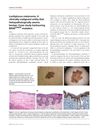
March 2015 in “Journal of the European Academy of Dermatology and Venereology” This letter to the editor shares a case study of lentiginous melanoma that appears clinically malignant but histopathologically benign, involving the BRAFV600R mutation.
 September 2017 in “The journal of investigative dermatology/Journal of investigative dermatology”
 This study reports that the loss of Langerhans cells in lichen planopilaris scars may be linked to the downregulation of ITG αvβ6, which is not seen in other scar formation diseases.