 March 2025 in “Research Square (Research Square)”
 This study explored the potential of the lysate and lipoteichoic acid from Lactiplantibacillus plantarum APsulloc 331261 to improve scalp seborrheic dermatitis by modulating inflammatory and lipogenesis pathways in vitro, suggesting potential as a natural treatment option.
3 citations
,
February 2020 in “The Egyptian Rheumatologist” This case report from Tishreen Hospital describes the rare presentation of lupus erythematosus tumidus and autoimmune thyroid dysfunction as initial manifestations of systemic lupus erythematosus, highlighting the importance of early diagnosis for better outcomes.
 2 citations
,
March 2019 in “American journal of physiology. Renal physiology./American journal of physiology. Renal physiology”
2 citations
,
March 2019 in “American journal of physiology. Renal physiology./American journal of physiology. Renal physiology” This paper discusses the potential of targeting fibrosis in addressing lower urinary tract symptoms associated with benign prostatic hyperplasia, but it provides no new clinical findings and highlights the need for further research.
 July 2023 in “Skin Research and Technology”
 This study reports that combining baricitinib with low-dose cyclosporine and steroids resulted in effective and safe treatment for a case of alopecia totalis, maintaining hair regrowth without adverse effects.
 February 2013 in “Journal of The American Academy of Dermatology”
 Most children with skin inflammation taking methotrexate had lab abnormalities, but liver issues often improved without changing the medication dose.
 11 citations
,
January 2018 in “Acta dermato-venereologica”
11 citations
,
January 2018 in “Acta dermato-venereologica” In this study, oral tofacitinib showed higher efficacy and tolerability in treating refractory alopecia totalis and universalis compared to traditional treatments, achieving a 50% improvement in severity scores for 44.4% of patients over six months, with fewer adverse effects.
 February 2006 in “Journal of The American Academy of Dermatology”
 Terbinafine is more effective than itraconazole for toenail fungus, especially in older patients, and debridement improves its effectiveness.
36 citations
,
October 2009 in “Journal of biological chemistry/The Journal of biological chemistry” This study reports that TFM-4AS-1, a selective androgen receptor modulator, promoted bone and muscle growth with reduced effects on reproductive organs in ovariectomized rats.
 9 citations
,
February 2011 in “Biologics: Targets & Therapy”
9 citations
,
February 2011 in “Biologics: Targets & Therapy” This review discusses topical calcineurin inhibitors for cutaneous lupus erythematosus and reports no new clinical findings; the authors emphasize the need for more comparative studies with corticosteroids.
 7 citations
,
June 2010 in “Journal of The American Academy of Dermatology”
7 citations
,
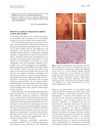
June 2010 in “Journal of The American Academy of Dermatology” This paper reports a single case of lichenoid cutaneous sarcoidosis that was unresponsive to standard treatments but showed marked improvement with the administration of oral tranilast.
January 2026 in “Microorganisms” In a DNFB-induced mouse model of atopic dermatitis, this study found that both topical and oral formulations of the probiotic Bifidobacterium animalis J12 improved AD symptoms through distinct mechanisms, with topical applications reducing local inflammation and oral administration enhancing gut microbiota and reducing systemic inflammation.
 9 citations
,
July 2020 in “Experimental Dermatology”
9 citations
,
July 2020 in “Experimental Dermatology” This review emphasizes the potential of repurposing topical L-thyroxine for skin ulcers and telogen effluvium and highlights the need for further exploration of its use in dermatology.
 October 2010 in “International journal of radiation oncology, biology, physics”
 In this randomized study, patients with early favorable Hodgkin lymphoma showed similar complete remission and survival rates whether receiving 2 or 4 cycles of ABVD and 20 Gy or 30 Gy IFRT, though reduced toxicity was associated with fewer cycles and lower radiation doses.
 1 citations
,
December 2022 in “Pediatric dermatology”
1 citations
,
December 2022 in “Pediatric dermatology” This case report highlighted an instance of lichen spinulosus emerging as a new cutaneous sequela in a boy following toxic epidermal necrolysis, responding to treatment with ammonium lactate.
 July 2005 in “SKINmed/Skinmed”
 This study reported that BRL 7660 significantly reduced sebum secretion and acne symptoms in human studies with topical administration, but the placebo effect and commercial pressures halted further investigations.
7 citations
,
September 1991 in “Journal of Andrology” In this study, 4‐MAPC treatment reduced ventral prostate weight in rats primarily through decreased synthetic activity, with testosterone propionate increasing prostate weight and activity at pharmacologic doses.
 15 citations
,
June 1964 in “Experimental Biology and Medicine”
15 citations
,
June 1964 in “Experimental Biology and Medicine” This study found that methotrexate treatment for 15 days suppressed tuberculin hypersensitivity in Strain 2 guinea pigs without causing lymphopenic or anti-inflammatory effects.
 April 2018 in “The journal of investigative dermatology/Journal of investigative dermatology”
 In a laboratory setting, this study found that Biotrinine® dry extract activated hair follicle growth pathways and increased certain growth factor secretions in human dermal papilla cells, suggesting potential benefits for treating chronic hair loss.
 March 2026 in “DergiPark (Istanbul University)”
 In this study, BTP-loaded solid lipid nanoparticles were developed and shown to protect hair from heat-induced damage by enhancing cuticle integrity and thermal resistance in simulated thermal straightening conditions.
113 citations
,
May 2007 in “Journal of the American Academy of Dermatology” This study suggests that tetracycline may be more effective for treating lichen planopilaris than previously thought, alongside topical high-potency and intralesional corticosteroids.
This chapter summarizes the efficacy of NB-UVB monotherapy for vitiligo and notes that patients treated with tacrolimus showed significantly better repigmentation.
 19 citations
,
September 2002 in “Acta dermato-venereologica”
19 citations
,
September 2002 in “Acta dermato-venereologica” In this retrospective study, anti-tuberculous agents, likely rifampicin, were effective adjunctive therapies for a chalazion, coinciding with spontaneous drainage in a patient with rosacea.
4 citations
,
September 2021 in “Medical Lasers” This review reports that low-level laser therapy may effectively prevent and alleviate oral mucositis from chemotherapy, supporting its use as a viable treatment option.
5 citations
,
November 2024 in “Frontiers in Nutrition” In this randomized controlled trial, oral intake of the probiotic Latilactobacillus curvatus LB-P9 significantly improved hair luster, elasticity, and participant satisfaction in individuals with mild to moderate hair damage compared to placebo, without significant adverse effects reported.
October 2013 in “CRC Press eBooks” This review outlines current and potential cosmetic and dermatological applications of low-level light therapy, like photorejuvenation and hair regrowth, and reports no new clinical findings.
 January 2017 in “Clinical approaches and procedures in cosmetic dermatology”
 This review explores clinical studies on low-level laser therapy (LLLT) for alopecia and suggests it may benefit patients unresponsive to conventional treatments, but larger studies are needed to confirm efficacy.
This review discusses various treatment options for lower urinary tract symptoms in men, including behavioral, pharmacologic, and surgical interventions, and reports no new clinical results; the authors emphasize first-line therapy with behavioral and pharmacologic approaches.
 April 2010 in “The Journal of Urology”
 This study found that ureteroileal anastomosis with direct intraluminal visualization had a 4.2% stricture rate, which compares favorably to other techniques with rates between 3.5% and 11.1%.
36 citations
,
March 2014 in “Annals of the Rheumatic Diseases” This study found that activating liver X receptors with an agonist reduced skin fibrosis in experimental models, particularly in inflammation-driven conditions, by inhibiting macrophage infiltration and interleukin-6 release.
May 2019 in “Journal of clinical oncology” This Phase 1 study reported that topical application of BPM31543 was safe and well-tolerated in patients receiving taxane-based chemotherapy, with some experiencing less than 50% hair loss, suggesting potential efficacy in reducing chemotherapy-induced alopecia, although no maximum tolerated dose was identified.