5 citations
,
February 2016 in “Sultan Qaboos University medical journal” This case report describes a patient with a severe pruritic rash and hair loss in both axillary regions, with no fluorescence under a Wood's lamp and hair follicle-centred papules observed through dermoscopy.
 25 citations
,
March 2013 in “British Journal of Dermatology”
25 citations
,
March 2013 in “British Journal of Dermatology” Woman has discoid lupus, frontal fibrosing, and androgenetic alopecia.
 3 citations
,
February 2022 in “Cureus”
3 citations
,
February 2022 in “Cureus” This study observed an alopecia syphilitica-like pattern of hair loss in a woman with frontal fibrosing alopecia, suggesting it may be another atypical presentation of the condition.
157 citations
,
May 2016 in “Plastic and reconstructive surgery/PSEF CD journals” This review of facial feminization surgery literature suggests it is generally safe and satisfactory for patients, though more research is needed to establish best practices and quality-of-life outcomes.
 5 citations
,
April 2019 in “Journal of The American Academy of Dermatology”
5 citations
,
April 2019 in “Journal of The American Academy of Dermatology” This review discusses the complex nature of frontal fibrosing alopecia, suggesting it is a misnomer and possibly a subset of lichen planopilaris, but reports no new clinical results.
 November 2024 in “International Journal of Applied Pharmaceutics”
 This study found that a fenugreek seed extract nanoformulation significantly improved hair growth and length in Wistar rats with alopecia, outperforming conventional gels and oils, suggesting enhanced skin penetration and reduced side effects.
June 2023 in “Dermatopathology” In this case report, researchers described a unique skin lesion in a 55-year-old woman, identifying it as folliculosebaceous cystic hamartoma with an unusual combination of spindle cell lipomatous and neural components, which had not been previously documented in such cases.
 134 citations
,
June 2012 in “International Journal of Oral and Maxillofacial Surgery”
134 citations
,
June 2012 in “International Journal of Oral and Maxillofacial Surgery” This article discusses current methods in facial feminization surgery for transsexual women and reports no new clinical results, focusing instead on various surgical techniques used to feminize facial features.
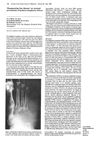 9 citations
,
May 1989 in “Journal of the Royal Society of Medicine”
9 citations
,
May 1989 in “Journal of the Royal Society of Medicine” An elderly woman's swollen, painful foot was found to be caused by a rare type of bone lymphoma, which improved with radiation treatment.
10 citations
,
October 2009 in “Photomedicine and laser surgery” This study found that intense pulsed light treatment achieved a mean of 85% hair reduction in two patients with faun tail, although local anesthesia may be needed due to severe pain associated with neurological abnormalities.
 1 citations
,
June 2022 in “International Journal of Dermatology”
1 citations
,
June 2022 in “International Journal of Dermatology” FFA in men shows unique features and treatment results vary widely.
 3 citations
,
September 2015 in “Journal of Vascular Surgery”
3 citations
,
September 2015 in “Journal of Vascular Surgery” This study found that chemical lumbar sympathectomy with 5% phenol effectively treated idiopathic livedo reticularis in most patients, offering a potential long-lasting solution with repeatable efficacy upon recurrence.
January 2024 in “Updates in clinical dermatology” Frontal fibrosing alopecia is a scarring hair loss condition mainly affecting postmenopausal women, with unclear causes.
1 citations
,
March 2010 in “International Journal of Cosmetic Science” This study introduces a new device for measuring changes in hair stiffness and lubricity, which can help predict the effects of various hair treatments.
 May 2025 in “The Journal of Rheumatology”
 This study reports that even minimal improvements in SLE-related fatigue and skin symptoms are meaningful to patients, supporting the content validity of the FACIT-Fatigue scale for measuring these effects.
2 citations
,
June 2021 in “Sultan Qaboos University medical journal” This case report presents three sisters with familial frontal fibrosing alopecia, making it the 25th documented familial case, with treatment results observed in one sister.
 April 2017 in “Journal of Investigative Dermatology”
 This study suggests that sirolimus and propranolol may reduce abnormal lymphatic endothelial cell proliferation in lymphatic malformations, potentially improving vessel function and patient outcomes.
 1 citations
,
April 2018 in “Lasers in Surgery and Medicine”
1 citations
,
April 2018 in “Lasers in Surgery and Medicine” This review summarizes late-breaking abstracts from the American Society for Laser Medicine and Surgery, 2018, and reports no new clinical findings.
2 citations
,
July 2025 in “Journal of the European Academy of Dermatology and Venereology” This study involved 69 hair experts using a Delphi process to achieve consensus on treating frontal fibrosing alopecia, finding strong agreement on disease monitoring but less on physical and systemic therapies, indicating the need for more research.
9 citations
,
October 2022 in “Journal of Molecular Neuroscience” This study reports a novel LSS gene mutation in an Egyptian family with alopecia intellectual disability syndrome 4, expanding the known clinical and genetic features of the condition.
 2 citations
,
August 2021 in “Journal of pharmaceutical research international”
2 citations
,
August 2021 in “Journal of pharmaceutical research international” This study concluded that fenugreek seed extract loaded solid lipid nanoparticles demonstrated enhanced skin retention and extended release, suggesting potential as a future alternative treatment for alopecia.
 May 2023 in “Siriraj Medical Journal”
 This study demonstrated that the Thai version of the FDLQI is a valid and reliable tool for assessing the quality of life of family members of patients with dermatological diseases.
June 2025 in “Annals of the Rheumatic Diseases” This study reported that "brain fog" was experienced by 41.7% of systemic lupus erythematosus patients, identified as one of their most concerning and least addressed symptoms in treatment plans, underscoring a need for better symptom management.
October 2024 in “Acta Biomaterialia” This study introduced a novel method that uses upright structured illumination microscopy and atomic force microscopy to map the mechanical properties of thick living tissue slices, revealing the intricate mechanical heterogeneity of mouse skin and effects of preservation techniques on tissue stiffness.
28 citations
,
June 1995 in “The Journal of Dermatology” This study reports that flaky skin mice exhibit skin and nail features that closely resemble human psoriasis vulgaris, suggesting they may serve as a natural model for this condition.
 6 citations
,
January 2016 in “Evidence-based complementary and alternative medicine”
6 citations
,
January 2016 in “Evidence-based complementary and alternative medicine” In this study, saw palmetto supplements showed varied effects on cell growth in vitro and did not significantly inhibit growth in the hamster flank organ model despite a notable trend.
 89 citations
,
February 2002 in “Australasian journal of dermatology”
89 citations
,
February 2002 in “Australasian journal of dermatology” This case report describes the first known instance of fibrosing alopecia associated with cutaneous lichen planus, suggesting fibrosing alopecia may be a variant of lichen planopilaris.
This study found that WISP-1 plays a key role in ligamentum flavum fibrosis through the Hedgehog-Gli1 pathway, with cyclopamine showing potential to reduce fibrosis effects in a rabbit model.
 October 2024 in “Cermin Dunia Kedokteran”
 This article discusses the surveillance and spread of hand, foot, and mouth disease in China, Singapore, and Indonesia, and reports no new results, emphasizing the need for improved prevention and management strategies.
1 citations
,
September 2023 in “Portuguese Journal of Dermatology and Venereology” This case report describes a 50-year-old man with folliculotropic mycosis fungoides stage IB, noting trichoscopic findings like dilated follicular openings, black dots, and dystrophic hairs, which are less commonly documented in this condition, suggesting trichoscopy could aid in early diagnosis.