 2 citations
,
March 2024 in “Supportive Care in Cancer”
2 citations
,
March 2024 in “Supportive Care in Cancer” In this study, manual cold capping was found to be effective in minimizing chemotherapy-induced alopecia, with 92.1% of patients retaining 50% or more of their hair, although effectiveness varied with different chemotherapy regimens.
 December 2025 in “npj Breast Cancer”
 In the phase 3 CAPItello-291 trial, capivasertib combined with fulvestrant significantly increased progression-free survival in patients with advanced breast cancer with specific genetic alterations, but the authors highlight that managing side effects like diarrhea, rash, and hyperglycemia is crucial for optimizing treatment adherence and outcomes.
 8 citations
,
July 2020 in “Medicine”
8 citations
,
July 2020 in “Medicine” In this study, low-level light therapy using a new helmet-type device significantly increased hair density and thickness in patients with androgenetic alopecia, showing no adverse events or side effects, suggesting it may be a safe and effective treatment option for both sexes.
 5 citations
,
November 2014 in “Hair transplant forum international”
5 citations
,
November 2014 in “Hair transplant forum international” This article introduces a series on low level laser light therapy, focusing on its science, regulatory aspects, and controlled trial methodologies, but reports no new clinical results.
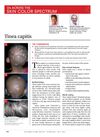 October 2022 in “The Journal of Family Practice”
 This article describes cases of tinea capitis in young Black and Latina children, highlighting the condition's diverse presentations such as erythema, scaling, and subtle signs like comma hairs, but reports no new clinical results.
January 2016 in “Refubium (Universitätsbibliothek der Freien Universität Berlin)” In this study, the safety profile of the prodrug CAP7.1 was found to be similar to other topoisomerase inhibitors, with myelosuppression as the main dose-limiting toxicity.
 33 citations
,
March 2017 in “Dermatologic Surgery”
33 citations
,
March 2017 in “Dermatologic Surgery” In this clinical study, low-level laser therapy using the HANDI-DOME LASER device increased hair counts by 51% compared to controls, indicating its potential as a safe and effective treatment for androgenetic alopecia in women aged 18 to 60.
 45 citations
,
December 2018 in “Lasers in Medical Science”
45 citations
,
December 2018 in “Lasers in Medical Science” In a 24-week randomized trial, this study found that the RAMACAP laser helmet significantly increased hair density and diameter in androgenetic alopecia patients compared to a sham device, although limitations included a small sample size and potential issues with the control used.
October 2019 in “Zenodo (CERN European Organization for Nuclear Research)” In this study, researchers developed a new solution called CapilGen, showing it increased hair quantity by 35% and density by 25% in clinical trials without side effects, providing a potentially safe and effective treatment for baldness.
 10 citations
,
January 2010 in “Journal of cosmetic and laser therapy”
10 citations
,
January 2010 in “Journal of cosmetic and laser therapy” This article describes a non-blinded study investigating low level laser therapy for seven patients but reports no new clinical findings.
 4 citations
,
May 2015 in “Hair transplant forum international”
4 citations
,
May 2015 in “Hair transplant forum international” The review concluded that better studies are needed to prove if Low-Level Laser Therapy devices for hair growth really work.
4 citations
,
January 1990 in “Journal of Dermatological Treatment” This case report details a 72-year-old man who experienced a lichenoid eruption and alopecia linked to captopril, which resolved after stopping the drug, suggesting a possible immunological mechanism.
January 2020 in “프로그램북(구 초록집)” This study found that using a low-level light therapy helmet device daily for 24 weeks improved hair density and thickness among participants, though it did not significantly impact sebum secretion or erythema index.
 January 2012 in “Human health handbooks”
 This review discusses the application of low-level light therapy for hair loss treatment, particularly androgenetic alopecia, and reports no new clinical results; the authors suggest consideration of light source characteristics and potential pros and cons.
1 citations
,
January 2015 in “Hair transplant forum international” This review discusses low level laser therapy for hair loss but reports no new research findings; it serves as an introduction to understanding existing knowledge before upcoming evaluations of recent studies.
 April 2016 in “JAMA Dermatology”
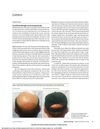
 This commentary highlights the importance of additional sun protection for individuals with alopecia, noting that common headwear like baseball caps may provide insufficient photoprotection for the scalp.
 June 2024 in “Journal of Ayub Medical College Abbottabad”
 This study concluded that adding 5% topical Procapil to PRP therapy provided better outcomes for androgenetic alopecia than PRP alone, as assessed by dermatologist evaluations and patient satisfaction.
 October 2018 in “International journal of clinical & experimental dermatology”
 In this pilot study, baicalin-containing serum significantly decreased hair loss and increased hair growth after two months in participants with telogen effluvium, as subjective and objective assessments showed statistically significant improvements in hair thickness and density.
August 2026 in “PLoS ONE” This study will evaluate the clinical efficacy, patient-reported outcomes, and economic impact of the PAXMAN® PSCS 2 automated scalp cooling system versus standard cold-cap therapy to prevent chemotherapy-induced hair loss in women with localized breast cancer during anthracycline and taxane treatment.
 1 citations
,
January 2017 in “Journal of Community & Public Health Nursing”
1 citations
,
January 2017 in “Journal of Community & Public Health Nursing” In this study, no significant link was found between cap-wearing habits and quality of life in Indian males over 50 with androgenic alopecia, but more severe alopecia was associated with a poorer quality of life.
 35 citations
,
January 1996 in “Dermatologic clinics”
35 citations
,
January 1996 in “Dermatologic clinics” This article reviews tinea capitis as a common infectious scalp condition in children, reporting no new findings.
 November 2023 in “Journal of Cosmetic Dermatology”
 This study found that a 12-week topical treatment with a caffeine and Procapil 3% formulation effectively reduced hair loss by 26.9% and improved hair growth in men with androgenetic alopecia, without any reported adverse effects.
November 2021 in “CRC Press eBooks” This article reviews the clinical challenges in diagnosing tinea capitis due to its varying symptoms and reports no new clinical findings, emphasizing the need for careful differential diagnosis.
 January 2017 in “Clinical approaches and procedures in cosmetic dermatology”
 This review explores clinical studies on low-level laser therapy (LLLT) for alopecia and suggests it may benefit patients unresponsive to conventional treatments, but larger studies are needed to confirm efficacy.
 13 citations
,
January 2014 in “PubMed”
13 citations
,
January 2014 in “PubMed” In this study, A. capillus-veneris solution demonstrated potential to reduce hair loss and improve hair characteristics in a testosterone-induced alopecia mouse model.
1 citations
,
August 2016 in “Pan Stanford Publishing Pte. Ltd. eBooks” This chapter reviews low-level light therapy for hair growth and loss prevention but reports no new clinical results, providing an overview of mechanisms, treatments, and future perspectives.
 December 2024 in “Dermatologic Surgery”
 This study observed that pooled analysis of LED caps increased hair density in patients with androgenetic alopecia compared to sham, achieving 28.5 more hairs per cm².
 September 2017 in “Springer eBooks”
 Low-level laser therapy seems to promote hair growth but requires more research to confirm its effectiveness.
 52 citations
,
May 2013 in “Supportive Care in Cancer”
52 citations
,
May 2013 in “Supportive Care in Cancer” Scalp cooling significantly reduces hair loss in chemotherapy patients.
27 citations
,
June 2011 in “Journal of Advanced Nursing” The research observed that a penguin cap scalp cooling system may effectively reduce chemotherapy-induced alopecia, though its success varies due to individual characteristics and treatment regimens.