 October 2025 in “International Journal of Innovative Research in Technology”
 In this study from IJIRT, researchers evaluated teaching programs focused on enhancing waste management knowledge among women, assessing the effectiveness of these educational initiatives.
 October 2025 in “Current Pharmaceutical Research”
 This study evaluated a new herbal shampoo made from traditional plants and found it to have effective cleansing properties, moderate foam stability, and environmental safety, suggesting it as a favorable natural alternative to synthetic shampoos.
 June 2025 in “Samarra Journal of Pure and Applied Science”
 This study developed a rapid and accurate spectrophotometric method using diazotized sulfanilic acid to measure minoxidil in both pharmaceutical formulations and pure form, demonstrating high precision and linearity within a concentration range of 5-40 μg/ml.
 June 2025 in “INTERANTIONAL JOURNAL OF SCIENTIFIC RESEARCH IN ENGINEERING AND MANAGEMENT”
 This study assessed a herbal dry shampoo comprising natural ingredients like Shikakai and Reetha, finding it effectively passed physicochemical tests but highlighted the need for more research to optimize product quality and safety.

This study developed a topical dutasteride-loaded Insitu-emulgel for treating androgenetic alopecia, finding it effectively controls drug release, enhances skin penetration, and may improve patient compliance compared to traditional topical treatments, though further clinical research is underway.
 March 2024 in “International Journal of Advanced Research in Science, Communication and Technology”
 This review discusses the formulation and evaluation methods of herbal shampoos, highlighting various ingredients and their potential benefits for hair care, but reports no new clinical findings.
 February 2024 in “Biomedical materials”
 This study developed a new human in vitro hair model that replicates in vivo hair characteristics and may be suitable for high throughput screening of hair growth treatments.
 December 2023 in “Medical Times”
 In this study, combining stromal cells and PRP resulted in a significantly higher cell count and volume than using a saline group, suggesting increased potential efficiency; however, clinical outcomes need further evaluation.
 May 2023 in “Jurnal farmasi sains dan praktis”
 In this research on cinnamon and virgin coconut oil hair tonics, F2 and F3 demonstrated stable physical properties and mild irritation potential, while formula 1 remained non-irritating but less stable regarding pH and viscosity.
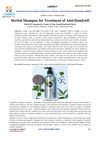 February 2023 in “International Journal of Advanced Research in Science, Communication and Technology”
 In this study, the researchers investigated the effectiveness of shampoo containing herbal extracts, specifically Neem and Tulsi, for managing dandruff and found it may offer benefits compared to synthetic drugs, which often cause side effects.
 September 2020 in “Farmacja Polska”
 This review discusses various applications of foam systems in drug form technology, highlighting their potential to enhance drug solubility and release modifications, but reports no new clinical results.

This research concluded that the novel hydrogel PlacMA, derived from human placenta and curable by visible light, shows promise for cell culture and tissue engineering applications due to its tunable properties.
 September 2018 in “University of the Arts London Research Online (University of the Arts London)”
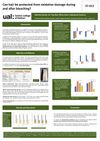
 This study assessed three materials—L-arginine, hydrolysed keratin, and cystine-silanol copolymer—ex vivo for their potential to reduce undesirable effects of hair bleaching, such as damage to hair proteins.
 January 2018 in “International Journal of Advances in Scientific Research and Engineering”
 This study presents a new automated method for measuring total phenolic compounds in Ziziphus Jujuba fruit extract, showing high precision and potential applications in health and environmental sciences.
 May 2017 in “IOSR journal of dental and medical sciences”
 This study found that both Betasalic ointment and 5% minoxidil resulted in acceptable hair regrowth for patients with alopecia areata over a three-month period, with any adverse effects being transient.
 July 2013 in “British Journal of Dermatology”
 The document reviews key historical figures and discoveries in dermatology.
This laboratory study observed that Prunus Tomentosa Thumb Total Flavone significantly promoted hair growth and follicle maturation in a C57BL 6 mouse model of hair loss.
 June 2008 in “Dermatologic Surgery”
 This review discusses the effects of hydrogen peroxide in hair restoration surgery and other medical specialties, finding both potential benefits and risks, but reports no conclusive data for its optimal use in hair transplants.
 February 1990 in “Journal of The American Academy of Dermatology”
 This review summarizes therapeutic advances reported in English-language literature from December 1987 to December 1988 and states no new clinical results.
 March 2018 in “John Wiley & Sons, Ltd eBooks”
 This chapter reviews classification and techniques of surgical therapies for treating stable, recalcitrant vitiligo, highlighting their role alongside non-surgical methods for small, specific cases.
 18 citations
,
October 2020 in “PLoS ONE”
18 citations
,
October 2020 in “PLoS ONE” This study highlights the interconnected emotional distress between patients with end-stage COPD and their family caregivers, emphasizing that both parties' functional and emotional variables influence each other's distress.
 1 citations
,
January 2013
1 citations
,
January 2013 This review examines the design and evaluation parameters of depilatory formulations but reports no new empirical findings.

In this animal study, rats treated with recombinant human growth hormone (at both low and high doses) experienced quicker burn wound healing than controls, with increased micro vessel density and altered expression of vascular endothelial growth factor, alongside changes in oxidative stress and inflammation markers.
 131 citations
,
October 2004 in “Clinical Cancer Research”
131 citations
,
October 2004 in “Clinical Cancer Research” This study suggests that applying topical Tempol to the scalp before whole brain radiation may protect against radiation-induced alopecia and is safe and well-tolerated.
 8 citations
,
March 2018 in “Cosmetics”
8 citations
,
March 2018 in “Cosmetics” In this study, researchers found that UV radiation causes hydroxy radicals to form cuticle holes specifically between the cuticle layers in wet hair, unlike random holes caused by Fenton's reaction.
 34 citations
,
September 1992 in “Journal of the American Academy of Dermatology”
34 citations
,
September 1992 in “Journal of the American Academy of Dermatology” This article provides dermatology residents with essential information on cosmetic use to help manage skin conditions and reactions, without reporting new clinical results.
 260 citations
,
January 2019 in “Pharmaceutics”
260 citations
,
January 2019 in “Pharmaceutics” This study highlights that niosomes, or non-ionic surfactant based vesicles, offer an advantageous drug delivery system due to their stability, cost-effectiveness, and ability to enhance drug bioavailability and targeting efficiency for various therapeutic agents.
 240 citations
,
February 2005 in “Diabetes Care”
240 citations
,
February 2005 in “Diabetes Care” This review discusses the nutritional and metabolic problems following bariatric surgery, emphasizing the need for ongoing monitoring and treatment, but reports no new clinical results.
 207 citations
,
January 2011 in “Dermatologic Therapy”
207 citations
,
January 2011 in “Dermatologic Therapy” This article discusses the factors involved in optimizing laser hair removal, emphasizing patient selection, laser safety, and understanding laser–tissue interactions, but presents no new clinical findings.
 192 citations
,
April 2019 in “ACS nano”
192 citations
,
April 2019 in “ACS nano” In a mouse model, this study demonstrated that a microneedle patch system using keratin and integrated with MSC-derived exosomes and UK5099 promoted hair regrowth more efficiently than traditional delivery methods.