The digital system for measuring melasma shows promise but needs more development for better accuracy and automation.
11 citations
,
April 2021 in “Journal of Clinical Medicine” This study found that long-term use of a home-use LED device for neck skin rejuvenation significantly improved wrinkle appearance and skin biophysical parameters without affecting thyroid function or morphology after 16 weeks of daily use.
 16 citations
,
September 2018 in “Journal of Molecular Liquids”
16 citations
,
September 2018 in “Journal of Molecular Liquids” This study investigated a nanostructured system using PS-b-PAA diblock copolymer for incorporating the hydrophobic photosensitizer ClAlPc, finding it effective in causing cellular damage in Caco-2 cells under light while demonstrating no cytotoxicity without light, suggesting its potential use in photodynamic therapy.
 October 2022 in “Dermatology practical & conceptual”
 Scalp skin condition LEDS has similar features to Zoon's balanitis, a mucosal skin disorder.
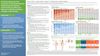 March 2026 in “SKIN The Journal of Cutaneous Medicine”
 This study demonstrated that litifilimab significantly reduced disease activity in cutaneous lupus erythematosus by Week 16, with improvements most notable in sunlight-exposed skin areas.
 17 citations
,
April 2004 in “Acta Clinica Belgica”
17 citations
,
April 2004 in “Acta Clinica Belgica” This study found that ultraviolet light-enhanced visualization can detect subtle skin changes linked to carotene and vitamin A deficiency, which improved with dietary correction in deficient individuals.
 38 citations
,
January 2023 in “International Journal of Medical Sciences”
38 citations
,
January 2023 in “International Journal of Medical Sciences” This review discusses the potential of repeated low-level red-light therapy to inhibit myopia progression through metabolic effects, highlighting its molecular and cellular impact, but reports no new clinical results.
4 citations
,
September 2021 in “Sensors” In this study, LED therapy for eyebrow loss in older females with frontal fibrosing alopecia significantly increased eyebrow hair count after 10 treatments and maintained improvement at 6 months, indicating it could be a promising and well-tolerated treatment option.
30 citations
,
May 2019 in “Journal of the European Academy of Dermatology and Venereology”  April 2018 in “The journal of investigative dermatology/Journal of investigative dermatology”
 This study found that in a mouse model of Focal Dermal Hypoplasia, treatment with lithium carbonate improved skin disease symptoms compared to controls, though disease severity varied and posed interpretation challenges.
 9 citations
,
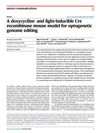
October 2022 in “Nature Communications”
9 citations
,
October 2022 in “Nature Communications” In this study, researchers developed a new photoactivatable Cre recombinase mouse model, DiLiCre, which allows precise light-induced genetic modifications and cell tracing, demonstrating its effectiveness for advancing biological and biomedical research.
13 citations
,
June 2014 in “Molecular therapy” This study found that a lentiviral array of reporters can identify lineage-specific promoters and pathways in mesenchymal stem cell differentiation, aiding in the prediction of signaling pathway effects.
54 citations
,
November 2014 in “JEADV. Journal of the European Academy of Dermatology and Venereology/Journal of the European Academy of Dermatology and Venereology” This study found that combining low-fluence Q-switched Nd: YAG laser and intense pulsed light led to faster and more effective melasma treatment compared to using the laser alone, though recurrence still occurred.
18 citations
,
May 2022 in “Stem Cell Research & Therapy” This study found that irradiating human adipose-derived stem cells with green OLEDs enhanced their wound healing capability and increased cell proliferation, migration, and adhesion in preclinical models.
February 2023 in “Default Digital Object Group” This study demonstrated that a single multimode fiber can be used for single-shot wide-field reflectance imaging, achieving high correlation with the ground truth and enabling real-time microendoscopy at up to 180 frames per second.
19 citations
,
December 2008 in “Arthritis Care & Research” This study found that the decision board is a reliable and valid tool for assessing treatment preferences in systemic lupus erythematosus patients, who tended to favor oral medication due to concerns about side effects.
July 2026 in “Journal of Investigative Dermatology”  August 2025 in “Photodermatology Photoimmunology & Photomedicine”
 This review found that LED therapy, using light in specific wavelengths, may offer effective, non-invasive treatment options for various skin conditions, including acne, melasma, photoaging, and wound healing.
1 citations
,
June 2023 in “Journal of Visualized Experiments” This study introduces a customizable 3D-printed microscope stage insert for inverted confocal microscopes, improving accessibility and usability of intravital microscopy for observing cell dynamics in live mice.
November 2025 in “Informatica” This study introduces a novel image enhancement method that significantly improves the visual quality of low-light sports images by utilizing improved bilateral filtering and the CLAHE algorithm, achieving a 65.24% improvement in color and edge detail preservation compared to state-of-the-art methods on the LOL dataset.
 33 citations
,
January 2017 in “Annals of Dermatology”
33 citations
,
January 2017 in “Annals of Dermatology” This study suggests that LED light may promote the proliferation of human dermal papilla cells through the activation of specific signaling pathways.

This study introduced a new laser-only method called EKA for acne treatment, which is reported to be safe, painless, and heat-free, showing promising results for both acne and scar repair in initial sessions without combining with LED light.
 February 2025 in “Journal of Biophotonics”
 This study found that using dual-wavelength low-level laser therapy is more effective for hair regrowth in mice than single-wavelength treatment and significantly better than no treatment, based on 14 days of phototherapy with LED lights.
March 2017 in “Jurnal materi dan pembelajaran fisika” This review discusses applications of light diffraction in healthcare, highlighting its use in LASIK procedures, optogenetics, and measuring hair diameter, but reports no new results.
 1 citations
,
March 2006 in “Dermatologic Surgery”
1 citations
,
March 2006 in “Dermatologic Surgery” This study found that using polarized magnification during hair transplant procedures may ease recipient site creation and reduce transection of existing hair follicles, potentially maximizing hair density.
 February 2009 in “Journal of The American Academy of Dermatology”
 This study suggests that fractional infrared technology may effectively improve cervical skin laxity by enhancing dermal thickness without adverse effects in a small pilot group.
31 citations
,
September 2019 in “Acta Pharmacologica Sinica”  1 citations
,
October 2023 in “Skin research and technology”
1 citations
,
October 2023 in “Skin research and technology” This study found that line-field confocal optical coherence tomography effectively visualized key diagnostic features of classic lichen planopilaris in real time, suggesting its potential as a valuable diagnostic tool.
 37 citations
,
January 2023 in “Ophthalmology and Therapy”
37 citations
,
January 2023 in “Ophthalmology and Therapy” In this study, more than 25% of children experienced axial length shortening greater than 0.05 mm/year following repeated low-level red-light therapy.
 August 2018 in “Journal of Investigative Dermatology”
 This study found that combining optical clearing methods with light-sheet fluorescence microscopy allows detailed 3D visualization of normal and pathological human skin biopsies, revealing differences in epidermal thickness and volume.