 January 2017 in “Springer eBooks”
 This article reviews the classification, pathogenesis, and treatment options for cutaneous lupus erythematosus and reports no new clinical findings.
 73 citations
,
April 2010 in “Anais Brasileiros de Dermatologia”
73 citations
,
April 2010 in “Anais Brasileiros de Dermatologia” This study concluded that dermoscopy enhances the diagnostic capability for cicatricial alopecia beyond clinical inspection and identified novel dermoscopic features such as blue-grey dots.
3 citations
,
October 2011 This article discusses revised SLE classification criteria by the SLICC and reports no new research results.
July 2020 in “Zenodo (CERN European Organization for Nuclear Research)” This study found that cicatricial alopecia in the Libyan community primarily affects middle-aged individuals, especially women, highlighting the importance of early diagnosis and treatment to reduce its impact.
 March 2021 in “CRC Press eBooks”
 This chapter reviews trichoscopic features of primary cicatricial alopecias, particularly lichen planopilaris and frontal fibrosing alopecia, and reports no new results.
 1 citations
,
December 2022 in “Pediatric dermatology”
1 citations
,
December 2022 in “Pediatric dermatology” This case report highlighted an instance of lichen spinulosus emerging as a new cutaneous sequela in a boy following toxic epidermal necrolysis, responding to treatment with ammonium lactate.
 January 2024 in “Revista Dermatológica Centro Uraga”
 This case report describes a 68-year-old woman diagnosed with chronic cutaneous lupus, characterized by irregular plaques with distinct pigmentation and scarring alopecia, confirmed through histopathology revealing specific skin changes.
 May 2014 in “Clinical and Experimental Dermatology”
 A 70-year-old woman with a rare skin condition improved after treatment with topical steroids and acitretin.

This study found that low-intensity light therapy improved quality of life related to emotional, psychosocial, and symptom domains in individuals with androgenic alopecia, with a greater impact observed in women.
 April 2026 in “International Journal of Research in Dermatology”
 This meta-analysis found that laser-based therapies showed promising clinical benefits in treating scarring alopecias, such as disease stabilization and symptom improvement, but highlighted the need for high-quality randomized controlled trials due to serious risk of bias and methodological limitations in existing studies.
1 citations
,
September 2024 in “Life” This study reports three cases of alopecia areata resistant to corticosteroids that improved after 16 weeks of treatment with a combination of fractional carbon dioxide laser and topical tacrolimus, suggesting a potential new therapeutic option that requires further confirmation.
1 citations
,
February 2025 in “Journal of Drugs in Dermatology” This report describes two cases of cutaneous lupus erythematosus mimicking alopecia areata, highlighting the importance of considering CLE in the diagnosis of patchy hair loss to prevent scarring alopecia.
 1 citations
,
January 2020 in “ARC Journal of Dermatology”
1 citations
,
January 2020 in “ARC Journal of Dermatology” This study observed that five cases of primary cicatricial alopecia showed an excellent response to a combination of oral zinc and long-pulsed Nd:YAG 1064-nm laser treatment, suggesting this approach may be beneficial for certain types of this condition.
 28 citations
,
August 2015 in “Journal of functional biomaterials”
28 citations
,
August 2015 in “Journal of functional biomaterials” This review examines cell-based therapies for limbal stem cell deficiency, highlighting epidermal and hair follicle-derived stem cells as promising candidates for future clinical trials, but reports no new clinical findings.

This study retrospectively analyzed 945 patients with head and neck cSCC to identify risk factors for recurrences, reporting treatment modality, tumor characteristics, and patient factors such as immunosuppression as strong predictors for loco-regional recurrences.
4350 citations
,
May 2012 in “Arthritis & Rheumatism” This study found that the new SLICC classification criteria for systemic lupus erythematosus were more sensitive and resulted in fewer misclassifications than the current ACR criteria, although they had lower specificity.
 8 citations
,
April 2022 in “The journal of investigative dermatology/Journal of investigative dermatology”
8 citations
,
April 2022 in “The journal of investigative dermatology/Journal of investigative dermatology” This study identified biallelic variants in the LSS gene as a possible genetic cause of palmoplantar keratoderma-congenital alopecia syndrome type 2, highlighting the role of cholesterol synthesis in skin cornification.
5 citations
,
November 2023 in “Journal of Investigative Dermatology” People with primary cicatricial alopecia have a higher risk of heart disease and stroke.
 July 2021 in “Open access journal of biomedical science”
 This study evaluated the effectiveness of a lotion containing Larrea divaricata and Coffea arabica extracts in accelerating hair growth in women after chemotherapy, but it reports no results.
 47 citations
,
April 2016 in “Lasers in Surgery and Medicine”
47 citations
,
April 2016 in “Lasers in Surgery and Medicine” This review found that low-level laser therapy appears promising in improving hair regrowth and patient satisfaction in androgenetic alopecia, though results should be interpreted cautiously.
 January 2009 in “Elsevier eBooks”
 Low level laser therapy may help with hair loss.
 81 citations
,
July 2011 in “Lasers in Medical Science”
81 citations
,
July 2011 in “Lasers in Medical Science” This study found that using a low-level laser comb led to hair regrowth in a mouse model of alopecia areata, while sham-treated mice showed no hair regrowth.
 February 2025 in “PubMed”
 This case series found that trichoscopy and biopsy of the scalp in individuals with skin of color identified concurrent lichen planopilaris and female androgenic alopecia, highlighting the importance of comprehensive scalp evaluation to ensure accurate diagnosis and effective treatment.
 2 citations
,
April 2022 in “Clinical, cosmetic and investigational dermatology”
2 citations
,
April 2022 in “Clinical, cosmetic and investigational dermatology” In this case series, four African American women with treatment-resistant central centrifugal cicatricial alopecia showed scalp itch relief and significant hair regrowth after using a new botanical formula for 8 weeks to 1 year, with no adverse effects reported.
 January 2018 in “Skin appendage disorders”
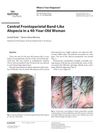
 A woman's hair loss was correctly diagnosed as Lichen planopilaris after initial misdiagnosis, highlighting the usefulness of trichoscopy in diagnosing hair disorders.
 15 citations
,
November 2012 in “International Journal of Dermatology”
15 citations
,
November 2012 in “International Journal of Dermatology” This case series observed a potential familial link in central centrifugal cicatricial alopecia (CCCA), suggesting a genetic predisposition that may be worsened by hair grooming practices.
 January 2011 in “Journal of The American Academy of Dermatology”
 Two patients had a rare combination of red skin spots and white scaly skin lesions not on the genitals.
 August 2023 in “JAAD international”
 This study, conducted at Montefiore Medical Center, reports that central centrifugal cicatricial alopecia predominantly affects middle-aged Black or African American women, often presenting without symptoms, which may delay diagnosis and treatment. The study underscores the need for a specific ICD-10 code for better epidemiological studies.
 32 citations
,
September 2016 in “Dermatologic Surgery”
32 citations
,
September 2016 in “Dermatologic Surgery” This review discusses the current evidence and highlights gaps in research needed for the wider acceptance of low-level laser therapy as a treatment for hair loss; no new clinical results are provided.
 June 2011 in “CRC Press eBooks”
 Low-Level Laser Therapy can stimulate healing and cell function, potentially leading to wider medical use.