 3 citations
,
September 2024 in “BMC Oral Health”
3 citations
,
September 2024 in “BMC Oral Health” This study found that low-level laser therapy effectively reduced relapse rates, while functional appliances did not; combining them offered no additional benefits.
 1 citations
,
June 2024 in “JMIR Dermatology”
1 citations
,
June 2024 in “JMIR Dermatology” This study found that 675 nm laser treatment improved androgenetic alopecia in Indian patients, resulting in significant increases in hair count, density, and thickness after 14 sessions, enhancing the anagen phase and other hair-related parameters.
 June 2026 in “Aesthetic Cosmetology and Medicine”
 This study reported that patients with mild to detectable androgenetic alopecia showed subjective improvement and a favorable safety profile after receiving a polynucleotide-based intradermal gel, with only one case of mild injection-site erythema noted among 60 participants over three months.
In this study, 14 sessions of 675 nm laser stimulation significantly improved hair count, density, and thickness in Indian patients with androgenetic alopecia, with an increase of around 17% in hair parameters over four months.
 April 2022 in “Research Square (Research Square)”
 In this study, both topical clobetasol propionate and fractional Er: YAG laser followed by topical steroids demonstrated significant improvement in patients with alopecia areata, but the combined laser and steroid treatment was found to be more effective and safe.
 77 citations
,
August 2025 in “Signal Transduction and Targeted Therapy”
77 citations
,
August 2025 in “Signal Transduction and Targeted Therapy” This review highlights the potential of extracellular vesicle-based therapies for treating various diseases, but it also notes challenges like the lack of regulatory guidelines that hinder their clinical development.
 343 citations
,
December 2008 in “Endocrine Reviews”
343 citations
,
December 2008 in “Endocrine Reviews” This review discusses the various evidence-based and potential applications of metformin in treating and preventing symptoms and complications associated with polycystic ovary syndrome but reports no new clinical results.
 41 citations
,
March 2010 in “Psychology Research and Behavior Management”
41 citations
,
March 2010 in “Psychology Research and Behavior Management” This review discusses the complex interplay between the nervous system and skin conditions, highlighting various treatment strategies, but reports no new research findings.
 21 citations
,
April 2015 in “Psychology Research and Behavior Management”
21 citations
,
April 2015 in “Psychology Research and Behavior Management” This review evaluates various cognitive-behavioral interventions for trichotillomania but does not report new clinical findings, highlighting the need for further research on their efficacy.
 4 citations
,
November 2022 in “Journal of clinical and translational research”
4 citations
,
November 2022 in “Journal of clinical and translational research” This systematic review found that chitosan-based wound therapy may accelerate wound healing by reducing inflammation and modulating immune response, but notes limited clinical trials to date.
 3 citations
,
May 2024 in “Cureus”
3 citations
,
May 2024 in “Cureus” This study found that LAHR significantly improves the quality of life in the short term for women with PCOS, but underscores a need for further research to develop long-term treatment strategies.
 2 citations
,
March 2021 in “Dermatologic Therapy”
2 citations
,
March 2021 in “Dermatologic Therapy” This study found that low-level laser therapy significantly increased hair counts in women with female pattern hair loss but not in those with telogen effluvium, without serious adverse events.
 2 citations
,
January 2021 in “JAAD Case Reports”
2 citations
,
January 2021 in “JAAD Case Reports” This article reviews potential causes for angiolymphoid hyperplasia with eosinophilia, a benign vascular tumor often found in middle-aged adults, and reports no new clinical findings.
 April 2026 in “International Journal of Nanomedicine”
 This review explores quercetin's potential in multifunctional theranostic systems, highlighting its bioactivity and the challenges of improving its clinical application through innovative strategies like nanoencapsulation, while noting that research in this area is underdeveloped.
 February 2026 in “Frontiers in Bioengineering and Biotechnology”
 This review discusses the development of liposome-based delivery systems to enhance skin wound healing, highlighting their advantages and potential applications, but reports no new clinical results.
In this study, researchers found that an injectable solution of low-molecular-weight hyaluronic acid and amino acids significantly improved skin rejuvenation and elasticity in the labia majora of post-menopausal women over 12 weeks, with a reported 25% or greater aesthetic improvement and high patient satisfaction.
 January 2023 in “International Journal of Pharmaceutical Research and Development”
 This review discusses alopecia, its pathophysiology, nanotechnology-based drug delivery systems, and related quality of life issues, without reporting new clinical results.
 January 2021 in “Indian Journal of Pharmaceutical Sciences”
 This study found that diode and alexandrite laser hair removal systems did not significantly impact thyroid hormone concentrations, hemoglobin, or bilirubin levels in women undergoing facial hair treatment.
This review discusses cyclosporine A's mechanisms of action and side effects compared to tacrolimus in renal transplantation, but it reports no new experimental results; the authors highlight implications for cardiovascular risk management.
 November 2003 in “Aap Grand Rounds”
 Parents often claim to use more home safety measures than they actually do.
 136 citations
,
March 1996 in “Journal of the American Chemical Society”
136 citations
,
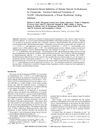
March 1996 in “Journal of the American Chemical Society” This study explains finasteride's high potency and specificity as a mechanism-based inhibitor for treating benign prostatic hyperplasia by detailing its interaction with human type 2 steroid 5α-reductase.
 January 2020 in “Der Pharmacia Lettre”
 This review discusses natural remedies and nanoparticle formulations for alopecia management and reports no new clinical results, emphasizing potential benefits of herbal treatments over synthetic therapies.
 April 2026 in “International Journal of Clinical Case Reports and Reviews”
 In this preclinical study, researchers developed and evaluated a new non-invasive laser system designed for personalized medical use, showing its potential for chronic disease management and adjunctive fat reduction by offering enhanced treatment precision and adaptability over existing devices.
 January 2026 in “Nature Communications”
 This study presented a new wearable textile-based device with near-infrared OLEDs that significantly reduced cell aging markers and improved cell migration in vitro, suggesting it as a promising, non-invasive phototherapy option for hair follicle treatment and hair-loss management.
 65 citations
,
January 2013 in “Cochrane library”
65 citations
,
January 2013 in “Cochrane library” This review found that infliximab, golimumab, and some forms of radiotherapy significantly improved nail psoriasis compared to controls, although they could have serious adverse effects and are not commonly used specifically for nail issues.
 12 citations
,
January 2010 in “Pediatric Health”
12 citations
,
January 2010 in “Pediatric Health” This review discusses treatment strategies for PCOS, focusing on using insulin-sensitizing medications alongside weight reduction and exercise to improve hyperinsulinemia and hyperandrogenism, and reports no new results.
 2 citations
,
January 2018 in “Recent clinical techniques, results, and research in wounds”
2 citations
,
January 2018 in “Recent clinical techniques, results, and research in wounds” This review discusses the effects of low-level laser therapy in various biological processes for wound healing and tissue repair and reports no new results.
 July 2023 in “Journal of lasers in medical sciences”
 This case report describes the first use of photobiomodulation therapy with a continuous wave red laser (660 nm) as monotherapy for alopecia areata, resulting in significant hair regrowth within 7 days, though further research is needed for conclusive evidence.
 158 citations
,
January 2015 in “Artificial Intelligence in Medicine”
158 citations
,
January 2015 in “Artificial Intelligence in Medicine” This study found that DrugNet, a network-based prioritization method, effectively improves drug repositioning tasks, achieving high performance in validation tests and clinical trial comparisons.
 54 citations
,
October 2019 in “Cochrane library”
54 citations
,
October 2019 in “Cochrane library” This study found low- to very low-quality evidence suggesting that several pharmacological treatments, including alpha blockers and antibiotics, may reduce prostatitis symptoms without significantly increasing adverse events in the short term, although more rigorous trials are needed.