2 citations
,
November 2024 in “Wildlife Society Bulletin” The researchers found that combining permethrin (44%) and fluralaner effectively reduced tick load in moose calves, as indicated by less severe hair loss, compared to untreated calves, while topical permethrin (5%) alone had no clear effect on tick load, body mass, or hematocrit.
 2 citations
,
January 2023 in “Pharmaceuticals”
2 citations
,
January 2023 in “Pharmaceuticals” This study found that in male mice, microglial changes due to a Parkinson's-like lesion were influenced by sex hormones, with dutasteride treatment preventing some effects.
1 citations
,
July 2022 in “Frontiers in Pharmacology” This study found that dutasteride may help prevent enteric neuronal damage in an animal model of Parkinson's disease, highlighting its potential for drug repurposing to address neuroinflammation.
 August 2025 in “Journal of Pure and Applied Microbiology”
 This review discusses various therapeutic properties of bee venom, including its potential against cancer, infections, and inflammatory diseases, but notes limitations in clinical application due to variability and safety concerns, calling for further research.
 August 2024 in “Current Protocols”
 In this study, researchers described protocols using C3H/HeJ mice to reliably induce alopecia areata through full-thickness skin grafts or adoptive transfer of cultured lymphoid cells, offering valuable models for studying the disease and testing new drug therapies.
December 2023 in “Indian Journal of Endocrinology and Metabolism” In this case report from People's College of Medical Sciences, a 20-year-old man initially misdiagnosed with Addison's disease was ultimately found to have strongyloidiasis, with his symptoms and weight loss improving after antihelminthic treatment.
733 citations
,
September 2009 in “Journal of Cell Science” This article reviews the complex process of wound repair, emphasizing recent microarray studies and proteomic analyses, but reports no new clinical results.
57 citations
,
May 2021 in “Molecules” This review explores the chemical composition and biological activities of essential oils from selected aromatic roots, highlighting their potential for various industries, though more research is needed to standardize their bioactive components.
16 citations
,
March 2021 in “EvoDevo” This study found that zebrafish and sticklebacks, despite differences in their tooth regeneration structures, share a similar genetic program during tooth regeneration, suggesting a conserved "successional dental epithelium" in vertebrates.
8 citations
,
July 2024 in “Journal of Advanced Research” In this study, researchers report that CDK inhibitors like palbociclib and ribociclib, initially developed for cancer therapy, show potential in treating neutrophilic inflammation-related conditions such as ARDS and psoriasis, although their clinical repurposing requires further research on safety and dose adjustments.
 7 citations
,
August 2022 in “Experimental dermatology”
7 citations
,
August 2022 in “Experimental dermatology” This review discusses the role of YAP/TAZ proteins in skin cancer physiology and tumorigenesis, and the potential of targeting these proteins in skin cancer treatments, but presents no new experimental findings.
 6 citations
,
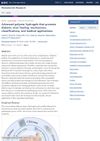
February 2023 in “Biomaterials Research”
6 citations
,
February 2023 in “Biomaterials Research” This review explores the different types of hydrogels used to repair diabetic ulcers, the mechanisms involved, and the limitations in developing these technologies for clinical use, but it reports no new clinical results.
3 citations
,
April 2025 in “International Journal of Molecular Sciences” This review evaluates the anti-aging properties of TSG from He shou wu, finding it may protect against age-related diseases through multiple mechanisms, though further research is needed for clinical application.
3 citations
,
October 2024 in “International Journal of Molecular Sciences” This review highlights the regenerative abilities of *Xenopus laevis*, focusing on how tadpoles regrow complex tail structures and the cellular and molecular mechanisms behind this. It underscores *X. laevis* as a valuable model for understanding regeneration, with insights potentially advancing regenerative medicine.
1 citations
,
January 2014 in “Assiut Veterinary Medical Journal/Maǧallaẗ Asyūṭ al-ṭibiyyaẗ al-baytariyyaẗ” This study in Aswan governorate reported that emaciated cattle showed decreased blood cell counts and serum minerals, as well as elevated liver enzymes, possibly associated with parasitic infections.

This review synthesizes current knowledge on choriogenesis, the final stage of oogenesis in insects, by exploring the role of follicle cells, regulatory mechanisms of gene expression, and the biochemical makeup of the eggshell, while also highlighting structural diversity and adaptations across insect species.
 February 2026 in “Phycology”
 This review highlights the potential of microalgae as sustainable sources for nutraceuticals and cosmeceuticals, emphasizing their applications in functional foods, dietary supplements, and cosmetics for roles such as anti-aging and photoprotection in alignment with sustainability principles.
January 2026 in “International Journal of Molecular Sciences” This review discusses the diverse industrial applications of hemp beyond traditional fiber uses, highlighting its phytochemical components with antioxidant and antimicrobial properties that are explored in agrochemicals, cosmetics, and food sectors.

In this study on Drosophila embryos, researchers observed that the Slit/Robo signaling pathway is crucial for the collective migration and proper positioning of Posterior Signaling Center cells within the hematopoietic niche, highlighting its role in niche assembly and cellular organization.
 April 2024 in “Archives of toxicology”
 Certain substances can protect against ear damage from some antibiotics in zebrafish.
182 citations
,
December 2021 in “Cosmetics” This literature review discusses recent advances in using essential oils and their components in cosmetic products, highlighting their diverse benefits and challenges in formulation due to varying chemical profiles, as well as addressing safety considerations for these natural ingredients.
61 citations
,
June 2019 in “BMC Genomics” This study explored the expression and potential functions of long non-coding RNAs in the skin pigmentation of Koi carp, revealing their involvement in pigmentation and differentiation mechanisms.
35 citations
,
February 2023 in “Journal of Clinical Medicine” This review discusses treatments for demodicosis in adults and children and provides no new clinical results; the authors emphasize the need for careful diagnosis and therapy selection.
34 citations
,
February 2015 in “Frontiers in Cellular Neuroscience” This study identified new genes and compounds affecting hair cell survival during ototoxin exposure using the zebrafish model, potentially aiding in understanding and preventing hearing loss and balance disorders in humans.
26 citations
,
September 2014 in “Neuroscience Letters” This study found that metformin did not prevent gentamicin-induced hearing loss and even worsened auditory threshold shifts and caused adverse effects at higher doses in guinea pigs.
24 citations
,
August 2022 in “Immunity” This study found that control of Demodex mite colonization in mice required skin ILC2s and IL-13, highlighting their role in maintaining HF integrity and limiting mite overgrowth.
 23 citations
,
November 2018 in “npj Regenerative Medicine”
23 citations
,
November 2018 in “npj Regenerative Medicine” This review discusses the similarities and differences in wound healing between non-sterile skin wounds and ischemic injuries to internal organs, emphasizing regenerative capabilities observed in zebrafish models, with no new clinical results reported.
 21 citations
,
November 2021 in “Biomolecules”
21 citations
,
November 2021 in “Biomolecules” This review compiles information on traditional uses, phytoconstituents, and biological activities of Eclipta prostrata but reports no new experimental results; the authors call for more studies to understand its pharmacological mechanisms.
17 citations
,
September 2024 in “Molecules” This literature review compiles and analyzes current research on turmeric essential oil's active compounds, reporting their potential therapeutic applications across various medical conditions due to their unique pharmacological profiles and absence of toxicity.
17 citations
,
November 2000 in “Journal of Investigative Dermatology” ZPK helps skin cells mature and may affect skin health.