Linalool in personal care products may worsen frontal fibrosing alopecia by damaging hair follicle stem cells and triggering harmful immune responses.
3 citations
,
October 1993 in “Endocrinology” In this study, finasteride inhibited progesterone synthesis in mouse-derived MA-10 Leydig tumor cells by blocking cholesterol side-chain cleavage, but human and rat cells showed minimal sensitivity.
 18 citations
,
January 2002 in “Chemical & pharmaceutical bulletin/Chemical and pharmaceutical bulletin”
18 citations
,
January 2002 in “Chemical & pharmaceutical bulletin/Chemical and pharmaceutical bulletin” This study found that several new pregnane derivatives, especially steroids 16 and 19, demonstrated higher antiandrogenic activity on male hamster models than the commonly used finasteride.
5 citations
,
November 2015 in “Journal of Enzyme Inhibition and Medicinal Chemistry” This study found that aliphatic ester moieties in 16-formyl-17-methoxy dehydroepiandrosterone derivatives increased their potency as 5α-reductase type 2 inhibitors in vitro compared to finasteride.
15 citations
,
June 2023 in “Journal of Microbiology and Biotechnology” In this study, researchers found that an ethyl acetate extract of the green microalga Scenedesmus deserticola significantly increased the viability of human dermal fibroblasts by over 20% compared to a control and identified a potent anti-UV compound, loliolide, through further fractionation.
March 2019 in “Reactions Weekly” January 2018 in “Journal of analytical, bioanalytical and separation techniques”  January 2021 in “Social Science Research Network”
 This study suggests that a nanostructured lipid carrier formulation of minoxidil and latanoprost may effectively target hair follicles and enhance drug penetration for alopecia treatment.
 5 citations
,
December 2011 in “Drug Research”
5 citations
,
December 2011 in “Drug Research” This study found that cortexolone 17α-propionate showed strong topical antiandrogenic activity, outperforming progesterone and several known antiandrogens, but lacked systemic antiandrogenic effects in animal models.
 162 citations
,
August 2002 in “Survey of Ophthalmology”
162 citations
,
August 2002 in “Survey of Ophthalmology” This study found that latanoprost induces significant growth and pigmentation of lashes and ancillary hairs, with effects mirroring both brief and chronic treatments observed in patients and animal models.
 37 citations
,
January 1980 in “PubMed”
37 citations
,
January 1980 in “PubMed” This study found that topical hair lotions with 17 alpha-estradiol may reduce telogen hair loss in patients with androgenetic alopecia, though they did not lead to new hair regrowth.
2 citations
,
March 2022 in “Dermatologic Therapy” This study found that using topical latanoprost 0.005% solution significantly increased hair density and regrowth in patients with scalp alopecia areata over 12 weeks, although it did not significantly reduce hair loss area compared to the placebo.
 July 2024 in “International Journal of Medical Arts”
 In this study, both topical minoxidil and latanoprost were found to improve dermoscopic features of alopecia areata, with latanoprost showing superior effectiveness; minor side effects included erythema and itching.
 4 citations
,
February 2019 in “PubMed”
4 citations
,
February 2019 in “PubMed” This study found that cortexolone 17α-propionate (clascoterone) effectively inhibited androgen receptor-regulated transcription and IL-6 synthesis in scalp cells, potentially making it a promising candidate for topical treatment of androgenetic alopecia.
 1 citations
,
April 2006 in “International Journal of Oncology”
1 citations
,
April 2006 in “International Journal of Oncology” In this study, lysocellin induced G1 phase arrest in human osteosarcoma cells, but diminished the cytotoxic efficacy of etoposide, while its derivative alopestatin may reduce etoposide-induced alopecia in a rat model.
12 citations
,
February 2023 in “Applied and Environmental Microbiology” This study reported that structure-guided engineering of CYP154C2 mutants significantly improved the 2α-hydroxylation of androstenedione and testosterone, with enhanced conversion efficiency and substrate selectivity compared to the wild-type enzyme.
 December 1998 in “Acta Crystallographica Section C-crystal Structure Communications”
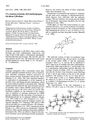
 This study describes the molecular conformation and intermolecular interactions in the crystalline structure of the compound C24H31BrO4.
 32 citations
,
October 2003
32 citations
,
October 2003 This review reports that 100 mg/day spironolactone improved hair growth more than placebo and was more effective in reducing hair growth than finasteride and low-dose cyproterone acetate, but its effectiveness for acne remains unclear due to small sample sizes.

This invention reports piperazine derivatives as potent inhibitors of type 3 17β-hydroxysteroid dehydrogenase, suggesting potential therapeutic applications in treating prostate cancer, acne, and androgenic alopecia.
 July 2026 in “Pharmacological Reports”
 In this pilot study, topical latanoprost acid was observed to increase hair count and improve hair follicle structure in women with androgenetic alopecia, with no serious adverse events, suggesting potential for further investigation to confirm its efficacy and safety.
January 2020 in “Journal of the Brazilian Chemical Society” This study suggests that using nanostructured lipid carriers may improve the targeting of 17-α-estradiol in treating alopecia by improving skin penetration and stability.
103 citations
,
April 2005 in “Experimental dermatology” This study found that PGF2alpha analogues and PGE2 stimulated hair follicle activity in mice, with PGF2alpha analogues also linked to potential side effects like poliosis when used as eye treatments.
15 citations
,
July 2022 in “Nano Research” This study suggests that using cholesterol-free liposomes, specifically PPD-Lip, as a delivery system with dutasteride may enhance the treatment of androgenetic alopecia by promoting hair regrowth in mice models.
December 2016 in “University of Birmingham Institutional Research Archive (University of Birmingham)” This study found that manipulating 5αR2 activity in human hepatocytes in vitro can regulate lipogenesis, with potential clinical implications for patients taking 5αR inhibitors.

This study evaluated the stability of multiple active ingredients in TrichoSol™ for use in alopecia treatments, finding varying stability durations at room temperature—up to 180 days for some ingredients—supporting its use as a compounding vehicle in personalized therapies.
1 citations
,
April 2022 in “Clinical Cosmetic and Investigational Dermatology” In this study, a case of lichen amyloidosis on the scalp significantly improved with a 2-month topical treatment using clobetasol propionate/all-trans retinoic acid ointment.
 July 2013 in “Journal of clinical & experimental dermatology research”
 This study found that prototype right heart circulatory assist devices significantly improved hemodynamics and reduced pulmonary vascular resistances in piglet models of acute hemodynamic shock.
 December 2025 in “PubMed”
 In this study, researchers found that a propylene glycol-free and alcohol-reduced topical foam containing minoxidil and finasteride remained chemically, physically, and microbially stable for 180 days when stored properly at room temperature in light-resistant containers.