3 citations
,
August 2018 in “Journal of Structural Biology” KAP8.1 protein is crucial for hair structure and interacts with keratin 85.
52 citations
,
February 2005 in “Biopolymers” In this study, chemical treatments during permanent hair straightening were found to randomize proteins in the cortex, aiding in the reconnection of disulfide bonds during oxidation.
82 citations
,
March 1992 in “Journal of Investigative Dermatology” July 2024 in “Journal of Investigative Dermatology” In these two clinical trials, DS-2325a, a KLK5 inhibitor, was found to be generally safe and well tolerated in healthy volunteers, with mild and non-serious adverse events, suggesting its potential for further development as a treatment for Netherton Syndrome.
2 citations
,
March 2012 in “Hiroshima University Acedemic Information Repository (Hiroshima University)” This article discusses the emergence of "Kainar syndrome" among residents near a nuclear test site in Kazakhstan and names brucellosis combined with vitamin deficiency as the suspected cause, without attributing it to nuclear tests.
 13 citations
,
May 2016 in “International journal of biological macromolecules”
13 citations
,
May 2016 in “International journal of biological macromolecules” This study demonstrated that molecular dynamics simulations of keratin could effectively model the mechanical properties of hair, aligning well with experimental data, especially when conducted in vacuum conditions.
6 citations
,
January 2004 in “DNA Research” This study identified a nonsense mutation in the Sgkl gene as the cause of defective hair growth in a mutant mouse strain, implicating the SGKL signaling pathway in hair development.
1 citations
,
January 2018 in “International Journal of Trichology” This report discusses the characteristics of circle hairs, a type of body hair growth disorder, and emphasizes the value of trichoscopy for diagnosis.
69 citations
,
May 1997 in “Veterinary Pathology” This study found that the angora mouse mutation prolongs the anagen phase, resulting in excessively long hair and follicular abnormalities, without involving circulating hair cycle factors.
11 citations
,
January 2021 in “British Journal of Dermatology” This report describes a new case of syndromic ichthyosis caused by compound heterozygous mutations in AP1B1, detailing the associated clinical features and molecular consequences in the patient.
30 citations
,
November 2012 in “Proceedings of the Royal Society B Biological Sciences” This study found that the keratin matrix in mammalian hard α-keratins is crucial for maintaining stiffness in water by controlling intermediate filament hydration.
24 citations
,
February 2002 in “The journal of investigative dermatology/Journal of investigative dermatology” In this study, researchers identified two new keratin-associated proteins, hKAP1.6 and hKAP1.7, in human hair follicles, contributing to understanding hair fiber differentiation.
May 2010 in “Faculty Opinions – Post-Publication Peer Review of the Biomedical Literature” A mutation in the KRT74 gene causes woolly hair by affecting hair texture.
 April 2010 in “The Journal of Urology”
 This study found that ureteroileal anastomosis with direct intraluminal visualization had a 4.2% stricture rate, which compares favorably to other techniques with rates between 3.5% and 11.1%.
December 2025 in “Clinical Case Reports” In this study, researchers reported that dermoscopic examination of eyebrow hairs can help in the early diagnosis of Netherton syndrome in children by detecting trichorrhexis invaginata, facilitating prompt counseling and care while awaiting genetic test results.
3 citations
,
January 2010 in “Yearbook of Urology” January 2010 in “Yearbook of Urology” 35 citations
,
September 2003 in “Archives of dermatology” This study proposed that the tiger tail phenomenon in trichothiodystrophy hair is caused by regular undulations of hair fibers, altering the optical properties seen under polarized light.

This study in Gansu alpine fine-wool sheep identified two SNPs in the KRT71 gene that significantly affect wool length, with distinct expression patterns observed in hair follicles, suggesting KRT71 as a candidate gene for enhancing wool production traits.
86 citations
,
May 2002 in “Journal of Investigative Dermatology” This study characterized a new human keratin, hK6irs1, specifically found in the inner root sheath of hair follicles, which suggests its role in the structural integrity and guidance of growing hair shafts.
2 citations
,
May 2024 in “BMC Genomics” This study analyzed the genetics of the patchiness phenotype in New Zealand rabbits and found that the gene KRT82, with identified SNPs in its promoter, may serve as a potential biomarker for breeding these rabbits.
 3 citations
,
December 2007 in “Injury Extra”
3 citations
,
December 2007 in “Injury Extra” This article presents a case of limb tourniquet syndrome in an elderly patient with memory problems, emphasizing potential regional changes that can cause irreversible damage.
3 citations
,
January 2021 in “Veterinary dermatology” This study describes a rare form of congenital alopecia in domestic short hair cats, characterized by hair shaft defects and follicular dystrophy similar to those seen in certain mutant mouse strains.
1 citations
,
January 1988 in “Feminist studies” 40 citations
,
December 2010 in “Human Genetics” This chapter discusses the chemical changes and possible heat-induced hair damage from thermal straightening, as well as controversies surrounding the safety of keratin straightening treatments, but it reports no new clinical results.
 18 citations
,
February 2015 in “Acta Crystallographica Section D: Structural Biology”
18 citations
,
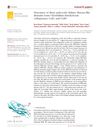
February 2015 in “Acta Crystallographica Section D: Structural Biology” This study reports that Ca 2+ binding alters the dynamics and surface properties of PKD-like domains in Clostridium histolyticum collagenases, enhancing their stability and potentially aiding in collagen-targeting vehicle development.
 3 citations
,
September 2022 in “The journal of investigative dermatology/Journal of investigative dermatology”
3 citations
,
September 2022 in “The journal of investigative dermatology/Journal of investigative dermatology” This study found that enhanced wound healing in oral mucosa involves a SOX2-regulated transcriptional network which includes increased expression of keratin K75, and interaction of K75 with the LINC complex may play a crucial role in promoting rapid wound repair.
 42 citations
,
October 2009 in “The journal of investigative dermatology/Journal of investigative dermatology”
42 citations
,
October 2009 in “The journal of investigative dermatology/Journal of investigative dermatology” In this study, researchers identified two distinct homozygous mutations in the KRT85 gene among consanguineous Pakistani families with pure hair and nail ectodermal dysplasia, highlighting variations in severity and potential impacts on the K85 protein function.
 4 citations
,
April 2019 in “Cosmetics”
4 citations
,
April 2019 in “Cosmetics” In this study, the bending stiffness of human hair was linked to the varying proportions of para-like versus ortho-like cortical cells within the hair fiber.