 11 citations
,
December 2014 in “Clinical Obstetrics and Gynecology”
11 citations
,
December 2014 in “Clinical Obstetrics and Gynecology” This article presents a systematic approach for obstetricians/gynecologists to diagnose and manage common types of nonscarring hair loss in women, reporting no new clinical results.
 9 citations
,
June 2019 in “Mycopathologia”
9 citations
,
June 2019 in “Mycopathologia” This study found that the presence of Malassezia fungi in the scalp's hairy roots was more pronounced in individuals with androgenetic alopecia than in healthy controls, suggesting a potential link to the condition.
 33 citations
,
June 2007 in “International Journal of Pharmaceutics”
33 citations
,
June 2007 in “International Journal of Pharmaceutics” This study found that the sebum partition coefficient (K(sebum)) for some drugs differs from the stratum corneum partition coefficient (K(sc)), indicating its importance for targeted drug delivery into hair and sebaceous follicles.
 14 citations
,
September 2015 in “Expert Opinion on Therapeutic Targets”
14 citations
,
September 2015 in “Expert Opinion on Therapeutic Targets” This review discusses potential treatments for androgen excess in polycystic ovary syndrome and reports no new findings, emphasizing the importance of individualized antiandrogenic management to minimize side effects.
 1 citations
,
January 2017 in “Elsevier eBooks”
1 citations
,
January 2017 in “Elsevier eBooks” This article reviews various hair growth and hair loss treatments, noting limited new developments since FDA-approved drugs but highlights recent cosmetic surgery and potential cell-based therapies; it reports no original findings.
 August 2025 in “MedScien”
 This study highlights factors contributing to increasing seborrheic alopecia among teenagers, including hormonal, lifestyle, and psychological influences, and suggests integrated treatment strategies including medication, lifestyle adjustments, and psychological interventions.
 July 2024 in “Forum Dermatologicum”
 This review evaluates various topical treatments for androgenetic alopecia but does not provide new clinical findings, emphasizing the need for selecting therapies with limited systemic side effects.
This study found that an herbal extract from Marking nuts, when compared to a standard drug, effectively inhibited the dandruff-causing organism Malassezia furfur and promoted hair growth on mice, suggesting potential use for dandruff treatment and hair rejuvenation.
 9 citations
,
October 2013 in “Pediatric dermatology”
9 citations
,
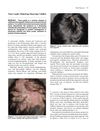
October 2013 in “Pediatric dermatology” This study highlights a dissecting cellulitis-like presentation of tinea capitis in children that should be identified to ensure correct diagnosis and treatment to prevent scarring alopecia.
 1 citations
,
January 2015 in “Journal of Aesthetic & Reconstructive Surgery”
1 citations
,
January 2015 in “Journal of Aesthetic & Reconstructive Surgery” This review discusses techniques for harvesting follicular units, medical treatments for androgenetic alopecia, and potential future advancements in hair restoration therapy, but it reports no new clinical results.
 March 2022 in “International journal of pharmaceutical sciences review and research”
 This review examines treatment options for PCOS, highlighting the importance of managing symptoms and patient counseling, and reports no new clinical results.
 269 citations
,
August 2002 in “Journal of The American Academy of Dermatology”
269 citations
,
August 2002 in “Journal of The American Academy of Dermatology” This study found that 5% topical minoxidil significantly increased hair regrowth and improved psychosocial perceptions of hair loss in men with androgenetic alopecia compared to 2% topical minoxidil and placebo over 48 weeks.
84 citations
,
January 1987 in “The Pediatric Infectious Disease Journal” This study found that griseofulvin cleared tinea capitis more quickly than ketoconazole in children, with faster sterile culture and complete scalp clearing times.
1 citations
,
November 2005 in “PubMed” This study found that continuous itraconazole therapy was more effective than pulse therapy for treating tinea capitis caused by Microsporum ferrugineum, with a higher cumulative cure rate and no significant adverse effects.
 December 2024 in “International Journal For Multidisciplinary Research”
 This study found that monotherapy and topical medications are primarily used to treat pediatric skin diseases, with a variety of drugs prescribed indicating the complexity of these conditions.
25 citations
,
January 2019 in “Journal of Pharmacy And Bioallied Sciences” This study concluded that the formulated polyherbal shampoo is a chemical-free product with nourishing, conditioning, cleansing, and antimicrobial effects.
 1 citations
,
February 2017 in “MOJ bioequivalence & bioavailability”
1 citations
,
February 2017 in “MOJ bioequivalence & bioavailability” This review discusses recent advancements in understanding the pathophysiology of androgenetic alopecia and highlights the potential for multilateral topical therapies to improve treatment efficacy with fewer side effects; it reports no new clinical results.
 February 2025 in “Journal of Cosmetic Dermatology”
 This study examined the sensitization potential of common hair care products and found that certain ingredients, like cobalt chloride and nickel sulfate, frequently cause allergic reactions in individuals with hair diseases, providing essential insights for personalized treatment strategies.
 February 2022 in “Scientia Pharmaceutica”
 This study validated that six out of seven tested topical formulations for alopecia are compatible for 6-month use, suggesting they may be practical for compounding pharmacies.
8 citations
,
March 2010 in “Chinese medical journal/Chinese Medical Journal” This study found that antifungal therapy significantly reduced pustules in patients with refractory acne, indicating a potential role for Malassezia infection in such cases.
January 2026 in “Medicina” This study conducted among medical students in Saudi Arabia found a 37.2% prevalence of premature hair graying and associated it with smoking, a keto diet, hair coloring, and family history, while suggesting that lifestyle changes may reduce its impact.
 2 citations
,
May 2021 in “Journal of pharmaceutical and biomedical analysis”
2 citations
,
May 2021 in “Journal of pharmaceutical and biomedical analysis” This study utilized a UHPLC-HRMS method to identify eight active pharmaceutical ingredients, such as ketoconazole and minoxidil, in 26 out of 100 analyzed cosmetic products.
 April 2024 in “Scientific reports (Nature Publishing Group)”
 In this study, a combined rosemary and neem extract outperformed ketoconazole and minoxidil in treating dandruff, scalp disorders, and promoting hair growth, demonstrating potent antifungal and anti-inflammatory properties in lab settings.
 14 citations
,
September 2019 in “Eye”
14 citations
,
September 2019 in “Eye” This review discusses the evidence for using oral medications to treat central serous chorioretinopathy, highlighting eplerenone as having the most support despite a lack of robust efficacy across studies.
 February 1990 in “Journal of The American Academy of Dermatology”
 This review summarizes therapeutic advances reported in English-language literature from December 1987 to December 1988 and states no new clinical results.
4 citations
,
September 2024 in “Skin Research and Technology” This study provides a comprehensive overview of the current state and emerging trends in SD (seborrheic dermatitis) research, aimed at aiding clinical practitioners and researchers in understanding valuable insights for decision-making and identifying future research directions.
 April 2024 in “Communications biology”
 The researchers reported that disrupting ATRA signaling by deleting RDHE genes in the hair follicle led to altered hair follicle cycles, composition, and gene expression, indicating RDHEs' role in hair follicle signaling coordination.
 219 citations
,
March 2004 in “Journal of The American Academy of Dermatology”
219 citations
,
March 2004 in “Journal of The American Academy of Dermatology” In this 48-week trial, 5% topical minoxidil was more effective than both 2% minoxidil and placebo in promoting hair growth in women with female pattern hair loss, with notable improvements in nonvellus hair count and hair growth assessments.
 189 citations
,
March 2018 in “Human Reproduction Update”
189 citations
,
March 2018 in “Human Reproduction Update” This study reported that women with polycystic ovary syndrome had a higher prevalence of impaired glucose tolerance and type 2 diabetes, with variations influenced by ethnicity and obesity.
 18 citations
,
January 2003 in “Gynecological Endocrinology”
18 citations
,
January 2003 in “Gynecological Endocrinology” In this study, low-dose finasteride (2.5 mg/day) significantly reduced hirsutism scores in women over 12 months without significant hormonal changes or serious side effects.