 24 citations
,
June 2020 in “Industrial Crops and Products”
24 citations
,
June 2020 in “Industrial Crops and Products” This study reports that biomass activated carbon fibers derived from metaplexis japonica seed hair effectively adsorb methylene blue dye, demonstrating high capacity and rapid adsorption performance.
2 citations
,
September 2024 in “Journal of the American Academy of Dermatology” Deuruxolitinib is generally safe for treating alopecia areata.
The researchers reported that yak hair fibers undergo macromolecular conformational changes and partial slippage of macromolecules during stretching, confirming this as the main stretching mechanism when the stretching ratio is large.
 January 2025 in “Dermatology Reports”
 This case report describes a 61-year-old Italian man with a rare, localized variant of junctional epidermolysis bullosa linked to the R795X mutation in the COL17A1 gene, highlighting the importance of precise diagnosis for effective management of rare genetic disorders.
 6 citations
,
October 2011 in “International Journal of Pharmaceutical Sciences and Drug Research”
6 citations
,
October 2011 in “International Journal of Pharmaceutical Sciences and Drug Research” This study investigates the pharmacognostic properties of jojoba roots, focusing on microscopic characteristics, physico-chemical constants, fluorescence analysis, and preliminary phytochemical evaluation, but it does not report new clinical findings.
 12 citations
,
September 2010 in “Clothing and Textiles Research Journal”
12 citations
,
September 2010 in “Clothing and Textiles Research Journal” This preliminary study found that poplar seed hair fibers have promising properties for use as environmentally friendly, lightweight insulation, with similar thermal resistance to wool and polyester despite being slightly less effective than down.
 May 2025 in “International Journal Of Science Technology & Management”
 This study focused on developing a pomade called "Hyung Hair" made from rambutan leaf extract, which showed potential benefits such as reducing hair loss and slowing gray hair growth, with a feasibility analysis indicating the business's viability.
This study identified pectin in early immature durian fruits and found that pectin-oligosaccharides derived from them show stronger antioxidant and antiglycation activities, with potential applications in cosmetic products.
35 citations
,
January 2017 in “International Journal of Food Properties” This study observed that a peptide showed higher antioxidant and metal ion chelation activity compared to its encapsulated version cross-linked in calcium alginate beads.
July 2023 in “Zenodo (CERN European Organization for Nuclear Research)” This abstract acknowledges the distress of hair loss in women, highlighting its misunderstanding, without reporting any new research findings.
16 citations
,
January 1977 3 citations
,
September 2022 in “European Journal of Dermatology” This report identifies a novel splice-site variant in the LAMB3 gene linked to junctional epidermolysis bullosa, emphasizing the need for gene sequencing in diagnosing the disease.
 August 2022 in “International journal of research in pharmacy and chemistry”
 This review summarizes the chemical composition and pharmacological properties of Teak (Tectona grandis) but presents no new research findings, emphasizing its use in traditional medicine and therapeutic potentials.
 May 2020 in “Jurnal Penelitian Perawat Profesional”
 This literature review identified that katuk leaves, rich in vitamins and phenolic compounds, show potential in preventing hair loss by promoting hair growth, enhancing vascularity, and nourishing hair.
13 citations
,
November 2022 in “Journal of King Saud University - Science” This study found that Juniperus excelsa extracts significantly aided wound healing in mice, while olive water extracts were most effective for hair growth promotion.
 September 2025 in “Journal of Health Sciences”
 In this study, researchers developed an antioxidant hair tonic using Dipteryx odorata (cumaru) extract, aimed at treating scalp psoriasis, which could potentially improve quality of life for patients due to its natural anti-inflammatory and antioxidant properties.
March 2023 in “Zenodo (CERN European Organization for Nuclear Research)” 2 citations
,
September 2024 in “Journal of the American Academy of Dermatology” Deuruxolitinib significantly helps regrow scalp hair in adults with moderate to severe alopecia areata.
 2 citations
,
January 2024 in “Journal of Pharmacognosy and Phytochemistry”
2 citations
,
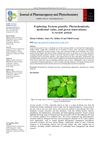
January 2024 in “Journal of Pharmacognosy and Phytochemistry” The study highlights Teak's (Tectona grandis) diverse applications beyond high-quality timber, emphasizing its bioactive compounds' pharmacological potential in cancer treatment and other uses across traditional medicine, cosmetics, and biodiesel production.
 3 citations
,
November 2021 in “Frontiers in Genetics”
3 citations
,
November 2021 in “Frontiers in Genetics” This study suggests that the CXCL8 gene may regulate cashmere fineness in Liaoning cashmere goats, providing new insights into the cellular mechanisms of cashmere growth and quality.
 3 citations
,
April 2023 in “Quality Assurance and Safety of Crops & Foods”
3 citations
,
April 2023 in “Quality Assurance and Safety of Crops & Foods” This study found that oil extracted from Prinsepia utilis seeds is physicochemically stable and suitable for use in manufacturing ketoconazole soap, which met quality control standards and may provide a cost-effective alternative to expensive additives in cosmetic and pharmaceutical applications.
1 citations
,
February 2023 in “Journal of Natural Fibers” This study found that Magra sheep with high-luster wool exhibited significantly higher expression of keratin genes, suggesting that increased keratin protein levels may be crucial for wool luster.
January 2011 in “Leather Science and Engineering” This study found that rabbit skin histology revealed changes in collagen and elastic fibers after soaking, dehairing, and tanning processes, impacting fiber tightness and fur removal.
January 2026 in “Frontiers in Animal Science” In this study, researchers assessed wool quality in sheep and found that the Gentile di Puglia breed, a Merino-derived Italian breed, exhibits finer wool through higher secondary follicle density compared to the non-merinized Sarda breed, suggesting its potential for sustainable wool production.
January 2020 in “한국미용학회지” This study found that incorporating Musa extracts in pretreatment products effectively mitigated hair damage during permanent wave application, closely maintaining hair thickness and tensile strength compared to untreated hair.

This study analyzed the phytochemical content of two Portulaca species and found that extracts from Portulaca oleracea L. and Portulaca grandiflora H. demonstrated suitable characteristics for hair tonic formulations, meeting Indonesian National Standards for cosmetic products.
 July 2023 in “Biodiversitas”
 In this study, researchers found that Sundanese mothers in a rural village in West Java frequently used 25 medicinal plant species, primarily from the Zingiberaceae family, during pregnancy, childbirth, and postpartum, with popular preparations including decoctions and cooking.
 8 citations
,
May 2024 in “PLoS Biology”
8 citations
,
May 2024 in “PLoS Biology” This study on feather pattern formation in chicken skin found that inhibiting gap junctional intercellular communication can lead to the emergence of new feather buds in specific spatial patterns, suggesting that GJIC may facilitate Turing-type periodic patterning by propagating inhibitory signals over long distances.
January 2022 in “JURNAL BIOSAINS” This study found that a hair tonic made with 10% cassava leaf extract in combination with rose water juice improved hair length growth in rabbits compared to a commercial product.
January 2025 in “Animal Science Journal” This study reported that the coat hairs of golden takin, living in harsh environments, have unique structural features compared to cattle, with overcoat hairs having continuous medullated tissue and undercoat hairs being finely crimped, potentially contributing to temperature regulation in cold conditions.