 January 2017 in “Hair transplant forum international”
 This study examined the effects of platelet-rich plasma (PRP) treatment on women with female androgenetic alopecia in a double-blind, placebo-controlled pilot trial, but specific results were not reported in the abstract.
39 citations
,
January 2006 in “Journal of Cosmetic and Laser Therapy” This study found that pneumatic skin flattening (PSF) significantly reduces pain and post-treatment erythema during high-energy IPL and laser hair removal while enhancing treatment efficacy.
 April 2022 in “The Egyptian Journal of Hospital Medicine”
 This review examines the use of platelet rich fibrin for treating post-acne scars and reports no new clinical results; it highlights that fibrin's matrix enables a prolonged release of growth factors.
 January 2024 in “Journal of dermatology and skin science”
 In this study, researchers found that applying topical aprepitant, which blocks substance P receptors, significantly reduced facial dermatitis and hair loss in rats experiencing erlotinib-induced skin side effects, highlighting the neurogenic inflammation's role and the protective effect of ROS inhibition.
4 citations
,
January 2023 in “bioRxiv (Cold Spring Harbor Laboratory)” This study identified the genes for pyochelin siderophore biosynthesis as a novel target regulated by the heme-responsive PrrH sRNA in Pseudomonas aeruginosa.
 45 citations
,
June 2004 in “Lasers in Medical Science”
45 citations
,
June 2004 in “Lasers in Medical Science” This study found that non-coherent intense pulsed light (IPL) treatment significantly reduced hair growth by about 80% in patients with skin type III-V without causing side effects.
 September 2009 in “European Urology Supplements”
 This study demonstrates that a new Adaptive Modulation and Coding method can improve control performance in Communication-Based Train Control systems using WLAN by reducing average delay through effective transmission mode selection.
 2 citations
,
February 2024 in “Journal of the European Academy of Dermatology and Venereology”
2 citations
,
February 2024 in “Journal of the European Academy of Dermatology and Venereology” This study resulted in a draft version of the Patient‐Reported Impact of Dermatological Diseases measure, PRIDD, which includes 27 items refined from patient consensus and is now undergoing psychometric testing.
 February 2023 in “Research Square (Research Square)”
 This study reports that a new mouse model with a CARD14 mutation successfully mimics key human PRP symptoms, and anti-IL-17A antibody significantly reduces these symptoms.
38 citations
,
January 2017 in “Mediators of Inflammation” This study found that platelet-rich growth factor significantly reduced the release of proinflammatory cytokines in an in vitro rheumatoid arthritis model.
15 citations
,
January 2008 in “PubMed” This article reviews considerations and requirements for performing laser hair removal and reports no new clinical results.
November 2017 in “DOAJ (DOAJ: Directory of Open Access Journals)” This study found an IFIS incidence rate of 3.18% among cataract surgeries in a Chinese hospital and identified reserpine, clozapine, and post-panretinal photocoagulation as new risk factors.
41 citations
,
April 2009 in “Journal of comparative neurology” In this study, researchers observed that P2X3-immunoreactive fibers extensively innervate the epidermis of rats, suggesting a primary role in detecting noxious stimuli in cutaneous tissue.
July 2015 in “International Society of Hair Restoration Surgery” This project by the International Society of Hair Restoration Surgery reviews best practices in hair restoration surgery and reports no new research findings.
January 2026 in “International Journal of Surgery Case Reports” This case series reports that home use of intense pulsed light devices may effectively reduce hair burden and prevent recurrence of pilonidal disease in patients unable to regularly attend clinic sessions.
 9 citations
,
July 2022 in “EMBO molecular medicine”
9 citations
,
July 2022 in “EMBO molecular medicine” This study found that targeting IL-6, IL-1, and CCR6 signaling pathways may effectively reduce irradiation-induced alopecia and dermatitis in radiotherapy patients.
September 2023 in “Journal of the American Academy of Dermatology” Recognizing IPPP is crucial to prevent misdiagnosis and unnecessary treatments.
6 citations
,
August 2024 in “The Laryngoscope” In this study, serial platelet-rich plasma injections improved voice quality and mucosal wave ratings in patients with vocal fold scar, with patient-reported outcomes showing a consistent positive trend.
 26 citations
,
June 2018 in “The journal of immunology/The Journal of immunology”
26 citations
,
June 2018 in “The journal of immunology/The Journal of immunology” This study demonstrated that AIRE-deficient rats exhibit key symptoms of APECED, making them a relevant model for exploring potential treatments.
This study found that a short-term treatment with all-trans retinoic acid may effectively stabilize platelet counts in idiopathic thrombocytopenic purpura patients experiencing fluctuations during thrombopoietin receptor agonist therapy.
July 2021 in “Plastic and reconstructive surgery. Global open” This study identified specific genes involved in radiation-induced fibrosis in skin, capsule, and muscle tissues of breast cancer patients, offering insights that may help improve mitigation strategies for these side effects.
 August 2021 in “International Journal of Dermatology and Venereology”
 This review discusses various potential applications of platelet-rich fibrin in dermatology, but reports no clinical results and highlights the need for standardized protocols.
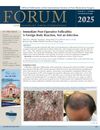 November 2025 in “International Society of Hair Restoration Surgery”
 This article reviews immediate post-operative folliculitis, emphasizing its self-limiting nature and differentiation from infective folliculitis, but it reports no new clinical findings.
177 citations
,
March 2018 in “International Journal of Molecular Sciences” This review discusses the role of mTOR kinase in pulmonary fibrosis and explores how mTOR inhibitors may help slow the progression of this condition, but it reports no new results.
 19 citations
,
May 2012 in “The journal of investigative dermatology/Journal of investigative dermatology”
19 citations
,
May 2012 in “The journal of investigative dermatology/Journal of investigative dermatology” This study found that mice lacking the type 3 IP(3) receptor in their hair follicles experienced repetitive hair loss and regrowth, indicating disrupted hair-cycle regulation potentially linked to specific signaling pathways.
 3 citations
,
June 2023 in “The journal of investigative dermatology/Journal of investigative dermatology”
3 citations
,
June 2023 in “The journal of investigative dermatology/Journal of investigative dermatology” This article discusses the clinical spectrum and pathobiology of radiotherapy-induced alopecia and reports no new research findings, highlighting potential pathways for future targeted RIA management.
 54 citations
,
December 2014 in “Wound Repair and Regeneration”
54 citations
,
December 2014 in “Wound Repair and Regeneration” This study observed that autologous PRP and PDRN injections improved hair thickness and density in women with pattern hair loss, with combined therapy showing greater improvement in thickness than PDRN alone.
 July 2023 in “Journal of Education, Health and Sport”
 This literature review reports that micro-needle radiofrequency is increasingly recognized in aesthetic medicine as a safe, effective treatment for various skin conditions, but further research is needed to optimize treatment parameters for the best outcomes.
 June 2020 in “The journal of investigative dermatology/Journal of investigative dermatology”
 This study found that low-level pulsed wave red light stimulated collagen and ATP production in human fibroblasts with significantly shorter treatment time than continuous wave light, suggesting enhanced consumer compliance for skin treatments.
20 citations
,
January 2017 in “Experimental Dermatology” In this study, deleting the Igf1 receptor in specific skin cells of mice affected hair follicle cycling but not overall skin health, suggesting Igf1r's role in hair cycle regulation through Bmp-4 activation.