78 citations
,
August 1996 in “The Journal of Clinical Endocrinology & Metabolism” This study reports that the same androgen receptor gene mutation within a family can lead to both complete and partial androgen insensitivity syndromes, suggesting that genetic defects alone may not predict clinical phenotype.
30 citations
,
January 1994 This study found that oral administration of Lactococcus lactis subsp. cremoris H61 to aged mice was associated with reduced bone loss, fewer skin ulcers, and less hair loss compared with controls.
August 2023 in “Zenodo (CERN European Organization for Nuclear Research)” 3 citations
,
February 2018 in “Aesthetic plastic surgery” This study found that the locked cheek lift technique effectively corrects cheek gravitational migration and reduces the lid cheek distance with minimal complications, maintaining results for over a year.
June 2026 in “British Journal of Dermatology” This study reported that dermatological adverse events are common in patients treated with amivantamab for non-small cell lung cancer, often impacting quality of life and requiring treatment modifications.
1 citations
,
August 2019 in “Journal of pediatric & adolescent gynecology” This report describes a novel AR gene mutation in a female patient, contributing to androgen insensitivity syndrome, and emphasizes its potential impact on genetic counseling.
 September 2023 in “Frontiers in cell and developmental biology”
 This study found that a catalytically active version of Vav2 significantly altered gene expression patterns in hair follicle stem cells in mice, with these changes varying over the animals' lifespans.
1 citations
,
August 2016 in “Dermatology - Open Journal” In this study, the researchers found that optic atrophy 1 (OPA1) is involved in the transition between filamentous and rounded mitochondria in hair follicle dermal papilla cells, potentially influencing cellular energy dynamics.
 January 2017 in “Research Portal (King's College London)”
 This paper analyzes Hilary Mantel's memoir and suggests that conflicts between her bodily experiences and psychological identifications affected her acceptance of a female gender identity, influencing her experience of endometriosis.
 19 citations
,
December 2018 in “Experimental and Molecular Medicine”
19 citations
,
December 2018 in “Experimental and Molecular Medicine” This study reports that the novel small molecule IM176OUT05, by modifying stem cell metabolism, promoted hair regrowth and increased hair follicle numbers in mice.
April 2008 in “Progrès en Urologie” 25 citations
,
July 2015 in “EMBO Reports” This study suggests that mouse lineage specification during pre-implantation development involves distinct timing and mechanisms for trophectoderm and inner cell mass differentiation, challenging existing models.
44 citations
,
March 2008 in “Journal of Experimental Botany” This study found that during bark regeneration after girdling, immature xylem cells can transdifferentiate into phloem cells, with exogenous indole acetic acid accelerating this process.
 5 citations
,
January 2021 in “iScience”
5 citations
,
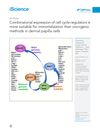
January 2021 in “iScience” Using a combination of specific cell cycle regulators is better for safely keeping hair root cells alive indefinitely compared to cancer-related methods.
 October 2023 in “Acta dermato-venereologica”
 Minoxidil and platelet-rich plasma can help turn thin hair into thicker hair in male pattern baldness.
58 citations
,
December 2000 in “Experimental Dermatology” This study found that new rabbit antisera against recombinant mouse involucrin effectively marked keratinocyte differentiation, with comparable expression patterns to human involucrin.
October 2002 in “Dermatologic Surgery” This notice corrects an article on fluridil for androgenetic alopecia, indicating potential conflicts of interest due to the authors' patent holdings and funding source; it reports no new research findings.
11 citations
,
January 2022 in “Brazilian Oral Research” This study found that XP-endo Finisher R was approximately twice as effective as passive ultrasonic irrigation in removing root filling material from curved mesiobuccal canals of maxillary molars.
7 citations
,
August 2023 in “Life” This review discusses using extracellular vesicles as less invasive surrogates for assessing drug-metabolizing enzymes and transporters, suggesting potential advancements in precision therapy, but reports no new clinical results.
 April 2023 in “Journal of Investigative Dermatology”
 This study found that human epidermal stem cells can adapt to small temperature variations via mTOR signaling, and that prolonged mTORC1 inhibition supports stem cell maintenance.
46 citations
,
December 1992 in “The Journal of Steroid Biochemistry and Molecular Biology” In this study, researchers observed that testicular 17β-hydroxysteroid dehydrogenase deficiency in an inbred Arab population in Israel leads to genital ambiguity at birth and progressive virilization after puberty.
1 citations
,
February 2022 in “Brain Research Bulletin” This study found that finasteride reduced impulsivity in a rat model of pramipexole-induced probability discounting, possibly by normalizing D3 receptor expression in the nucleus accumbens.
 18 citations
,
September 2013 in “Technology”
18 citations
,
September 2013 in “Technology” This study introduces a new multimodal imaging technology to visualize and quantify cell dynamics in natural skin over long durations, demonstrated in GFP bone marrow-transplanted mice, to study dynamic skin regeneration.
 March 2025 in “Stem Cell Research & Therapy”
 This study found that microneedles containing magnetic intracellular vesicles and tremella polysaccharide improved the hair microenvironment and accelerated hair regeneration in mice with androgenic alopecia.
9 citations
,
March 2017 in “Journal of Visualized Experiments” This study introduced a novel in vitro murine assay using transgenic mice to identify immunomodulatory compounds, which identified 160 potential hits from 4,398 compounds screened.
 1 citations
,
July 2023 in “Nature communications”
1 citations
,
July 2023 in “Nature communications” This study found that deleting the Mof gene in mouse skin leads to severe defects in skin cell self-renewal, differentiation, and hair follicle growth, indicating that MOF is crucial for mitochondrial and ciliary gene expression and essential for skin development.
7 citations
,
September 2006 in “Molecular Carcinogenesis” This study observed that K5Cre +/+ transgenic mice develop a distinct phenotype characterized by wavy hair, curly whiskers, and an increased rate of papilloma malignant transformation.
6 citations
,
January 2018 in “Advances in experimental medicine and biology” This research reports that Muse cells from human skin can be differentiated into melanocytes, fibroblasts, and keratinocytes, enabling the creation of 3D reconstituted skin, potentially advancing skin reconstruction therapies.
 March 2024 in “Organic letters”
 This study reports that difluoromethyl nitrile oxide can rapidly functionalize various alkenes at room temperature, leading to products that can transform into valuable medicinal chemistry building blocks like CF2H-isoxazolines for bioactive molecule modification.
 January 2022 in “Healthy Tadulako Journal”
 This study found no difference in the physical stability of hair tonic preparations made from sansevieria leaves extract, regardless of whether maceration or soxhletation methods were used.