 1 citations
,
April 2022 in “Rheumatology”
1 citations
,
April 2022 in “Rheumatology” Following COVID-19 vaccination, this case report observed that a 31-year-old male displayed a significant abnormal autoimmune response, leading to suspected undifferentiated connective tissue disease possibly overlapping rheumatoid arthritis and SLE, despite negative autoimmune markers prior to surgery.
 4 citations
,
January 2009 in “Indian Journal of Dermatology, Venereology and Leprology”
4 citations
,
January 2009 in “Indian Journal of Dermatology, Venereology and Leprology” This archived website overview discusses Bioline International's role in reducing the knowledge gap by hosting peer-reviewed journals from developing countries but presents no new research findings.
 5 citations
,
February 1977 in “Archives of Dermatology”
5 citations
,
February 1977 in “Archives of Dermatology” This study reports that 14 of 19 patients with erythema nodosum leprosum had C3 deposits in vessel walls when examined using direct immunofluorescence.
3 citations
,
January 1984 21 citations
,
May 2019 in “Pediatrics in review” This review examines primary and secondary immunodeficiencies, focusing on how healthcare providers can recognize and manage these conditions in children; it reports no new clinical results.
 August 2025 in “JEADV Clinical Practice”
 This case report describes the management of PRIDE complex, a skin and hair condition associated with EGFR inhibitor treatment like cetuximab, emphasizing that it does not require stopping the medication.
1 citations
,
December 2023 in “Nanomaterials” In this study, the researchers synthesized copper-doped mesoporous silica nanoparticles and observed that they enhance tumor microenvironment regulation and, when paired with disulfiram, effectively kill cancer cells while also showing synergistic anti-tumor effects with immune checkpoint inhibitors.
June 2017 in “The Medical Journal of Australia” This article provides no abstract or new research findings.
51 citations
,
July 2003 in “Annals of the Rheumatic Diseases” This case study reports a successful use of co-trimoxazole in treating a 13-year-old girl with symptoms suggestive of autoimmune disorders and relapsing polychondritis.
 41 citations
,
December 2008 in “Journal of the American Academy of Dermatology”
41 citations
,
December 2008 in “Journal of the American Academy of Dermatology” This review discusses fixed drug eruption (FDE) potentially linked to finasteride and emphasizes dermatologists' need to recognize its possible occurrence due to the drug's widespread use, but reports no new clinical results.
June 2025 in “JCEM Case Reports” In this case study, authors reported that a 43-year-old female patient initially showed persistently high testosterone levels due to immunoassay interference, later verified as normal using liquid chromatography-tandem mass spectrometry (LC-MS/MS), highlighting the need to consider assay artifacts in diagnosing hyperandrogenism without clinical signs.
19 citations
,
March 2016 in “British journal of dermatology/British journal of dermatology, Supplement” In this study, evidence that trichodysplasia spinulosa-associated polyomavirus targets follicular keratinocytes was observed in a pediatric case, suggesting these cells as the primary viral target.
13 citations
,
August 1985 in “The Journal of Dermatology” This study identified a monoclonal antibody, HKN-2, that recognizes specific cells in human skin and may indicate a common antigenic determinant between hair and other skin epithelial tissues.
 1 citations
,
April 2017 in “Journal of Investigative Dermatology”
1 citations
,
April 2017 in “Journal of Investigative Dermatology” This proof-of-concept study reported that a new, ultra-fast, one-step immunohistochemistry method improved the interpretation of Mohs surgery slides, particularly for poorly differentiated tumors.
 August 2018 in “Reactions Weekly”
 Two men experienced hair regrowth while being treated with immune globulin for other health issues, but there were also side effects.
7 citations
,
October 2008 in “Arthritis Care & Research” This case report describes a 32-year-old woman with a history of undifferentiated connective tissue disease who presented with cardiogenic shock, and endomyocardial biopsy revealed giant cell myocarditis, possibly indicating an association with her autoimmune condition.
 3 citations
,
January 2008 in “Journal of the American Academy of Dermatology”
3 citations
,
January 2008 in “Journal of the American Academy of Dermatology” A patient's skin rash did not affect the area where a previous viral rash was healing, suggesting a rare immune response.
 27 citations
,
September 1992 in “The Lancet”
27 citations
,
September 1992 in “The Lancet” ICL is a condition with low CD4+ T cells like AIDS but not caused by HIV, and normal CD4+ T cell counts may vary between men and women.
 February 2026 in “Nature Communications”
 In this study, researchers created a detailed human skin cell atlas by analyzing over 700,000 cells, finding that disrupted communication among specific immune and stromal cell subsets may play a key role in initiating and sustaining chronic skin inflammation in atopic dermatitis.
March 2025 in “Clinical Reviews in Allergy & Immunology”  8 citations
,
August 2009 in “Pediatric transplantation”
8 citations
,
August 2009 in “Pediatric transplantation” This report presents a case where a patient with Omenn syndrome, complicated by cytomegalovirus infection, was successfully treated using reduced intensity conditioning allogeneic HSCT from a sibling donor.
1 citations
,
November 2025 in “Expert Review of Clinical Immunology” This review of sequential immunotherapy strategies for alopecia areata suggests that combining initial intensive immunosuppression with maintenance therapy may effectively manage disease progression by modulating inflammation and restoring immune tolerance.
 23 citations
,
January 2024 in “Nature Immunology”
23 citations
,
January 2024 in “Nature Immunology” This study, using multimodal profiling in mice, found that various tissues contain unique γδ T cell subsets adapted to their environment, revealing their functional diversity, lineage relationships, and similarities to CD8+ tissue-resident memory T cells.
12 citations
,
April 2023 in “Molecular Pharmaceutics” This study demonstrated that a microarray patch can deliver antibodies in a controlled and prolonged manner, maintaining their functionality after manufacturing and heat exposure, with successful pharmacokinetic proof-of-concept in rats.
1 citations
,
January 2024 in “BMJ Case Reports” In this case report, a woman in her 50s was diagnosed with meningitis linked to mixed connective tissue disease after presenting symptoms similar to infectious meningitis, but with no infection detected and serological evidence pointing to the autoimmune condition.
 1 citations
,
January 2019 in “Open Journal of Internal Medicine”
1 citations
,
January 2019 in “Open Journal of Internal Medicine” This case report describes a 19-year-old patient with systemic lupus and a composite heterozygosis SC with thalassemic component, highlighting the diagnostic challenge when symptoms of both conditions occur simultaneously.
 August 2022 in “MEDICINUS”
 This case study reports a 22-year-old homosexual man coinfected with secondary syphilis, condyloma acuminata, and HIV, highlighting the coexistence and increased STI risks associated with HIV and HPV infection.
39 citations
,
June 2023 in “Advanced Materials” This review discusses the unique advantages and challenges of microneedle arrays for vaccine and immunotherapy delivery but reports no new clinical results.
 May 2025 in “The Journal of Rheumatology”
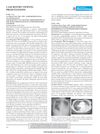
 In this case report, two patients with coexisting systemic lupus erythematous and neuromyelitis optica spectrum disorder achieved remission of SLE activity using an anti-CD19 monoclonal antibody.
1 citations
,
May 2022 in “European Journal of Dermatology” This study found that while no predictive factors for response to vismodegib were identified, longer treatment duration was associated with a lower risk of relapse in basal cell carcinoma patients.