November 2025 in “The Journal of Immunology” In a murine model of alopecia areata, this study observed that the IL-2 fusion protein HCW9302 helped prevent disease development by expanding regulatory T cells and reducing disease-causing effector T cell infiltrates, suggesting potential for using IL-2 fusion proteins in alopecia areata treatment.
2 citations
,
October 2019 in “Nanomedicine” This commentary discusses current challenges and future opportunities in pharmaceutical care for organ transplant recipients, focusing on immunosuppressive strategies, their complexities, and potential advancements like nanoimmunotherapy, but reports no new clinical results.
 3 citations
,
January 2019 in “Bulgarian Journal of Veterinary Medicine”
3 citations
,
January 2019 in “Bulgarian Journal of Veterinary Medicine” This case study describes a cat co-infected with Demodex cati and feline immunodeficiency virus, showing initial treatment improvement followed by disease recurrence and eventual euthanasia.
 February 2026 in “Frontiers in Medicine”
 This case series described five patients with chronic alopecia areata who successfully maintained long-term disease control using a combination of topical immunotherapy and other treatments over 9–15 years, highlighting the approach's continued value alongside novel therapies.
 14 citations
,
March 2020 in “Journal of Medical Internet Research”
14 citations
,
March 2020 in “Journal of Medical Internet Research” This study suggests that PrEP implants for HIV prevention are potentially acceptable among gay and bisexual men, with positive attitudes toward implant features and minor insertion-related effects.
9 citations
,
April 2023 in “Experimental Dermatology” This study found that adding allergen immunotherapy to conventional treatment may reduce relapse-related hair loss in house dust mite-allergic alopecia areata patients over a 3-year period.
4 citations
,
January 2024 in “Allergy” This study indicates that individuals exposed to PPD mount varying immune responses, with either tolerance, subclinical inflammation, or allergy, suggesting no true non-responders to PPD.
November 2022 in “Chinese Journal of Dermatology” This review discusses the relationship between allergies and alopecia areata, highlighting potential roles for anti-allergy and desensitization therapies, but reports no new clinical results.
1 citations
,
August 2012 in “Pediatrics in review” This paper reviews various vitamin deficiencies, including vitamin D, and highlights their potential health impacts. It does not report new research findings but discusses current recommendations and risks associated with these deficiencies.
1 citations
,
October 2025 in “Journal of the American Society of Nephrology” In this case report, a 56-year-old man developed acute granulomatous interstitial nephritis following Moderna Covid-19 vaccination, with his kidney function improving after steroid treatment but declining upon cessation; the report suggests a vaccine-related cause given his atypical clinical course.
1 citations
,
December 2017 in “Dermatology - Open Journal” This case study reports successful regression of alopecia areata in a female patient through DPCP immunotherapy supported by oral antihistamines and topical corticosteroids, suggesting indirect antihistamine effects on allergic inflammation may contribute to improvement.
July 2024 in “Journal of Investigative Dermatology” Targeting TCR-Vβ2 in cutaneous T cell lymphoma shows promise for safer, more specific treatment.
 13 citations
,
February 2006 in “Clinical and Experimental Dermatology”
13 citations
,
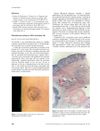
February 2006 in “Clinical and Experimental Dermatology” A benign tumor developed at a girl's BCG vaccination site, not previously linked to the vaccine.
July 2026 in “International Journal of Homoeopathic Sciences” This case study reports that a 30-year-old female with vitiligo showed marked improvement in skin pigmentation and overall well-being through individualized homeopathic treatment with Natrum muriaticum 200C, supported by photographic evidence and MONARCH scoring suggesting a causal relationship.
March 2023 in “Journal of Pakistan Association of Dermatologists” In this study, three pediatric patients with alopecia areata and high levels of certain viral antibodies experienced excellent outcomes following treatment with a combination of corticosteroids, minoxidil, inosine pranobex, valacyclovir, and light-emitting diode therapy.
 November 1999 in “Australasian Journal of Dermatology”
 This article discusses various dermatological topics from different journals but does not present any new clinical findings.
24 citations
,
January 2018 in “Systematic Reviews” This study found that the current approval processes by major regulators like the EMA and FDA for HPV vaccines may rely on only half of the available trial data.
 January 2024 in “Dermatology practical & conceptual”
 This study found that topical immunotherapy was effective in 56.83% of pediatric patients with alopecia areata, but those with co-occurring atopic dermatitis were more likely to show an inadequate response to treatment.
 13 citations
,
July 1996 in “Annals of Internal Medicine”
13 citations
,
July 1996 in “Annals of Internal Medicine” In this letter, thrombocytosis was associated with the use of low-molecular-weight heparin in a patient with adrenal cortical carcinoma, highlighting a potential side effect of this treatment.
1 citations
,
January 1989 This study produced and characterized four new monoclonal antibodies that specifically recognize differentiation antigens in human hair follicle and epidermal structures.

In this case report, a 23-year-old man experienced dizziness, blurred vision, malaise, and fatigue after excessive use of topical minoxidil for three days, with symptoms resolving once minoxidil was discontinued.
January 2018 in “Digital Scholarship - UNLV (University of Nevada Reno)” This study found significantly higher hair cortisol concentrations in black children compared to white children aged 1-4 years, suggesting racial differences in cumulative stress as measured by hair cortisol.
May 2024 in “International journal of medicine and psychology.” This study found that in laboratory rats, toxic concentrations of hydrogen sulfide affected the immune system differently depending on age and immune suppression status, with notable changes in immune cell levels and phagocytosis, suggesting significant roles in age-associated pathologies.
 April 2010 in “Reactions Weekly”
 A woman's hair loss was likely caused by a cream used for skin treatment and improved after she stopped using it.
November 2025 in “Journal of Investigative Dermatology”  12 citations
,
June 2016 in “Clinical and Molecular Hepatology”
12 citations
,
June 2016 in “Clinical and Molecular Hepatology” This case report describes an autoimmune hepatitis patient who achieved remission with mycophenolate mofetil and corticosteroids after intolerance to azathioprine-based therapy.
 May 2024 in “European Journal of Immunology”
 This review discusses the potential of targeting Coenzyme A metabolism to restore metabolic balance, reduce chronic inflammation, and enhance immune function, particularly by modulating Vitamin B5 pathways involved in Th17-mediated inflammation and CD8-dependent anti-tumor immunity.
 January 1982 in “Journal of The American Academy of Dermatology”
 Experts discussed treatments for skin conditions in children, emphasizing hydration, cautious medication use, and early intervention for infections.
1 citations
,
April 2004 in “Cancer” This study describes that 65% of patients receiving imatinib mesylate in a patient assistance program experienced skin hypopigmentation, primarily in ethnically Chinese individuals, suggesting variability across populations.
 January 2026 in “Nanoscale Advances”
 This review provides an overview of microneedle-assisted photomedicine, detailing diagnostic and therapeutic strategies, design principles, and challenges for translating this approach to skin disease management.