 6 citations
,
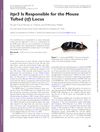
October 2012 in “Journal of Heredity”
6 citations
,
October 2012 in “Journal of Heredity” This study identified the Itpr3 gene as responsible for the tufted hair loss phenotype in the BTBR mouse strain.
1 citations
,
October 2010 in “2010 3rd International Conference on Biomedical Engineering and Informatics” This study successfully cloned and characterized the LEF-1 gene from Inner Mongolia Cashmere Goats, potentially aiding efforts to enhance cashmere production through genetic modification.
17 citations
,
September 2018 in “Matrix Biology” The researchers reported that mouse keratinocyte-specific deletion of laminin γ1 led to delayed coat pigmentation due to impaired melanocyte migration and differentiation, linked to altered laminin composition in the basement membrane.
 April 2023 in “Journal of Investigative Dermatology”
 This study found that dimethyl fumarate improved delayed wound healing in Il36rn-/- mice by reducing neutrophil extracellular trap formation and oxidative stress.
 October 2021 in “QJM: An International Journal of Medicine”
 This study found that patients with alopecia areata had significantly higher serum levels of interleukin-17 compared to healthy controls, suggesting a potential role for IL-17 in the disease's pathogenesis.
July 2022 in “The Egyptian Journal of Hospital Medicine” This study found no significant association between the IL-15 genetic polymorphism (rs17015014) and the risk or severity of Alopecia Areata in the examined population.
 25 citations
,
July 1994 in “Archives of Dermatology”
25 citations
,
July 1994 in “Archives of Dermatology” This study describes a patient with metastatic renal cell carcinoma who experienced a recurrence of pemphigus vulgaris after receiving interleukin 2 immunotherapy, suggesting a possible link between the treatment and autoimmune disease recurrence.
 140 citations
,
March 2013 in “The journal of immunology/The Journal of immunology”
140 citations
,
March 2013 in “The journal of immunology/The Journal of immunology” This study found that IL-7 is crucial for the survival of memory regulatory T cells in the skin of mice, whereas IL-2 is essential for their initial generation but not for their maintenance.
2 citations
,
June 2018 in “The Medical Journal of Cairo University/The Medical Journal of Cairo University” This study found that while Platelet Rich Plasma injections led to some clinical and immunological improvements in psoriatic plaques, it could not be recommended as a standalone treatment for localized plaque psoriasis.
 278 citations
,
March 2013 in “Gut”
278 citations
,
March 2013 in “Gut” In this study, nearly 5% of anti-TNF-treated patients with IBD developed psoriasiform skin lesions, with smoking identified as a main risk factor, and ustekinumab proved highly effective in severe cases.
28 citations
,
June 2021 in “Frontiers in immunology” This review discusses the role of the long form of thymic stromal lymphopoietin in cutaneous immune-mediated diseases and reports no new results.
 December 2023 in “Research Square (Research Square)”
 This study found that IL-4 VNTR intron 3 and TNF-α (rs1799964) gene polymorphisms do not have a significant association with alopecia areata susceptibility in the Egyptian population.
 2 citations
,
December 2021 in “Journal of Veterinary Medical Science”
2 citations
,
December 2021 in “Journal of Veterinary Medical Science” This case report found that adding lokivetmab to prednisolone treatment improved and maintained remission of pruritus in a dog with cutaneous epitheliotropic lymphoma.
July 2024 in “Journal of Investigative Dermatology” This study found that systemic treatment with DS77754007, a KLK5 inhibitor, improved skin symptoms in a mouse model of Netherton Syndrome more effectively than certain antibody treatments, suggesting KLK5 inhibition as a promising therapeutic approach for this condition.
 5 citations
,
July 2023 in “International Journal of Women’s Dermatology”
5 citations
,
July 2023 in “International Journal of Women’s Dermatology” This study reports that anifrolumab showed promising improvement in a case of refractory discoid lupus erythematosus, specifically enhancing skin lesions and promoting hair regrowth, suggesting potential as an effective therapy for severe cases.
 January 2012 in “Journal of Investigative Dermatology”
 Small molecule DMF improves psoriasis and multiple sclerosis, adult skin cells can be made to grow new hair, certain skin cells initiate hair growth, IL-17C controls gut health and can cause skin inflammation, and skin cells produce IL-17 that can lead to psoriasis.
 1 citations
,
July 2022 in “PLOS ONE”
1 citations
,
July 2022 in “PLOS ONE” This study found that in Lichen Planopilaris, the Microbacteriaceae family was negatively correlated with IL-23 expression, suggesting a role in the disease's inflammation and microbiota composition.
July 2025 in “Journal of Investigative Dermatology” TRIV-509 quickly improves skin barrier and cell health in atopic dermatitis.
 4 citations
,
December 2020 in “Mammalian genome”
4 citations
,
December 2020 in “Mammalian genome” This study found that pelage abnormalities in Harlequin mutant mice are linked to severe AIF deficiency and associated with altered expression of genes related to hair structure.
1 citations
,
August 2013 in “The Journal of Cell Biology” This study found that Wnt secretion is important for skin homeostasis in mice, as Evi-deficient mice developed skin lesions resembling psoriasis and showed immune cell imbalance.
 9 citations
,
April 2021 in “Frontiers in Immunology”
9 citations
,
April 2021 in “Frontiers in Immunology” This review discusses the role and mechanisms of unconventional lymphocytes in promoting tissue repair and maintaining mucosal barrier integrity in the skin, gut, and lungs, but reports no new findings.
 July 2024 in “Egyptian Journal of Medical Human Genetics”
 In this case-control study, the researchers found no significant association between IL-4 VNTR intron 3 and TNF-α (rs1799964) gene polymorphisms and alopecia areata susceptibility among the Egyptian population.
 1 citations
,
April 2016 in “Journal of The American Academy of Dermatology”
1 citations
,
April 2016 in “Journal of The American Academy of Dermatology” Ixekizumab helps improve life quality, physical ability, and work performance in patients with psoriatic arthritis who haven't used biologic drugs before.
April 2025 in “Journal of Diabetes & Metabolic Disorders” This study found that linc-PINT expression was significantly decreased in patients with atrial fibrillation compared to healthy controls, while several TGF-β signaling genes were increased, suggesting a potential role in heart arrhythmias' pathogenesis.

This study found that melatonin upregulates LncRNA16913.1, which sequesters chi-miR-195-5p to release FZD6 and enhance fibroblast proliferation in cashmere goat skin, suggesting a regulatory mechanism within the lncRNA-miRNA-mRNA cascade in vitro.
 209 citations
,
March 1989 in “Journal of The American Academy of Dermatology”
209 citations
,
March 1989 in “Journal of The American Academy of Dermatology” This study found that recombinant human leukocyte interferon alfa-2a achieved a 64% overall antitumor response rate in patients with early and advanced cutaneous T cell lymphoma and was generally well-tolerated.
July 2025 in “Journal of Investigative Dermatology” 49 citations
,
August 2022 in “Frontiers in Immunology” This paper discusses the evolving understanding of psoriasis pathogenesis with no new clinical findings; the authors highlight the role of T-cell plasticity and regulatory cells, calling for further clinical applications using single-cell technologies.
51 citations
,
March 2022 in “Frontiers in Immunology” This review discusses the regulatory roles of type 2 alarmin cytokines in skin immunity, focusing on their implications in host defense, chronic inflammation, and cancer, but reports no new clinical results.
July 2026 in “Frontiers in Immunology” In this case report, a 28-year-old male with severe atopic dermatitis, prurigo nodularis-like lesions, and alopecia areata showed rapid improvements in skin and hair following treatment with the JAK1 inhibitor, ivarmacitinib, suggesting its potential benefit for complex AD phenotypes with immune-mediated hair loss.