November 2025 in “Journal of Investigative Dermatology” TEC kinases may help cause inflammation in vitiligo and could be targeted for treatment.
This study found that IL-1α and IL-7 secreted from keratinocytes in a genetically engineered mouse model can stimulate the expansion of γδT-cells, aiding in the proliferation of epidermal stem cells for wound healing.
 4 citations
,
April 2016 in “Journal of The American Academy of Dermatology”
4 citations
,
April 2016 in “Journal of The American Academy of Dermatology” This case report details the first known instance of interferon-induced lichen planus in a seronegative HCV patient with metastatic renal cell carcinoma.
20 citations
,
March 2019 in “Case Reports in Dermatology” This report describes two cases where patients developed alopecia while undergoing treatment for psoriasis with IL-17 inhibitors, suggesting an unexpected paradoxical reaction.
71 citations
,
May 2024 in “New England Journal of Medicine” This study investigated the impact of the JAK inhibitor ruxolitinib on APS-1 patients, reporting that treatment decreased excessive T-cell-derived interferon-γ, normalized inflammatory markers, and led to remission of several autoimmune symptoms without serious adverse effects.
 6 citations
,
October 2017 in “Oncotarget”
6 citations
,
October 2017 in “Oncotarget” In this study, NIH hairless mice showed increased susceptibility to Listeria monocytogenes infection compared to NIH mice, potentially due to differences in gut microbiota and monocyte levels.
37 citations
,
June 2000 in “Experimental dermatology” This study investigated a spontaneous mutation in mice resulting in hair abnormalities and elevated IgE levels, which resembles human Netherton's syndrome and monilethrix.
 32 citations
,
December 2018 in “Cytokine”
32 citations
,
December 2018 in “Cytokine” This review discusses the involvement of type I interferons in skin autoimmune and inflammatory diseases but reports no new clinical results.
245 citations
,
October 2015 in “Nature medicine” The research found that hair follicle–derived cytokines, particularly IL-15 and IL-7, regulate skin-resident memory T cells and their role in both immune homeostasis and lymphoma in the skin.
 13 citations
,
June 2018 in “Journal of histochemistry and cytochemistry/The journal of histochemistry and cytochemistry”
13 citations
,
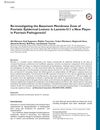
June 2018 in “Journal of histochemistry and cytochemistry/The journal of histochemistry and cytochemistry” This study found that the expression of laminin-511 and -332 was significantly increased in psoriasis skin lesions and may influence keratinocyte proliferation and apoptosis, suggesting a previously overlooked role in the disease's pathogenesis.
 23 citations
,
August 2018 in “Biochimica and biophysica acta. Molecular and cell biology of lipids”
23 citations
,
August 2018 in “Biochimica and biophysica acta. Molecular and cell biology of lipids” This article reviews the roles of lesser-known secreted phospholipase A2 isoforms in various biological processes, such as immune suppression, metabolic regulation, epidermal hyperplasia, and male reproduction, without reporting new clinical findings.
181 citations
,
January 2019 in “Cell” In this research, authors found that skin-resident ILCs regulate sebaceous gland function and microbial balance, emphasizing an immune-epithelia system that supports host-microbe symbiosis.
 April 2023 in “Journal of Investigative Dermatology”
 This study found that NIMP-R14-conjugated nanoparticles, loaded with roflumilast, effectively targeted neutrophils to reduce inflammation and improve symptoms in a mouse model of psoriasiform dermatitis, suggesting potential for targeted therapy in autoimmune skin diseases.
14 citations
,
September 2024 in “Arthritis & Rheumatology” In this study, a patient with clinically amyopathic dermatomyositis experienced persistent skin issues despite treatment, highlighting questions about type I interferon's role in skin disorders and potential IFN-targeted therapies for cutaneous lupus erythematosus and dermatomyositis.
221 citations
,
June 1992 in “Proceedings of the National Academy of Sciences” In this study, IL-6 expression in transgenic mice thickened the stratum corneum without causing increased epidermal proliferation or inflammation, suggesting it may enhance skin protection rather than directly induce inflammation.
7 citations
,
January 2020 in “The journal of investigative dermatology/Journal of investigative dermatology” This study shows that NIPP1 deficiency in mouse epidermis leads to hyperproliferation, hair loss, and chronic skin inflammation, which can be partially alleviated by dexamethasone treatment.
 10 citations
,
March 2015 in “Journal of dermatology”
10 citations
,
March 2015 in “Journal of dermatology” This case report describes a 12-year-old boy with severe skin scaling due to novel compound heterozygous null truncation mutations in the TGM1 gene, resulting in loss of transglutaminase 1 activity.
 4 citations
,
November 2017 in “PubMed”
4 citations
,
November 2017 in “PubMed” This pilot study found a correlation between individual genetic inflammation profiles and the effectiveness of PRP treatment for hair regeneration, with differences observed between male and female responses.
3 citations
,
August 2024 in “Molecular Biology Reports” This study found that the lncRNA018392, responsive to melatonin, accelerates cell proliferation in cashmere goats by recruiting the transcription factor SPI1 to upregulate the nearby gene CSF1R, which may explain the molecular mechanisms of cashmere growth.
 1 citations
,
August 2018 in “bioRxiv (Cold Spring Harbor Laboratory)”
1 citations
,
August 2018 in “bioRxiv (Cold Spring Harbor Laboratory)” This study reports that a novel gain-of-function mutation in TMEM173, combined with polymorphisms in TMEM173 and IFIH1, results in a distinct clinical phenotype with features of SAVI, including alopecia and photosensitivity.
September 2017 in “Journal of Investigative Dermatology” LRIG1 protein affects hair growth by regulating skin receptors, leading to hair loss when overexpressed.
January 2014 in “Max Planck Digital Library” This research describes mouse models to explore Kindlin-1's role in skin disorders, including Kindler syndrome, revealing novel integrin-independent pathways potentially leading to skin tumors.
 June 2026 in “bioRxiv (Cold Spring Harbor Laboratory)”
 This study found that inhibiting the interaction between HOTAIR and EZH2 can block pro-fibrotic gene expression in fibroblasts and interfere with tissue remodeling in systemic sclerosis patient skin.
 December 2022 in “Research Square (Research Square)”
 In this study, type I interferon response-related genes activated by RIG-1 and IL-17 signaling pathways were significantly up-regulated in both hair follicles and skin tissues affected by chronic discoidal lupus erythematosus.
May 2026 in “International Journal of Dermatology” IL-17 and IL-23 inhibitors may cause hair loss.
 59 citations
,
July 2015 in “Journal of Immunology”
59 citations
,
July 2015 in “Journal of Immunology” This study found that disrupting inflammasome signaling by eliminating caspase-1 and -11 in mice reduced skin inflammation and delayed the onset of disease, highlighting their role in skin disease pathogenesis.
15 citations
,
October 2014 in “The journal of investigative dermatology/Journal of investigative dermatology” This study suggests that erlotinib exacerbates inflammation in a mouse model of skin disease and that IL-1 inhibition could mitigate skin-related side effects of EGFR inhibitors.
 August 2024 in “Qucosa (Saxon State and University Library Dresden)”
 In this study on mice, researchers observed that dermal white adipose tissue (dWAT) plays a key role in regulating skin inflammation and tissue repair; however, reduced expression of certain cytokines in obese mice may hinder these processes, indicating potential metabolic disruptions in dWAT during inflammation.
July 2024 in “Journal of Investigative Dermatology” IL-27 may help prevent hair loss in alopecia areata by promoting immunosuppressive T cells.