14 citations
,
July 2019 in “Journal of Investigative Dermatology” In this study, targeted inactivation of the integrin-linked kinase gene in melanoblasts led to defects in cell migration, proliferation, and ability to populate the skin, implicating an integrin-linked kinase-Rac1 connection in melanocyte function.
1 citations
,
January 2023 in “Pediatric Dermatology” This case study of a neonate with ichthyosis and ILVASC demonstrates how an interdisciplinary approach facilitated a timely genetic diagnosis and management of complications.
 3 citations
,
May 2020 in “JAAD Case Reports”
3 citations
,
May 2020 in “JAAD Case Reports” This report discusses two patients with plaque psoriasis who developed hypertrichosis, or excessive hair growth, while undergoing interleukin-17A inhibitor therapy.
 January 2025 in “Cellular and Molecular Biology”
 This study found that in Liaoning cashmere goats, overexpression of the PIP5K1A gene enhances skin fibroblast proliferation, while interference with this gene reverses melatonin-induced proliferation, and PIP5K1A regulates certain miRNA expressions, suggesting a role in improving cashmere yield and quality.
9 citations
,
August 2023 in “Journal of Investigative Dermatology” This study highlights that while hair follicle cycling is primarily influenced by growth factors like IGF-1 and Wnt signals, the role of cytokines in normal human hair growth and cycling is less understood.
 September 2019 in “Rheumatology advances in practice”
 This case study highlights the difficulties in diagnosing and treating interstitial lung disease, emphasizing the complex nature of ILD management and the need for further research and clearer guidelines.
 9 citations
,
May 2012 in “PLOS ONE”
9 citations
,
May 2012 in “PLOS ONE” This study found that integrin-linked kinase is crucial for various epidermal functions, including differentiation and barrier formation, and also plays a previously unreported role in melanocyte development and function.
22 citations
,
May 2011 in “Molecular Biology of the Cell” In this study, gene inactivation in mouse hair follicle stem cells lacking ILK impaired wound healing by reducing their progeny’s contribution to the regenerating epidermis, but did not affect hair follicle regeneration.
 September 2017 in “The journal of investigative dermatology/Journal of investigative dermatology”
 This study reports that the loss of Langerhans cells in lichen planopilaris scars may be linked to the downregulation of ITG αvβ6, which is not seen in other scar formation diseases.
 December 2023 in “The journal of investigative dermatology/Journal of investigative dermatology”
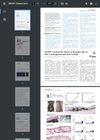
 In a mouse model study, researchers observed that the absence of MCPIP1 in myeloid cells decreased susceptibility to chemically induced skin papillomas but caused significant hair loss and skin pigmentation changes, suggesting a role for MCPIP1 in skin carcinogenesis and follicle integrity.
 May 2025 in “Frontiers in Genetics”
 This study reported discovering a novel missense variant in a case of autosomal recessive woolly hair in a 31-year-old Chinese woman, which significantly reduced secretion of the encoded protein, likely leading to disease by impairing its hydrolytic function.
53 citations
,
July 2009 in “Cancer Research” In this mouse study, the researchers found that the monoclonal antibody ME1 causes hair follicle inflammation by up-regulating TNFα, which can be reduced by TNFα and interleukin-1 inhibitors.
June 2026 in “Morphology” This study found that IBA-1-immunopositive macrophages in rat skin during wound healing show varied morphometric characteristics and peak in numbers at 2, 6, and 15 days post-injury.
58 citations
,
December 2000 in “Experimental Dermatology” This study found that new rabbit antisera against recombinant mouse involucrin effectively marked keratinocyte differentiation, with comparable expression patterns to human involucrin.
 1 citations
,
January 2022 in “bioRxiv (Cold Spring Harbor Laboratory)”
1 citations
,
January 2022 in “bioRxiv (Cold Spring Harbor Laboratory)” This study found that targeting IL-17 signaling in aged skin reduces inflammation and delays age-related traits, suggesting a potential strategy to prevent age-associated skin ailments.
 11 citations
,
November 2015 in “Experimental Dermatology”
11 citations
,
November 2015 in “Experimental Dermatology” This study reported that IL-6/STAT3 signaling influences p63 isoform expression in keratinocytes and is involved in wound-induced hair follicle neogenesis, highlighting the interplay between immune and developmental pathways.
 25 citations
,
May 1994 in “Journal of Investigative Dermatology”
25 citations
,
May 1994 in “Journal of Investigative Dermatology” This study identified a novel gene, hacl-1, that is specifically expressed in the hair follicles of ICR mouse skin and is associated with their active state.
19 citations
,
May 2018 in “Molecular Medicine Reports” This study found that miR-339-5p negatively regulates loureirin A-induced differentiation of hair follicle stem cells, potentially impacting skin repair and regeneration by inhibiting the Wnt/β-catenin signaling pathway.
May 2018 in “The Journal of Immunology” In this study, daily treatment with angiotensin (1-7) significantly reduced disease severity in a mouse model of Systemic Lupus Erythematosus, suggesting potential for Mas agonists in future therapies.
 March 2026 in “Folia Histochemica et Cytobiologica”
 This review highlights LTBP1 as a critical integrator in disease processes, showing its dual role in cancer progression and suppression, its pathological influence in fibrosis, and its contribution to various disorders, suggesting its potential as a biomarker and therapeutic target.
July 2026 in “Journal of Investigative Dermatology” August 2025 in “BMC Pharmacology and Toxicology” The LTF gene may help predict and manage nonspecific orbital inflammation.
 May 2017 in “Journal of The American Academy of Dermatology”
 PLAU and SerpinB2 affect cell death differently in various forms of leprosy and could be targets for new treatments.
27 citations
,
July 1997 in “PubMed” This study suggests that the harlequin ichthyosis mouse model closely resembles human type 2 harlequin ichthyosis, indicating its potential as a useful model for studying the human condition.
1 citations
,
October 2025 in “Journal of Allergy and Clinical Immunology” A JAK1 variant causes hair loss, skin issues, and thyroid disease, but treatment with a specific inhibitor can help.
 April 2023 in “The journal of investigative dermatology/Journal of investigative dermatology”
 This study found that an E-cadherin mutant preserved normal cadherin levels and prevented inflammation and lethality in mouse skin lacking p120, highlighting p120's role in regulating cadherin-mediated cell adhesion and inflammation.
 36 citations
,
June 2021 in “Experimental & Molecular Medicine”
36 citations
,
June 2021 in “Experimental & Molecular Medicine” This study found that mechanical stress activates a WISP-1/Hedgehog signaling axis that contributes to ligamentum flavum hypertrophy and fibrosis, identifying Hedgehog signaling as a potential therapeutic target.
 38 citations
,
January 2016 in “Cell Death and Disease”
38 citations
,
January 2016 in “Cell Death and Disease” This review discusses the role of the TCL1 transgenic mouse model in understanding chronic lymphocytic leukemia biology and highlights the importance of exploring new pathogenetic and therapeutic targets.

This study found a direct correlation between IL6 and insulin, glucose, and cholesterol serum levels in patients with oral lichen planus, suggesting a potential increased cardiovascular risk.
24 citations
,
July 2021 in “Pharmaceutics” This article reviews the JAK signaling pathway and the development of ruxolitinib cream as a targeted treatment for inflammatory skin diseases, reporting no new clinical results.