September 2023 in “British Journal of Dermatology” In this study, researchers found that patients with severe alopecia areata show varied regrowth timelines with baricitinib, and those with the most severe cases may still experience delayed but eventual improvement.
 April 2021 in “Research Square (Research Square)”
 This study found that the new cocrystal formulation KET-PABA improved the antimycotic efficiency of ketoconazole and induced an anti-inflammatory response without causing skin sensitization in mice.
 5 citations
,
September 2010 in “Cancer Prevention Research”
5 citations
,
September 2010 in “Cancer Prevention Research” This perspective discusses Villani et al.'s findings on the role of the IGF regulatory protein Igfbp2 in basal cell carcinogenesis and highlights potential therapeutic and preventive targets, while raising questions about the cell of origin.
 March 2017 in “BJU international”
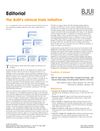
 This article discusses the BJUI's strategies to support urology-related clinical trials but reports no new experimental results; the authors emphasize the importance of rigorous trial design and reporting standards.
 14 citations
,
March 2022 in “Journal of inflammation research”
14 citations
,
March 2022 in “Journal of inflammation research” This review discusses the application and potential of baricitinib, a JAK1/2 inhibitor, for treating dermatological diseases like alopecia areata and reports no new clinical results.
This study mapped potential targets and pathways for baicalin's action in androgenic alopecia, suggesting it may inhibit 5α-reductase and serve as an effective treatment ingredient.
November 2025 in “SKIN The Journal of Cutaneous Medicine” This study found that approximately 85% of adults with severe alopecia areata who responded to baricitinib at 52 weeks maintained their improvement over a span of four years.
 8 citations
,
January 2019 in “Annals of Dermatology”
8 citations
,
January 2019 in “Annals of Dermatology” Among cultured sebocytes, this study found that bilobetin significantly inhibited lipid production induced by IGF-1, suggesting potential for use in acne treatment.
 January 2025 in “SKIN The Journal of Cutaneous Medicine”
 In this analysis of the BRAVE-AA trials, a significant number of patients with severe alopecia areata treated with baricitinib reached complete or nearly complete scalp coverage (SALT score ≤10 or ≤5) over 52 weeks, particularly among those with less severe baseline characteristics.
 August 2025 in “Fabad Journal of Pharmaceutical Sciences”
 This review highlights that bicalutamide, a non-steroidal antiandrogen used in prostate cancer treatment, is mainly effective through its (R)-enantiomer and emphasizes the need to monitor its adverse effects despite its targeted antiandrogenic action.
 October 2018 in “International journal of clinical & experimental dermatology”
 In this pilot study, baicalin-containing serum significantly decreased hair loss and increased hair growth after two months in participants with telogen effluvium, as subjective and objective assessments showed statistically significant improvements in hair thickness and density.
 November 2023 in “Dermatology and Therapy”
 This study found that treatment with baricitinib 4 mg over 52 weeks led to clinically meaningful regrowth of eyebrows and eyelashes in patients with alopecia areata, even without complete scalp hair regrowth.
 January 2026 in “Frontiers in Immunology”
 This review highlights icariin’s potential to regulate macrophages in varying conditions, discussing its effects on macrophage polarization, metabolism, and disease mechanisms, and noting the development of delivery systems to enhance its therapeutic impact.
 1 citations
,
September 2023 in “Journal of the American Academy of Dermatology”
1 citations
,
September 2023 in “Journal of the American Academy of Dermatology” This study focused on baricitinib's effect on patients with severe alopecia areata, highlighting its efficacy for hair regrowth and its potential to improve health-related quality of life and psychological symptoms, as seen in two phase 3 trials.
December 2015 in “OPAL (Open@LaTrobe) (La Trobe University)” In human hair follicle keratinocytes, this study found that treatment with the pharmacological inhibitor QLT0267 led to a strong inhibition of proliferation and migration and induced nearly 100% apoptosis.
December 2025 in “DiRROS repository (University of Maribor)” In this study, baricitinib showed effectiveness and good tolerability in treating severe alopecia areata over 52 weeks.
2 citations
,
February 2023 in “Actas Dermo-Sifiliográficas” Baricitinib effectively improved both atopic dermatitis and alopecia areata symptoms in a patient.
January 2026 in “Clinics and Practice” In this retrospective case series, baricitinib showed effectiveness in treating alopecia areata, with some potential benefits for psoriasis, but it may not be suitable for managing psoriatic arthritis in patients with these coexisting conditions.
6 citations
,
January 2010 in “Journal of Biochemical and Molecular Toxicology” This study found that the ID2 gene was highly expressed in bulge-derived keratinocytes when exposed to contact sensitizers and may serve as a marker to distinguish sensitizers from irritants during in vitro testing.
 June 2023 in “British Journal of Dermatology”
 In this study, baricitinib showed promising results in improving scalp, eyebrow, and eyelash hair loss in adults with severe and very severe alopecia areata over 52 weeks.
June 2025 in “British Journal of Dermatology” This study surveyed Irish dermatologists and found that while JAK inhibitors show promising efficacy for alopecia areata, there is significant variation in practice due to the lack of specific guidelines and long-term safety data for these treatments.
 3 citations
,
January 2017 in “Journal of Pakistan Association of Dermatology”
3 citations
,
January 2017 in “Journal of Pakistan Association of Dermatology” This study reported that scabies was the most common skin disease among patients at the outpatient department of BISD in 2002, followed by eczema and fungal infections.
 September 2024 in “Journal of the American Academy of Dermatology”
 This study found that baricitinib, when administered consistently over three years, maintained its efficacy in patients with severe alopecia areata who responded by Week 52 with notable hair regrowth, indicated by a SALT score of ≤20.
 December 2024 in “Frontiers in Pediatrics”
 This case report details the first use of baricitinib in a pediatric patient with immune thrombocytopenia and alopecia areata, showing successful treatment with increased platelet counts.
17 citations
,
April 2023 in “British Journal of Dermatology” This study suggests that off-label use of baricitinib in children under 12 with alopecia areata may improve hair regrowth, but further research is needed to confirm efficacy and safety.
 1 citations
,
August 2023 in “JAMA Dermatology”
1 citations
,
August 2023 in “JAMA Dermatology” In this study, baricitinib 4 mg led to greater scalp, eyebrow, and eyelash hair regrowth in severe alopecia areata patients than baricitinib 2 mg at weeks 36 and 52.
July 2015 in “International Society of Hair Restoration Surgery” This project by the International Society of Hair Restoration Surgery reviews best practices in hair restoration surgery and reports no new research findings.
 April 2023 in “Journal of Investigative Dermatology”
 This study found that adults with atopic dermatitis who were treated with baricitinib at doses of 2mg or 4mg experienced significant improvements in work productivity, potentially leading to substantial indirect cost savings for employers over 16 weeks.
 25 citations
,
November 2022 in “British journal of dermatology/British journal of dermatology, Supplement”
25 citations
,
November 2022 in “British journal of dermatology/British journal of dermatology, Supplement” In this analysis, safety data from two clinical trials showed that baricitinib for severe alopecia areata had predictable side effects like infections and elevated CPK, with some serious adverse events noted at low incidence rates; no deaths were reported.
In this case study, a patient with refractory oral lichen planus experienced marked improvement within one month of daily treatment with baricitinib, contributing to the evidence supporting the use of JAK inhibitors for lichen planus.