 December 2022 in “Journal of Experimental Biology and Agricultural Sciences”
 This study found that a specific combination of plant growth regulators effectively enhanced in vitro propagation and rooting of Eclipta alba, potentially enabling commercial-scale plant production.
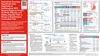 November 2025 in “SKIN The Journal of Cutaneous Medicine”
 This phase 3 trial found that over 50% of adolescents with severe alopecia areata achieved successful hair regrowth after 52 weeks on baricitinib 4-mg, with no new safety concerns reported compared to existing safety profiles.
September 2025 in “Journal of Skin and Stem Cell” This narrative review reports that baricitinib, a first-generation JAK inhibitor, has shown effectiveness in treating alopecia areata and atopic dermatitis and holds promise for other chronic dermatoses, marking a significant advancement in dermatological immunotherapy according to the summarized findings.
 September 2023 in “Journal of The American Academy of Dermatology”
 In this study, baricitinib was evaluated for its effectiveness in promoting concurrent regrowth of scalp hair, eyebrows, and eyelashes in patients with severe alopecia areata, showing clinically meaningful responses compared to placebo.
 4 citations
,
September 2024 in “Jurnal Pengolahan Hasil Perikanan Indonesia”
4 citations
,
September 2024 in “Jurnal Pengolahan Hasil Perikanan Indonesia” In this study, researchers reported that compounds from Bruguiera gymnorhiza leaves showed anti-inflammatory potential in in silico analyses, with favorable drug properties and specific binding to the IKKβ receptor, suggesting possible development into anti-inflammatory drugs.
Ivarmacitinib effectively regrows hair in severe alopecia areata.
In these randomized, placebo-controlled trials, patients with alopecia areata who received baricitinib showed significantly higher eyebrow and eyelash hair regrowth rates compared to placebo, with greater responses observed at the 4 mg dose and in those achieving overall scalp hair improvement by Week 52.
 January 2025 in “Geneesmiddelenbulletin”
 This 104-week follow-up trial found that baricitinib is effective and safe for treating severe alopecia areata but requires continuous use to sustain hair regrowth. The drug is included in the NVDV guidelines and reimbursed by Dutch insurers for this purpose.
 1 citations
,
September 2022 in “Journal of The American Academy of Dermatology”
1 citations
,
September 2022 in “Journal of The American Academy of Dermatology” In this analysis of two trials, baricitinib showed eyebrow and eyelash regrowth in severe alopecia areata patients with greater than 20% scalp hair loss at Week 36, compared to placebo.
5 citations
,
October 2022 in “British Journal of Dermatology” This study reports that two phase III trials demonstrated the effectiveness of the oral Janus kinase inhibitor baricitinib at 2 mg or 4 mg daily for treating severe alopecia areata in adults, marking a potential advance in managing this condition.
1 citations
,
March 2023 in “Anais Brasileiros de Dermatologia”  April 2006 in “Journal of the Islamic Medical Association of North America”
 This article describes a personal movie from 1969 documenting skull trephination surgery by Gusii tribal surgeons in Kenya, without presenting new clinical results.
 1 citations
,
December 2022 in “The Nishinihon Journal of Dermatology”
1 citations
,
December 2022 in “The Nishinihon Journal of Dermatology” This source reports that based on international Phase 3 trial results, the JAK1/2 inhibitor baricitinib was approved in Japan in June 2022 for treating extensive alopecia areata, offering a potentially useful treatment option.
November 2022 in “Munich Personal RePEc Archive (Ludwig Maximilian University of Munich)” In this study, the pi4kβ1β2 double mutant in Arabidopsis thaliana exhibited altered root growth, increased susceptibility to Blumeria graminis, and a potential correlation between PI4K activity and auxin response and immunity due to changes in vesicular trafficking and actin filaments.
 9 citations
,
May 2012 in “PLOS ONE”
9 citations
,
May 2012 in “PLOS ONE” This study found that integrin-linked kinase is crucial for various epidermal functions, including differentiation and barrier formation, and also plays a previously unreported role in melanocyte development and function.
October 2023 in “The Open Dermatology Journal” Baricitinib is effective for severe alopecia areata with manageable side effects, mainly upper respiratory infections.
 December 2024 in “Cermin Dunia Kedokteran”
 This source highlights that intraocular foreign bodies are urgent ophthalmologic emergencies requiring prompt diagnosis and treatment to prevent blindness and eye loss, with most cases involving the posterior segment of the eye.
 April 2023 in “Journal of Pakistan Medical Association”
 This source reports that clinical trials found oral baricitinib significantly improved hair regrowth in patients with severe alopecia areata, with 38.8% achieving at least 80% scalp hair coverage after 36 weeks on a 4-mg dose, compared to 6.2% with placebo in trial 1.
 3 citations
,
September 2022 in “Journal of the American Academy of Dermatology”
3 citations
,
September 2022 in “Journal of the American Academy of Dermatology” In this study, baricitinib treatment for severe alopecia areata showed similar safety and led to hair regrowth improvements independent of atopic background, with 40.8% of patients with atopy achieving a significant response compared to 30.2% without atopy when using a 4 mg dose.
449 citations
,
December 2005 in “The Plant Cell” This study found that the BIK1 gene in Arabidopsis thaliana modulates defense responses to pathogens and is essential for normal root growth and development.
12 citations
,
May 2016 in “British Journal of Dermatology” This report describes a rare case of epidermolysis bullosa acquisita in a child developing during therapy with squaric acid dibutyl ester for alopecia areata, suggesting a possible link between the medication and disease onset.
 1 citations
,
March 2023 in “Skin”
1 citations
,
March 2023 in “Skin” This study describes the patterns of clinical response in patients with severe alopecia areata treated with baricitinib over 52 weeks, based on integrated data from two Phase 3 trials.
 September 2023 in “Journal of The American Academy of Dermatology”
 This announcement discusses the recent FDA approval of baricitinib for treating severe alopecia areata in adults and reports no new clinical results.

In this study, data from multiple sources found that Baricitinib significantly promoted hair regrowth and improved patient-reported outcomes in those with severe alopecia, with minimal side effects, over a 36-week period.
 September 2019 in “Journal of Investigative Dermatology”
 In this study, dose-response modeling predicted that once-daily abrocitinib doses of 100 mg and 200 mg may provide a clinically meaningful response in treating moderate-to-severe atopic dermatitis compared to placebo.
August 2022 in “Journal of Investigative Dermatology” Baricitinib reduces inflammation and mitochondrial damage in skin cells.
 November 2025 in “SKIN The Journal of Cutaneous Medicine”
 In this study, baricitinib, a JAK inhibitor, was found to significantly improve scalp hair regrowth in both adults and adolescents with severe alopecia areata, with many achieving nearly full regrowth by weeks 36 or 52.
April 2010 in “Cancer Research” This study found significant upregulation of IDO-1 and IDO-2 in human basal cell carcinomas, suggesting that IDO production may confer immune privilege characteristics to the tumors, potentially impacting their growth.
 January 2025 in “Frontiers in Pediatrics”
 This case report describes a child with alopecia areata and atopic dermatitis who showed significant improvement after treatment with baricitinib and corticosteroid ointment, suggesting their potential efficacy and safety.
June 2025 in “Revista Foco” This review assessed randomised clinical trials on the efficacy and safety of topical and systemic JAK inhibitors for alopecia areata, finding significant hair coverage improvement with ritlecitinibe and baricitinibe, though prolonged treatment is often needed to maintain results.