16 citations
,
December 2001 in “The Journal of Dermatology” In this case report, a woman experienced complete hair regrowth after anagen effluvium and lichenoid eruptions, possibly due to early corticosteroid intervention after INH was withdrawn.
 26 citations
,
April 2007 in “Journal of pediatric gastroenterology and nutrition”
26 citations
,
April 2007 in “Journal of pediatric gastroenterology and nutrition” This case report describes an adolescent girl with polycystic ovarian syndrome and endogenously elevated androgen levels who developed a hepatic adenoma, suggesting a link between the two conditions.
 53 citations
,
October 1984 in “Endocrine reviews”
53 citations
,
October 1984 in “Endocrine reviews” This review highlights that idiopathic hirsutism is characterized by local hyperandrogenization affecting hair growth, without other signs of hyperandrogenism, and shows no new results; racial differences in prevalence are noted but not in androgenic steroids.
July 1993 in “学術講演梗概集. A, 材料施工,防火,海洋,情報システム技術” This study observed that hyperprolactinemia in women may be associated with skin and hair symptoms similar to those induced by androgens, suggesting hormone level evaluations in such cases.
January 2010 in “The Internet Journal of Family Practice” This article reviews the clinical features, incidence, and systemic effects of hypothyroidism across different age groups and reports no new clinical findings.
November 2025 in “Frontiers in Endocrinology” This report describes a rare case of ectopic adrenocorticotropic hormone syndrome caused by a pheochromocytoma that unusually co-expresses both ACTH and corticotropin-releasing hormone.
1 citations
,
August 2025 in “European journal of medical research” In this study, subclinical hypothyroidism in women with PCOS was linked to changes in the thyroid-prolactin axis and a lack of correlation between TSH and AMH, while gonadotropin levels and ovarian morphology remained unaffected, indicating the need for further prospective research.
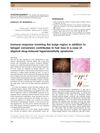 1 citations
,
October 2013 in “The Journal of Dermatology”
1 citations
,
October 2013 in “The Journal of Dermatology” This letter to the editor discusses the immune response related to hair loss in a case of atypical drug-induced hypersensitivity syndrome but reports no new research findings.
1 citations
,
June 2006 in “Experimental dermatology” This article reviews possible pathogenesis scenarios for hidradenitis suppurativa and emphasizes the need for focused research on the innate immune system of hair follicles to better understand the disease.
 45 citations
,
November 2015 in “Dermatologic Clinics”
45 citations
,
November 2015 in “Dermatologic Clinics” This review discusses the potential hormonal and metabolic factors influencing hidradenitis suppurativa and highlights the need for further research to explore hormonal dysregulation's role in the disease.
 February 2010 in “Journal of The American Academy of Dermatology”
 This study found that nonobese women with idiopathic hirsutism had higher fibrinogen levels and lower nitrite/nitrate concentrations compared to controls, similar to those with PCOS.
 2 citations
,
July 2012 in “InTech eBooks”
2 citations
,
July 2012 in “InTech eBooks” This article reviews the influence of thyroid hormone on skin and hair health, emphasizing its role in epidermal homeostasis and hair growth, but reports no new experimental results.
1 citations
,
January 2022 This case report describes a 29-year-old woman diagnosed with both systemic lupus erythematosus and Graves' disease, illustrating the occurrence of autoimmune polyendocrine syndromes with specific combinations of autoimmune disorders.
358 citations
,
January 1968 in “Physiological Reviews” Histamine plays key roles in immune responses, stomach acid, and brain signals.
24 citations
,
May 1951 in “Endocrinology” This study describes the effects of adrenocorticotropic hormone injections in rats, specifically detailing their stunted body growth and changes in visceral proportions and hematology.
 February 2026 in “South Asian Research Journal of Biology and Applied Biosciences”
 In this study, patients with alopecia areata had significantly higher levels of luteinizing hormone and follicle-stimulating hormone compared to healthy controls, suggesting a link between hormone levels and the disease.

In this case study, a 70-year-old male with lymphoid variant hypereosinophilic syndrome presented with rare isolated pulmonary involvement, which improved with prednisone treatment.
 2 citations
,
August 2022 in “Federal Practitioner”
2 citations
,
August 2022 in “Federal Practitioner” This case report describes a patient with lamotrigine-associated drug-induced hypersensitivity syndrome requiring prolonged and complex treatment, with observed complications including extensive alopecia areata and autoimmune thyroiditis.
May 2022 in “Endocrine practice” This case report illustrates that high-dose biotin supplementation can cause false thyroid function test abnormalities in vitro, emphasizing the need to assess biotin intake before testing.
 December 2025 in “International Journal of Medicine and Public Health”
 In this study, researchers found that overt hyperthyroidism was the most prevalent thyroid disorder among patients, especially in women, and it was characterized by classic symptoms like high pulse rate and weight loss, highlighting the importance of early identification and management to prevent complications.

This case study reports an unusual presentation of erosive lichen planus of the scalp linked to hepatitis C in a patient, highlighting challenges in establishing a definitive correlation between the two conditions.
65 citations
,
December 1986 in “The Journal of Clinical Endocrinology & Metabolism” This study concluded that a 26-year-old woman had autosomal dominantly inherited hereditary cortisol insensitivity, leading to increased adrenocortical cortisol and androgen secretion, which caused clinical symptoms unlike in her male relatives.
 January 2025 in “Haematology International Journal”
 This study describes a functional disorder in the ovary, known as stromal hyperplasia, characterized by the proliferation of ovarian stroma and luteinization of stromal cells, which is linked to excessive androgen production and elevated testosterone levels.
May 2008 in “10th European Congress of Endocrinology” This study discovered that TTR is expressed in the human placenta as early as 6 weeks gestation, with increased levels in the first trimester potentially facilitating thyroid hormone delivery to the fetus.
 32 citations
,
March 2015 in “The Journal of Clinical Endocrinology & Metabolism”
32 citations
,
March 2015 in “The Journal of Clinical Endocrinology & Metabolism” In this study, alopecia areata was associated with thyroid autoimmunity but not islet autoimmunity, correlating with specific class II HLA haplotypes linked to various autoimmune diseases.
1 citations
,
June 2023 in “Acta veterinaria” This study found that both subclinical and overt maternal hypothyroidism during pregnancy and lactation caused significant damage to the skin development of rat offspring, including pronounced hyperkeratosis and reduced hair follicle formation, with more severe effects observed in overt hypothyroidism.
11 citations
,
January 2023 in “World Journal of Clinical Cases” This study suggests that idiopathic hirsutism may involve higher local androgen synthesis despite normal serum androgen levels, challenging its categorization as idiopathic.
13 citations
,
August 2020 in “Der Hautarzt” This article discusses hyperandrogenism, including its symptoms, causes, and diagnostic approaches, and reports no new clinical results; it emphasizes the role of interdisciplinary care in treatment.
8 citations
,
January 2021 in “Fermentation” This article discusses the potential role of probiotics and synbiotics in managing hirsutism through insulin resistance but reports no new clinical results, calling for further research.
October 2025 in “Nepal Journal of Dermatology Venereology & Leprology” This study concluded that polycystic ovary syndrome is the most common cause of hirsutism, with significant correlations between PCOS, insulin resistance, and BMI among affected women.