1 citations
,
August 2021 in “Journal of The American Academy of Dermatology” This study investigates the effects of ice cooling and vibration on reducing pain during platelet-rich plasma injections for alopecia, especially due to concerns about lidocaine reducing PRP efficacy.
 6 citations
,
April 2012 in “Lasers in surgery and medicine”
6 citations
,
April 2012 in “Lasers in surgery and medicine” This study observed that persistent urticaria is a rare side effect of laser epilation, potentially linked to a hypersensitivity reaction in patients with allergies.
2 citations
,
October 2023 in “Science advances” In this study, researchers demonstrated that human hair follicle outer root sheath cells release ATP, serotonin, and histamine in response to mechanical stimulation, which subsequently activates surrounding sensory neurons.
 August 2023 in “Asian journal of pharmaceutical and clinical research”
 This descriptive longitudinal study conducted in a Kolkata hospital found that intense pulsed light treatment significantly improved hirsutism in patients, as evaluated by trichoscopy and visual analog scores, demonstrating its effectiveness and safety for hair removal, independent of medical treatment.
 3 citations
,
May 2011 in “Journal of the American Academy of Dermatology”
3 citations
,
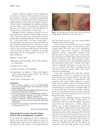
May 2011 in “Journal of the American Academy of Dermatology” This case report describes a 54-year-old woman who developed hypertrichosis around a leg ulcer while using PGE1 ointment, suggesting a potential side effect of the treatment.
This study found that the Leni wand device, which combines cold and vibration, was more effective at reducing pain from local anesthesia injections during hair transplant surgery than a device using only vibration, although results were obtained solely from a male participant group.
This study found that subcutaneous administration of Botulinum toxin type A significantly reduced histamine-induced itch intensity and neurogenic inflammation in human skin compared to saline.
 April 2024 in “Skin health and disease”
 In this case study, a patient developed parieto-temporal pain, tissue necrosis, and alopecia after receiving a hyaluronic acid injection for temporal augmentation, which was effectively treated with hyaluronidase and aspirin.
 September 2024 in “Journal of the American Academy of Dermatology”
 This study found that music during platelet-rich plasma scalp injections reduced anxiety in male patients and increased preference for clinics offering music, but effects in female patients were mixed.
In this study, researchers found that the bioactive lipid sphingosine 1-phosphate and its receptor, S1PR3, are essential for regulating mechanical pain sensitivity in mice.

Hair feels different when touched and rubs together in various ways.
110 citations
,
January 1983 in “Brain Research Reviews” This study found that the vermilion border and mucosa of the monkey lip have a dense sensory innervation, which correlates with their known tactile sensitivity.
 5 citations
,
March 2023 in “bioRxiv (Cold Spring Harbor Laboratory)”
5 citations
,
March 2023 in “bioRxiv (Cold Spring Harbor Laboratory)” This study found that Piezo2 channels are primarily located on sensory axon membranes in mechanosensory end organs, supporting a model where mechanical stimuli activate Aβ RA-LTMR neurons via axon protrusions.
 1 citations
,
April 2016 in “Journal of The American Academy of Dermatology”
1 citations
,
April 2016 in “Journal of The American Academy of Dermatology” A woman had a delayed allergic reaction to the blood thinner enoxaparin, treated with a steroid cream.
 142 citations
,
September 2020 in “Journal of neurophysiology”
142 citations
,
September 2020 in “Journal of neurophysiology” This study estimates that young adults have about 230,000 tactile afferent fibers innervating their skin, with density varying by region and decreasing with age.
 4 citations
,
March 2002 in “Hair transplant forum international”
4 citations
,
March 2002 in “Hair transplant forum international” This abstract discusses the challenges and considerations of hair restoration surgery related to the skin's rich neuro-vascular supply and does not report new clinical results.
 February 2026 in “Medicina”
 This study found that intradermal injections of Profhilo® significantly reduced skin inflammation and pain, while altering spinal cord markers in mice with ovalbumin-induced atopic dermatitis, suggesting potential therapeutic benefits for inflammatory skin conditions involving both peripheral and central processes.
 September 2018 in “Gynecology & Obstetrics”
 In a meta-analysis of 210 hair tourniquet syndrome cases, this study reported that 44.2% involved the penis, 40.4% the toes, and 8.6% fingers, highlighting the condition's potential severity and underreporting, especially in infants and some adults with cognitive impairments.
 17 citations
,
January 1996 in “Aesthetic Plastic Surgery”
17 citations
,
January 1996 in “Aesthetic Plastic Surgery” This study suggests that the tumescent technique effectively provides anesthesia and reduces bleeding during hair micrografting, eliminating the need for multiple needle injections or nerve blocks.
 12 citations
,
June 2010 in “Journal of dermatology”
12 citations
,
June 2010 in “Journal of dermatology” This study found that hyperpigmentation following contact immunotherapy for severe alopecia areata may indicate poor treatment responsiveness and aligns with characteristics of pigmented contact dermatitis.
39 citations
,
October 2012 in “Headache The Journal of Head and Face Pain” This study reports cutaneous atrophy and alopecia in four patients following greater occipital nerve blockade with triamcinolone and lidocaine, suggesting that alternative steroids may reduce these side effects.
January 2012 in “Case reports in pediatrics” This case study reports the first instance of localized acquired hypertrichosis in a pediatric patient following splint application after forearm surgery, with hair growth returning to normal within eight months.
 3 citations
,
May 2016 in “Journal of Cutaneous Medicine and Surgery”
3 citations
,
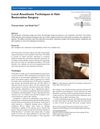
May 2016 in “Journal of Cutaneous Medicine and Surgery” This article briefly describes local anesthesia techniques for hair restoration surgery that aim to enhance patient comfort but reports no new research results.

This study reports isolated clitoral hood hair-thread tourniquet syndrome, highlighting the importance of suspicion in females with prominent clitoral hood and genital pain to facilitate timely intervention and tissue preservation.
This compilation lists potential side effects, drug interactions, and trade names of various dermatological and antiretroviral medications, but it reports no original research findings.
August 2025 in “Scientific Reports” In this study, researchers observed that intractable pruritus in anterior chest keloid lesions is linked to increased intraepidermal nerve fibre density and elevated expression of substance P, without differences in Langerhans cells across different keloid regions.
 1 citations
,
January 2001 in “Dermatologic Surgery”
1 citations
,
January 2001 in “Dermatologic Surgery” Pulsed dye laser and hydrogel dressings effectively treat hypertrophic scars.
 4 citations
,
October 2022 in “Aesthetic surgery journal”
4 citations
,
October 2022 in “Aesthetic surgery journal” This study reports that percutaneous superficial temporal arterial hyaluronidase injection effectively treated necrosis of the frontotemporal skin and ipsilateral scalp, with patients experiencing significant recovery in skin appearance and hair regrowth 2 to 3 months after injection, following complications from hyaluronic acid filler.
 September 2024 in “Journal of the American Academy of Dermatology”
 This study reports that oxytocin receptor expression in keratinocytes shows a potential relationship with touch sensory neurons, suggesting a role in skin sensitivity and the broader function of sensory neurons.
 23 citations
,
April 2004 in “American Journal of Ophthalmology”
23 citations
,
April 2004 in “American Journal of Ophthalmology” This case report found that topical bimatoprost usage in a female Hispanic patient with open-angle glaucoma was associated with hypertrichosis and increased pigmentation of vellus hairs on the malar region.