 11 citations
,
September 2013 in “Journal of The European Academy of Dermatology and Venereology”
11 citations
,
September 2013 in “Journal of The European Academy of Dermatology and Venereology” In this study, sensorineural hearing loss was significantly more frequent in patients with alopecia areata compared to healthy controls, suggesting a relationship between the autoimmune condition and hearing function.
May 2023 in “Zenodo (CERN European Organization for Nuclear Research)” This study reports a case of pyoderma gangrenosum in a patient with rheumatoid arthritis, emphasizing the need to consider it as a differential diagnosis when ulcerative skin lesions resemble vasculitis.
2 citations
,
October 2023 in “Science advances” In this study, researchers demonstrated that human hair follicle outer root sheath cells release ATP, serotonin, and histamine in response to mechanical stimulation, which subsequently activates surrounding sensory neurons.
11 citations
,
December 2012 in “Alcoholism Clinical and Experimental Research” This study found that in Withdrawal Seizure-Prone mice, ethanol withdrawal decreased the sensitivity of GABA A receptors to GABAergic neurosteroids in certain areas of the brain.
 4 citations
,
March 2017 in “Al-Mi’galaẗ al-sa'udiyaẗ lī-ulum al-ḥayaẗ”
4 citations
,
March 2017 in “Al-Mi’galaẗ al-sa'udiyaẗ lī-ulum al-ḥayaẗ” In this study, Leonuri Herba alkaloids significantly reduced prostate hyperplasia indicators and improved urinary parameters in hormone-induced model rats.
19 citations
,
April 2017 in “Synapse” This study suggests that the neurosteroid allopregnanolone contributes to stress resistance in mice, and the ALLO mimetic drug alfaxalone may offer anxiolytic benefits without muscle-relaxant effects.
July 2025 in “Actas Dermo-Sifiliográficas” This study outlines trichodynia, a painful scalp condition often linked with various types of alopecia and psychiatric disorders, noting the absence of specific treatments and highlighting the need for further research on therapeutic options.
 4 citations
,
April 2020 in “bioRxiv (Cold Spring Harbor Laboratory)”
4 citations
,
April 2020 in “bioRxiv (Cold Spring Harbor Laboratory)” This study estimates that approximately 230,000 tactile afferent fibers innervate the human body's skin, with varying densities across different regions correlating with spatial acuity and hair follicle density.
20 citations
,
October 2013 in “Dermatologic Surgery”  April 2018 in “Journal of Investigative Dermatology”
 This study found that both Th1 and Th2 cytokine markers were elevated in the serum and skin of patients with alopecia areata, with Th2 markers more closely linked to disease severity.
15 citations
,
August 2019 in “F1000Research” This review discusses the physiological roles of anthrax toxin receptors CMG2 and TEM8, highlighting their influence on extracellular matrix homeostasis, angiogenesis, cell migration, and skin elasticity, and reports no new clinical results.
1 citations
,
January 2007 in “Side effects of drugs annual” This chapter reviews dermatological treatments, noting that botulinum toxin A is associated with a higher occurrence of focal weakness compared to controls, and reports on adverse effects of finasteride and PUVA therapy.
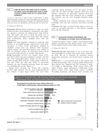
This study suggests that fatigue, joint pain, and light sensitivity are significant impacts for systemic lupus erythematosus patients, highlighting areas of unmet need in current treatment options.
 7 citations
,
October 2006 in “Medical hypotheses”
7 citations
,
October 2006 in “Medical hypotheses” UV light might cause excessive hair growth by increasing PGE2 in the skin.
 24 citations
,
August 2017 in “Prostaglandins & Other Lipid Mediators”
24 citations
,
August 2017 in “Prostaglandins & Other Lipid Mediators” This review discusses the potential roles of prostaglandin D2 and its receptor CRTH2 in various diseases beyond allergies and asthma and reports no new clinical results.
9 citations
,
April 2023 in “Experimental Dermatology” This study found that adding allergen immunotherapy to conventional treatment may reduce relapse-related hair loss in house dust mite-allergic alopecia areata patients over a 3-year period.
In this study, thalamic GABAA receptor α4 subunit levels were regulated after acute and chronic ethanol exposure, with temporal expression changes affected by phosphorylation state and neuroactive steroids.
92 citations
,
July 2001 in “The FASEB Journal” In this study, transgenic mice overexpressing the glucocorticoid receptor in certain epithelia showed skin development abnormalities resembling ectodermal dysplasia and exhibited reduced inflammatory responses.
 88 citations
,
August 2019 in “Nature communications”
88 citations
,
August 2019 in “Nature communications” In this study, researchers identified a specific T cell receptor associated with carbamazepine-induced severe cutaneous adverse reactions, demonstrating its potential for therapeutic development in patients with the HLA-B*15:02 genotype.
 31 citations
,
July 2017 in “Journal of the American Academy of Dermatology”
31 citations
,
July 2017 in “Journal of the American Academy of Dermatology” This study observed that apremilast treatment improved skin lesions and reduced pruritus in patients with chronic, severe atopic dermatitis and one case of hand and foot dermatitis.
 April 2020 in “Rheumatology”
 This study found significant but small variations in glucocorticoid adherence among patients with giant cell arteritis, mainly due to medical advice rather than patient factors.
March 2014 in “Institutional Repositories DataBase (IRDB)”  August 2024 in “Journal of Clinical Medicine”
 This study aimed to assess pruritus in lichen planopilaris and frontal fibrosing alopecia, analyzing its correlation with dermoscopic features, but it reports no specific clinical results.
June 2023 in “Lithuanian University of Health Sciences” 2 citations
,
September 2023 in “PubMed” The studies reviewed found favorable treatment outcomes for hypopigmented scars using PGF2α agonists with no adverse events reported. However, the authors highlight the need for larger randomized controlled trials to better understand their effectiveness and long-term safety.
5 citations
,
February 2019 in “Neuroscience letters” This study found that both declining levels of the neurosteroid THP and increasing levels of estradiol before puberty trigger maximal expression of α4βδ GABAA receptors in the CA1 hippocampus of female mice.
March 2008 in “The FASEB Journal” This study found that neurosteroid withdrawal significantly increased hippocampal GABA-A receptor α4 subunit expression in female mice, confirming an association between neurosteroid withdrawal and altered receptor expression.
 4 citations
,
January 2018 in “JEADV. Journal of the European Academy of Dermatology and Venereology/Journal of the European Academy of Dermatology and Venereology”
4 citations
,
January 2018 in “JEADV. Journal of the European Academy of Dermatology and Venereology/Journal of the European Academy of Dermatology and Venereology” Panitumumab can cause excessive ear hair growth.
5 citations
,
August 2005 in “Anatomy and Embryology” This study found that concentrated clusters of noradrenergic nerve fibers form a longitudinal linear system in rat skin, particularly innervating arrector pili muscles.
 3 citations
,
August 2018 in “Deleted Journal”
3 citations
,
August 2018 in “Deleted Journal” This study found that Guasha therapy did not significantly alter nerve fiber morphology or the expression of CGRP and SP in rat skin, with parameters generally returning to normal within five days.