10 citations
,
January 1994 This study discusses that permanent hair straightening can be achieved at neutral or acidic pH conditions, with varying effects on cystine and lanthionine levels, by inducing supercontraction of the hair fiber.
165 citations
,
May 2023 in “Science Advances” In this study, the researchers developed a living microecological hydrogel containing Chlorella and Bacillus subtilis that showed potential in promoting the healing of infected diabetic wounds by providing continuous oxygen delivery and anti-infective properties.
February 2026 in “ACS Omega” This study developed a multifunctional hydrogel, QTMP-Gel, which significantly accelerated wound healing in an oral mucositis hamster model by providing antioxidant and antibacterial effects, reducing inflammation, and controlling infection.
November 2025 in “OPAL (Open@LaTrobe) (La Trobe University)” This study developed a new method using ultrahigh-power sonication and mass spectrometry to improve protein extraction from hair shafts, identifying 239 differentially expressed proteins related to fetal growth restriction, which were validated as potential noninvasive biomarkers for perinatal diagnostics.

This study found that a blend of low- and high-molecular weight hyaluronic acid significantly improved penetration into the hair cortex compared to individual HA types, reducing frizz and increasing hair elasticity and water content, as measured by Confocal Raman Spectroscopy.
 1 citations
,
November 2023 in “Research Square (Research Square)”
1 citations
,
November 2023 in “Research Square (Research Square)” In this study, researchers introduced a machine learning approach to discover new nanozymes through the DiZyme platform, enabling the accurate prediction of multiple catalytic activities, and providing a comprehensive database and assistant resources for users.
May 2010 in “Europe PMC (PubMed Central)” This chapter discusses the synthesis and analysis of near-infrared fluorescent activity-based probes for imaging cysteine protease activity, reporting potential benefits for disease diagnosis but noting challenges in imaging specific locations with high cathepsin activity.
September 2010 in “International Journal of Cosmetic Science” This study describes a microfluorometric method to quantify lipid removal and reattachment on human hair during light exposure and chemical treatments, altering hair surface properties from hydrophobic to hydrophilic.
 18 citations
,
February 2015 in “Acta Crystallographica Section D: Structural Biology”
18 citations
,
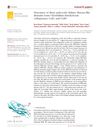
February 2015 in “Acta Crystallographica Section D: Structural Biology” This study reports that Ca 2+ binding alters the dynamics and surface properties of PKD-like domains in Clostridium histolyticum collagenases, enhancing their stability and potentially aiding in collagen-targeting vehicle development.
 10 citations
,
January 2001 in “ACTA HISTOCHEMICA ET CYTOCHEMICA”
10 citations
,
January 2001 in “ACTA HISTOCHEMICA ET CYTOCHEMICA” In this study, autophagy was commonly observed during keratinization in neonate rat hair follicles, suggesting lysosomal proteases and cytoplasmic enzymes may coordinate in hair follicle cell differentiation.
 October 2023 in “Journal of Molecular Liquids”
 This study demonstrated that imidazole-based ionic liquids, particularly [Emim]DEP, effectively dissolved yak hair keratin, maintaining its structure better than other tested solvents, and also performed well on human hair and goat wool, with consistent performance even after five recycling cycles.
 March 2010 in “International Journal of Cosmetic Science”
 This study found that oxidative treatment with peracetic acid dissociates some disulfide bonds in human hair fibers while maintaining the crystalline structure, suggesting different mechanisms stabilize different regions of intermediate filaments.
April 2026 in “Applied Materials Today” This study introduced a pH-responsive polymeric wound dressing that enhances healing in chronic wounds by changing shape and drug delivery based on wound pH, achieving a 94.88% healing rate in diabetic mice by day 14.
 38 citations
,
October 2011 in “Analytical biochemistry”
38 citations
,
October 2011 in “Analytical biochemistry” This study used proteomic techniques to analyze human hair proteins, revealing keratin heterogeneity and identifying posttranslational modifications, such as cysteine trioxidation and methylation.
20 citations
,
November 2012 in “Methods in molecular biology” This study proposes using superhydrophobic surfaces to reduce protein fouling and enable self-cleaning in microfluidic devices, detailing preparation and quantification methods for these coatings.
October 2021 in “Authorea (Authorea)” In this study, using tyrosine as a cross-linking agent for hair perming showed better initial results compared to commercial products, though efficiency decreased after washing without compromising hair strength.
8 citations
,
January 2024 in “Current Research in Food Science” This study found that using composite alginate hydrogels containing Aloe vera, CMC, and tragacanth can improve the encapsulation efficiency and protect pumpkin seed protein hydrolysates from degradation during simulated gastrointestinal digestion, potentially increasing their applicability as functional food components.
2 citations
,
June 2025 in “Chemical Engineering Journal” The hydrogel helps heal seawater-immersed wounds by reducing infection and inflammation.
June 2025 in “Problems of Cryobiology and Cryomedicine” In this study, the researchers found that tyndallization effectively sterilizes aqueous solutions of hyaluronic acid without diminishing their regenerative properties, and these properties remain intact even at low temperatures, supporting potential applications in cryobiology and cryomedicine.
 68 citations
,
March 2019 in “Advanced Healthcare Materials”
68 citations
,
March 2019 in “Advanced Healthcare Materials” This review assesses the benefits and limitations of various supramolecular hydrogels, including polymeric and peptide-based types, for wound healing, but reports no new clinical results.
 4 citations
,
January 1994 in “Yakugaku zasshi”
4 citations
,
January 1994 in “Yakugaku zasshi” In this study, EPC-K, a compound with antioxidant and moisturizing effects, was found to decompose significantly under certain conditions, impacting its stability in quasi drug hair-growing products.
 2 citations
,
January 2014 in “Sen i Gakkaishi”
2 citations
,
January 2014 in “Sen i Gakkaishi” This study verified that a new straightening process involving a flat iron, ammonium thioglycolate, and hydrogen peroxide may permanently straighten wavy hair by eliminating disulfide bond distortions.
August 2025 in “International Journal of Biological Macromolecules” A new hydrogel can kill resistant bacteria and help heal infected burn wounds.
59 citations
,
July 1972 in “Biochemistry” This study investigated the formation of a specific chemical crosslink in hair proteins and explored the role of transamidase enzymes in hair follicles.
November 2022 in “Asian Journal of Pharmaceutical Research” In this study, the researchers developed a cellulose-based hydrogel that provides sustained drug release with improved bioavailability and stability over time.
 8 citations
,
July 2018 in “Analytical sciences”
8 citations
,
July 2018 in “Analytical sciences” This study reported that derivatization with 5-butylpicolinic acid improved the sensitivity for detecting testosterone and DHT in saliva using LC-ESI-MS/MS, with minimal interference from the saliva matrix.
1 citations
,
June 2014 in “[Thesis]. Manchester, UK: The University of Manchester; 2014.” This study found that chemically modifying human hair through esterification or disulfide reduction and alkylation affects the hair's viscoelastic properties, including stability, integrity, and response to moisture.
 May 2026 in “Iranian journal of pharmaceutical research”
 This study found that HAMA hydrogels promote faster healing of skin wounds in mice by enhancing the accumulation of anti-inflammatory macrophages and increasing type III collagen in the local wound environment.
 January 2024 in “Collagen and leather”
 This study observed that using an environmentally friendly bovine milk permeate effectively and cleanly removes wool from sheepskins without harming the skin, and results in smoother leather compared to traditional chemical methods.
143 citations
,
January 2012 in “Cell and Tissue Research”