5 citations
,
February 2021 in “Gels” In this study, HYDRO DELUXE BIO was reported to show promise for scalp mesotherapy by enhancing angiogenesis and reducing inflammation in an in vitro model.
34 citations
,
January 1983 in “Journal of Investigative Dermatology” 44 citations
,
October 1990 in “Archives of Dermatological Research” The connective tissue around hair follicles changes structure throughout the hair cycle.
22 citations
,
January 2006 in “Journal of Structural Biology” Hair follicles form hard α-keratin filaments in four steps, showing structural differences.
11 citations
,
January 1977 in “Archives of dermatological research” Mouse tail skin has different keratinization near hair follicles and scales.
3 citations
,
June 1979 in “The Journal of Dermatology” This study found that the dermal glycosaminoglycan content and mast cell count in rats peaked during the anagen stage of hair growth and decreased during later stages.
42 citations
,
January 2003 in “International Journal of Gynecological Pathology” This research observed that multifocal pseudoepitheliomatous hyperplasia may explain some cases of squamous nests in vulvar lichen sclerosus with lichen simplex chronicus, potentially as a reaction to tissue damage rather than squamous cell carcinoma.
 May 2026 in “Iranian journal of pharmaceutical research”
 This study found that HAMA hydrogels promote faster healing of skin wounds in mice by enhancing the accumulation of anti-inflammatory macrophages and increasing type III collagen in the local wound environment.
January 2016 in “Frontiers in Bioengineering and Biotechnology” In this study, a porous keratin hydrogel derived from wool hair demonstrated strong mechanical properties and supported the growth of various animal cells, indicating potential as a scaffold in tissue engineering.
1 citations
,
November 2024 in “Journal of Investigative Dermatology” Er:YAG laser therapy effectively treats Hailey-Hailey disease, leading to long-term remission and improved quality of life.
12 citations
,
January 2013 in “Acta Histochemica” Junctional proteins stabilize the inner root sheath and connect the companion layer in human hair.
This study demonstrates that the trichohyalin gene is located at chromosomal region 1q21, where several other genes related to epidermal differentiation also map.
 January 1994 in “Nihon Chikusan Gakkaiho”
 This study observed that mink dermal collagen fibrils undergo structural changes during the hair cycle, with increased fiber thickness and bundle density as minks grow.
5 citations
,
November 2025 in “Biomolecules” This review examines the benefits of topical hyaluronic acid in cosmetic applications, noting its ability to penetrate the skin in low-molecular-weight forms and highlighting safety supported by clinical trials.
72 citations
,
May 1993 in “The Journal of Cell Biology” This study detailed the structure and amino acid composition of sheep trichohyalin, noting its presence in various tissues and suggesting a possible functional role beyond structural support in hair follicles.
September 2017 in “The journal of investigative dermatology/Journal of investigative dermatology” This study found that activating the hexosamine pathway increased hyaluronic acid secretion and hair follicle stem cell numbers in vitro, suggesting its role in modulating skin homeostasis.
26 citations
,
March 2017 in “Aesthetic plastic surgery” Accidental injection of hyaluronic acid caused temporary hair loss and skin damage, but treatment restored hair and healed the skin.
 April 2024 in “Journal of applied cosmetology”
 This study found that while hyaluronic acid fillers can enhance facial balance and aesthetics, particularly in the temple area, they carry significant risks like vascular occlusion and blindness, highlighting the need for careful technique and product selection to ensure safety.
 June 2023 in “Research Square (Research Square)”
 This study found that polycaprolactone (PCL) in facial fillers led to more cell proliferation and vascular activity than hyaluronic acid (HA) in Wistar rats, suggesting enhanced tissue regeneration effects with PCL.
30 citations
,
November 2012 in “Proceedings of the Royal Society B Biological Sciences” This study found that the keratin matrix in mammalian hard α-keratins is crucial for maintaining stiffness in water by controlling intermediate filament hydration.
January 1997 in “Han-guk hyeonmigyeong hakoeji/Applied microscopy” This study observed that the mechanical connection between hair follicles and connective tissue in human fetal scalp skin is weaker than in the corresponding skin components, reflecting dynamic processes in hair growth.
 36 citations
,
January 2007 in “Archives of Histology and Cytology”
36 citations
,
January 2007 in “Archives of Histology and Cytology” This study suggests that the absence of alpha5(IV)/alpha6(IV) chains in certain subepidermal basement membrane spots may relate to interactions with melanocytes in human skin.

This research found that keratin hydrogels derived from human hair may support cell viability and proliferation, indicating potential as 2D and 3D soft tissue culture scaffolds.

This study found that a blend of low- and high-molecular weight hyaluronic acid significantly improved penetration into the hair cortex compared to individual HA types, reducing frizz and increasing hair elasticity and water content, as measured by Confocal Raman Spectroscopy.
25 citations
,
October 1962 in “Journal of Ultrastructure Research” The hair follicle structure is more complex than thought, with new findings on protein formation.
14 citations
,
May 2022 in “Stem cell reports” This study reported that human induced pluripotent stem cell-derived skin organoids, used to model epidermolysis bullosa, have an epidermal-dermal junction largely lacking type VII collagen, which is important for skin structure.
17 citations
,
November 1967 in “American Journal of Anatomy” This study observed that the catagen phase in hairless mice displayed a slower shortening of the mutant epithelial column, resulting in longer total follicle length and abnormalities in the connective tissue sheath and glassy membrane.
15 citations
,
October 1999 in “British Journal of Dermatology” This study found that collagen remodeling is more active in anagen-stage skin than in telogen-stage skin in mice, suggesting that collagen modifications may support hair follicle growth and migration.
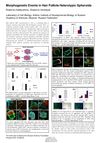
This study found that hyaluronic acid increased the size of hair follicle germ-like aggregates and the number of proliferative cells but did not maintain specific markers during the process.
36 citations
,
July 1988 in “Archives of Dermatological Research” Pili annulati is caused by a protein metabolism disorder affecting hair structure.