2 citations
,
January 2020 in “Clinical Dermatology Review” In this study, idiopathic hirsutism was identified as the most common cause of hirsutism among the patients, followed by polycystic ovarian syndrome.
 45 citations
,
June 2008 in “Journal of pharmaceutical and biomedical analysis”
45 citations
,
June 2008 in “Journal of pharmaceutical and biomedical analysis” This study developed a new HPLC method for detecting prohibited substances like minoxidil and hydrocortisone in cosmetic products, achieving high sensitivity and successful application to real-world samples.
 September 2024 in “Journal of the American Academy of Dermatology”
 PRO-C22 can help diagnose and monitor the severity of hidradenitis suppurativa.
 2 citations
,
January 2015 in “Hair transplant forum international”
2 citations
,
January 2015 in “Hair transplant forum international” This article discusses the introduction of human recombinant hyaluronidase in hair restoration surgery and presents no new clinical results.
This study found that GPC1 is a key regulator of angiogenesis in human dermal microvascular endothelial cells, influenced by factors secreted by keratinocytes, and may be a target for alopecia treatment research.
 10 citations
,
January 2013 in “Stem Cells and Development”
10 citations
,
January 2013 in “Stem Cells and Development” This study suggests that dermal stem/progenitor cells can be enriched by intracellular granularity and display high proliferation and differentiation potential in vitro, distinguishing them from other fibroblasts and progenitors.

In preclinical studies, topical CUR61414 reduced Hh signaling and shrank BCCs in mice, but this study found no clinical efficacy in human superficial or nodular BCCs.
 199 citations
,
April 2010 in “Nature”
199 citations
,
April 2010 in “Nature” A gene called APCDD1, which controls hair growth, is found to be faulty in a type of hair loss called hereditary hypotrichosis simplex.
 February 2024 in “Bioengineering”
 This study found that a hydrogel formulation containing insulin, chitosan, and hydroxypropyl methyl cellulose improved wound healing in diabetic mice, promoting faster wound closure and organized tissue formation, with in vitro tests showing no cytotoxicity and enhanced cell migration.
 April 2023 in “Journal of Investigative Dermatology”
 In this study, hair follicle-associated pluripotent stem cells from transgenic mice successfully normalized hair follicles and stimulated hair growth in athymic nude mice, indicating potential for cellular hair-loss therapy.
 7 citations
,
July 2019 in “International Journal of Molecular Sciences”
7 citations
,
July 2019 in “International Journal of Molecular Sciences” This study found that PGA-4HGF nanoparticles enhanced hair growth in mice more effectively than 4HGF alone by increasing anagen phase duration and dermal papilla cell proliferation.
 June 2023 in “Journal of cosmetic dermatology”
 This study concluded that both DPCP alone and combined with PRP are effective and safe for treating severe alopecia areata, with no significant difference between the two treatment methods.
November 2024 in “Stem Cell Research & Therapy” A new method improves the isolation of hair follicle cells for better hair growth research.
 June 2023 in “Journal of Liaquat University of Medical & Health Sciences”
 This study observed that women with PCOS from Khyber Pakhtunkhwa had significantly higher serum PSA levels, which positively correlated with hirsutism, testosterone, and DHEAS levels compared to healthy controls.
2 citations
,
June 2021 in “Bezmialem Science” This study found that using a centrifugation speed of 1800 rpm for 10 minutes is optimal for preparing platelet-rich plasma with PRPBAG®, yielding an eightfold increase in platelet concentration.
 35 citations
,
March 2012 in “Experimental and Clinical Endocrinology & Diabetes”
35 citations
,
March 2012 in “Experimental and Clinical Endocrinology & Diabetes” This article discusses various causes of hyperandrogenism in women and highlights diagnostic considerations for conditions such as PCOS, NCCAH, Cushing's disease, and androgen-secreting tumors, without reporting new clinical results.
This study found that a hair growth rate of 0.75 cm/month better matches retrospective cortisol timelines and identified factors influencing hair cortisol content in children and adolescents.

This study found that human placental extract significantly improved melasma, chronic ulcers, and alopecia areata without major adverse effects, suggesting its effectiveness and safety for these conditions.
 September 2024 in “Genes”
 This study found that overexpressing CRABP1 in dermal papilla cells promotes their proliferation and influences key genes in the Wnt/β-catenin signaling pathway, which may offer insights into mechanisms controlling hair follicle development.
 7 citations
,
June 1989 in “Steroids”
7 citations
,
June 1989 in “Steroids” In this study, the synthesis of C-4 and C-6 bridged haptens of 11 alpha-hydroxyprogesterone revealed an unexpected formation of a C-4 substituted product using a 6-bromo derivative, contrary to prior reports.
September 2016 in “Journal of dermatological science” This study found that hair-follicle-associated-pluripotent (HAP) stem cells can be cryopreserved for future use in nerve and spinal cord repair, with human trials being planned.
 64 citations
,
May 2003 in “Journal of health psychology”
64 citations
,
May 2003 in “Journal of health psychology” This study found that women with PCOS reported higher overall psychological distress, but there was no significant link between their perceived hirsutism and this distress.
April 2023 in “Journal of Investigative Dermatology” This study found that autologous cell-based therapy using dermal sheath cup cells showed a moderate increase in hair volume in patients with pattern hair loss, particularly in women.
 March 2025 in “ACS Applied Materials & Interfaces”
 This study found that using an ultrasound hollow microneedle array enhanced transdermal delivery of finasteride, accelerating hair regrowth in mice with androgenetic alopecia compared to other delivery methods.
 October 2023 in “Ho Chi Minh City Open University Journal of Science - Engineering and Technology”
 This study established a protocol to isolate and culture dermal papilla cells from human hair follicles, suggesting alkaline phosphatase activity as a key marker to differentiate them from human fibroblasts.
 10 citations
,
June 2024 in “American Journal of Clinical Dermatology”
10 citations
,
June 2024 in “American Journal of Clinical Dermatology” This review highlights that while sonidegib and vismodegib offer promising treatment options for advanced basal cell carcinoma, their use is often limited by treatment-emergent adverse events, which can be managed through protocol modifications and supportive interventions.
 29 citations
,
February 1996 in “Journal of Chromatography B: Biomedical Sciences and Applications”
29 citations
,
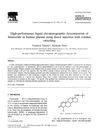
February 1996 in “Journal of Chromatography B: Biomedical Sciences and Applications” This study developed a fully automated HPLC method for accurately quantifying finasteride in human plasma, achieving a detection limit of 1 ng/ml with validated application in pharmacokinetic studies.
September 2016 in “Journal of dermatological science” This study suggests that human induced pluripotent stem cells can be used to generate dermal papilla equivalent cells, potentially aiding hair follicle regeneration and drug discovery for hair diseases.
1 citations
,
July 2025 in “BMC Medicine” The authors concluded that establishing and standardizing methods for data collection are crucial to improving PCOS diagnosis and research due to challenges observed in data harmonization across diverse international cohorts.
 April 2026 in “Journal of Experimental Psychopathology”
 This study suggests that hair cortisol concentration may not reliably indicate psychological distress or differentiate clinical from non-clinical populations, as observed in a female PhD student over nine years.