 6 citations
,
April 2017 in “Experimental dermatology”
6 citations
,
April 2017 in “Experimental dermatology” This study found that B6.CD80CD86−/− mice developed autoimmune-like alopecia with nearly 100% incidence by 40 weeks, making them a promising model for studying human alopecia areata.
5 citations
,
March 2012 in “Veterinary dermatology” This case report describes a potential drug-induced localized scleroderma in a Persian cat following the application of a 'spot-on' treatment.
January 2012 in “Open MIND” This case report details a 61-year-old Afro-Caribbean man with pseudofolliculitis barbae induced by oral minoxidil.
 16 citations
,
March 2013 in “JAMA Dermatology”
16 citations
,
March 2013 in “JAMA Dermatology” This case study describes a 33-year-old woman with chronic myelogenous leukemia who developed nonscarring alopecia after starting nilotinib therapy, linked to perifollicular inflammation.
 15 citations
,
November 1994 in “International Journal of Dermatology”
15 citations
,
November 1994 in “International Journal of Dermatology” This study found that while the combination of oral propranolol and intradermal injections in guinea pigs led to psoriasiform changes, it did not fully mimic psoriasis.
 12 citations
,
November 2011 in “International Journal of Dermatology”
12 citations
,
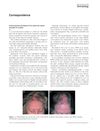
November 2011 in “International Journal of Dermatology” A woman developed a scalp condition from using minoxidil, which improved with a different treatment but left scarring.
2 citations
,
September 1978 in “Anatomia Histologia Embryologia” This study observed that alkaline phosphatase activity in dog hair follicles varied with hair cycle stages, displaying weak to negative reactions in the anagen stage, positive reactions in catagen, and strong positivity in telogen.
 4 citations
,
September 2017 in “Skin appendage disorders”
4 citations
,
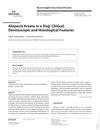
September 2017 in “Skin appendage disorders” This case report describes the first dermoscopic evaluation of alopecia areata-like disease in a dog, where the condition mirrored human cases in terms of clinical presentation and treatment response.
 105 citations
,
September 1995 in “Journal of The American Academy of Dermatology”
105 citations
,
September 1995 in “Journal of The American Academy of Dermatology” This review discusses the use of recombinant cytokines as therapeutic agents in clinical settings and describes the range of cutaneous complications associated with their use, including both minor and severe skin reactions.
 53 citations
,
May 2001 in “The American journal of the medical sciences”
53 citations
,
May 2001 in “The American journal of the medical sciences” This article reviews common skin eruptions in chemotherapy patients and discusses how recognizing these patterns can help avoid unnecessary changes to cancer treatment; it reports no new clinical results.
 53 citations
,
October 1993 in “Drug Safety”
53 citations
,
October 1993 in “Drug Safety” Oral retinoids can cause side effects ranging from mild to severe, including birth defects, and require careful monitoring and contraception.
 34 citations
,
January 2005 in “Journal of the American Veterinary Medical Association”
34 citations
,
January 2005 in “Journal of the American Veterinary Medical Association” This study found that cyclosporine A treatment at 5 mg/kg/day may reduce inflammation and promote gland regeneration in dogs with sebaceous adenitis, though symptoms returned when treatment stopped.
 29 citations
,
March 2001 in “Clinics in Dermatology”
29 citations
,
March 2001 in “Clinics in Dermatology” This article discusses various types of primary cicatricial alopecias and reports no new clinical results; it emphasizes the importance of accurate diagnosis for effective management.
 28 citations
,
September 2008 in “Current Pharmaceutical Design”
28 citations
,
September 2008 in “Current Pharmaceutical Design” This review discusses hypersensitivity reactions to anticoagulants like ASA and heparins, highlighting their rare but potentially life-threatening nature, and emphasizes the need for meticulous allergy testing to find safe alternatives.
 19 citations
,
January 2021 in “Experimental dermatology”
19 citations
,
January 2021 in “Experimental dermatology” This study found that acne inversa is primarily an epithelial-driven disease, with cyst-forming tendrils causing inflammation due to rupture and the release of debris, highlighting limitations of punch biopsies for analysis.
 19 citations
,
June 2011 in “British Journal of Dermatology”
19 citations
,
June 2011 in “British Journal of Dermatology” Severe digestive issues in DRESS need early endoscopy for better treatment.
 15 citations
,
January 2012 in “Journal of Veterinary Science”
15 citations
,
January 2012 in “Journal of Veterinary Science” This study examined variations in epidermal thickness and protein expression across different dog breeds, finding significant differences by anatomical site and breed, with associated mRNA and protein expression changes observed.
 13 citations
,
February 2015 in “Actas Dermo-Sifiliográficas”
13 citations
,
February 2015 in “Actas Dermo-Sifiliográficas” This review discusses the histologic features of nonscarring alopecia and highlights the importance of clinical-pathological correlation for accurate diagnosis, but reports no new clinical results.
 9 citations
,
July 2019 in “Folia Morphologica”
9 citations
,
July 2019 in “Folia Morphologica” This study found that Brandt's hedgehog has the thickest skin on its back and the thinnest on the cloacal region, with sebaceous and sweat glands primarily located in the nostril area.
 8 citations
,
February 2005 in “Veterinary dermatology”
8 citations
,
February 2005 in “Veterinary dermatology” This study suggests that hair loss in Chesapeake Bay retrievers is a breed-specific syndrome characterized by unique histological features and abnormal steroid production, possibly influenced by familial factors.
 7 citations
,
March 2017 in “Journal of dermatology”
7 citations
,
March 2017 in “Journal of dermatology” This review outlines the clinical and histopathological features that aid in classifying tumors arising from the folliculosebaceous apparatus and reports no new research results.
 3 citations
,
July 2017 in “Elsevier eBooks”
3 citations
,
July 2017 in “Elsevier eBooks” This article reviews the identification and assessment of cutaneous drug reactions, emphasizing the importance of early recognition and the need for accurate diagnosis to prevent serious complications; it reports no new clinical results.
 2 citations
,
February 2018 in “InTech eBooks”
2 citations
,
February 2018 in “InTech eBooks” This article discusses adverse immune-mediated skin reactions associated with TNF-alpha inhibitors, highlighting paradoxical reactions such as psoriasis that occur despite being treated with medications intended to alleviate the condition.
 2 citations
,
January 2014 in “Elsevier eBooks”
2 citations
,
January 2014 in “Elsevier eBooks” This review discusses drug-induced hypersensitivity syndrome and drug reaction with eosinophilia and systemic symptoms, highlighting clinical features, potential viral reactivations, and treatment, but reports no new clinical findings.
 February 2026 in “Frontiers in Medicine”
 This study found that fibrosing alopecia in a pattern distribution in Hispanic male patients often resembles androgenetic alopecia, with a tendency for earlier onset compared to European and North American populations.
 November 2023 in “Frontiers in veterinary science”
 In this study, researchers used yaks as a natural model to investigate hair growth mechanisms, overcoming previous limitations by establishing in vitro models of hair follicle-associated cells and optimizing methods for cell culture and differentiation.
 February 2023 in “Mağallaẗ Tikrīt li-l-ʻulūm al-ṣirfaẗ/Tikrit journal of pure science”
 In this study, the researchers reported the detailed anatomical structure of horse skin, including the composition and organization of the epidermis, dermis, and associated glands and follicles.
 June 2019 in “The Egyptian Journal of Histology”
 In this study, hyaluronic acid filler injections in albino rats increased subcutaneous tissue thickness, collagen and elastic fibers, and vascularization, suggesting potential benefits for combating skin aging and defects.
 275 citations
,
March 1999 in “Journal of The American Academy of Dermatology”
275 citations
,
March 1999 in “Journal of The American Academy of Dermatology” This review elaborates on the skin side effects of chemotherapy and emphasizes identifying and managing both common and life-threatening skin reactions, without presenting new clinical findings.
 130 citations
,
October 2006 in “Allergy”
130 citations
,
October 2006 in “Allergy” This review discusses hypersensitivity reactions to anticoagulants, highlighting the importance of early diagnosis and exploring various diagnostic and management options, but it presents no new clinical findings.