 49 citations
,
January 2003 in “Clinical and Experimental Dermatology”
49 citations
,
January 2003 in “Clinical and Experimental Dermatology” This report from the UK reviews the literature on post-menopausal frontal fibrosing alopecia and highlights its under-recognition and distinctive characteristics compared to lichen planopilaris, but does not provide new results.
 7 citations
,
April 1987 in “International Journal of Dermatology”
7 citations
,
April 1987 in “International Journal of Dermatology” This article reports no new clinical findings and provides no abstract, focusing on imipramine-induced lesions resembling alopecia areata.
4 citations
,
January 2012 This study found no significant difference in burn healing between rats treated with carboxytherapy and a control group.
 2 citations
,
December 2022 in “Journal of toxicologic pathology”
2 citations
,
December 2022 in “Journal of toxicologic pathology” This review outlines the histological structures of the skin, highlighting species and regional differences in dermal absorption and obstacles encountered in toxicological assessments due to epidermal thickness variability, contact dermatitis reactions, and stem cell vulnerabilities.
 5 citations
,
August 2011 in “Journal of the American Academy of Dermatology”
5 citations
,
August 2011 in “Journal of the American Academy of Dermatology” This report describes a rare case of cyclophosphamide-associated neutrophilic folliculitis, suggesting its inclusion in differential diagnoses for acneiform eruptions.
5 citations
,
July 2013 in “InTech eBooks” This book reviews the role of skin biopsy in diagnosing and treating various dermatological diseases, discussing site selection and applications for conditions like alopecia and pemphigus, but reports no new clinical results.
 April 2012 in “Informa Healthcare eBooks”
 Lichen planopilaris is a rare, chronic condition causing hair loss, mainly in middle-aged women, and early treatment is important to prevent permanent baldness.
8 citations
,
July 1986 in “International Journal of Dermatology” This article discusses eruptive vellus hair cysts, detailing their appearance, distribution, histology, and potential spontaneous resolution, but reports no new clinical findings on treatment.
November 2025 in “Clinics and Practice” This case report describes a rare and severe systemic reaction to red tattoo ink, including erythroderma, alopecia universalis, anhidrosis, and vitiligo, highlighting significant diagnostic and therapeutic challenges.
September 2024 in “Dermatologica Sinica” This study reported a rare case of pityriasis rubra pilaris-like skin reaction in an 18-year-old woman after starting ponatinib treatment for relapsed Philadelphia chromosome-positive acute lymphoblastic leukemia, which resolved after treatment adjustment and did not recur over 15 months.
 2 citations
,
November 2018 in “JAAD case reports”
2 citations
,
November 2018 in “JAAD case reports” This case report describes an inflammatory skin reaction linked to kava kava ingestion, with the patient's condition resolving after treatment with oral prednisone and topical hydrocortisone.
 April 1940 in “Archives of dermatology”
 This abstract presents a case of arsenical dermatitis with pigmentation and alopecia developed during treatment with arsphenamine for a positive Wassermann reaction.
January 2009 in “Nova Science Publishers (Nova Science Publishers, Inc.)” This study observed that human skin exhibits acute and chronic histological changes due to tick bites, including inflammation and changes in hair follicles, influenced by tick saliva and possible infections.
2 citations
,
May 2008 in “Journal of Clinical Oncology” This study found that patients with unresectable melanoma treated with AZD6244 experienced skin reactions, including depigmentation and papulopustular rashes, in patterns similar to those caused by EGFR inhibitors.
42 citations
,
January 2003 in “International Journal of Gynecological Pathology” This research observed that multifocal pseudoepitheliomatous hyperplasia may explain some cases of squamous nests in vulvar lichen sclerosus with lichen simplex chronicus, potentially as a reaction to tissue damage rather than squamous cell carcinoma.
 2 citations
,
February 2009 in “Clinical and Experimental Dermatology”
2 citations
,
February 2009 in “Clinical and Experimental Dermatology” In this case study, a 51-year-old Japanese man was diagnosed with desmoplastic trichoepithelioma after histological examination of surgically excised facial plaques.
 July 2018 in “Elsevier eBooks”
 This review discusses primary neutrophilic cicatricial alopecias, their clinical and histological characteristics, and the importance of early therapeutic intervention to prevent scarring alopecia, reporting no new clinical results.
 5 citations
,
April 2016 in “The American Journal of Dermatopathology”
5 citations
,
April 2016 in “The American Journal of Dermatopathology” This report describes a rare case of nonscarring alopecia linked to a tick bite on a 21-year-old male's scalp, with specific histological findings and proposed mechanisms.
 February 2026 in “International Journal of Nanomedicine”
 This study demonstrated that engineered exosomes carrying EGF and FGF restored hair density and follicle integrity in an androgenetic alopecia mouse model by reactivating hair follicle growth factors, offering a novel therapeutic approach without immunogenic reactions or systemic toxicity.
332 citations
,
June 1994 in “Archives of Dermatology” This study found that progressive frontal hairline recession in postmenopausal women may exhibit features similar to fibrosing alopecia, with histologic similarities to lichen planopilaris but lacking lesions of lichen planus.
 January 2015 in “Indian Journal of Dermatology, Venereology and Leprology”
 The document concludes that various skin conditions have specific characteristics and treatments, and highlights the importance of vitamin D in managing these dermatological issues.
January 2025 in “Mansoura Medical Journal” In this animal study, researchers observed that both aging and lower androgen levels in male albino rats led to significant structural changes in meibomian glands, including reduced acinar cell size, diminished meibum secretion, and increased collagen deposition.
24 citations
,
September 2007 in “Veterinary Dermatology” This report documented the first known case of Malassezia slooffiae-associated dermatitis identified in a goat through diagnostic work-up, including histology and DNA sequencing.
21 citations
,
September 2015 in “International journal of gynaecology and obstetrics” This article discusses safety, management, and adverse effects of chemotherapy in gynecological malignancies without reporting new clinical data, and emphasizes the importance of thorough patient and drug selection.
 3 citations
,
June 1987 in “British Journal of Dermatology”
3 citations
,
June 1987 in “British Journal of Dermatology” In this study, nifedipine provided rapid symptomatic relief in most patients with severe recalcitrant perniosis, but some experienced side effects that limited dosage and two patients were lost to follow-up.
 1 citations
,
April 2012 in “Informa Healthcare eBooks”
1 citations
,
April 2012 in “Informa Healthcare eBooks” Some medications for inflammation can cause a condition with scalp rashes and hair loss, often linked to Crohn's disease, and may require treatment changes to prevent permanent hair loss.
December 2025 in “Skin Health and Disease” This case report details the development of a psoriasiform rash and inflammatory alopecia in a 29-year-old man with severe atopic dermatitis following dupilumab treatment. The authors observed hair regrowth and eczema control after discontinuing dupilumab and beginning treatment with abrocitinib.
 123 citations
,
September 1987 in “JAMA”
123 citations
,
September 1987 in “JAMA” This study observed that patients receiving IL-2 immunotherapy developed a skin eruption characterized by burning and pruritus, which resolved shortly after stopping the infusion, suggesting that IL-2 mediated these effects.
 22 citations
,
December 2003 in “Veterinary clinical pathology”
22 citations
,
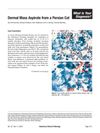
December 2003 in “Veterinary clinical pathology” This case study reported a diagnosis of dermatophytic pseudomycetoma in a Persian cat with dermal nodules, highlighting potential heritable predisposition and suggesting systemic antifungal therapy for fair prognosis.
16 citations
,
February 2019 in “Journal of Cellular and Molecular Medicine” This study established a rat model of radiation-induced dermatitis using 90 Gy irradiation, which may aid in exploring new treatments and understanding the pathology, particularly highlighting autophagy regulation as a potential therapeutic target.