 52 citations
,
November 2003 in “Journal of Investigative Dermatology”
52 citations
,
November 2003 in “Journal of Investigative Dermatology” In this study, mutations in the CDH3 gene were identified as the cause of hypotrichosis with juvenile macular dystrophy, and the researchers observed substantial phenotypic variability among affected individuals.
1 citations
,
January 2020 in “Microscopy research” This study found that hair follicle stem cells from the bulge region in mice and humans can be isolated and cultured to maintain their phenotype and high proliferative capacity, suggesting their potential as an accessible source for tissue engineering and regenerative therapies.
 7 citations
,
May 2010 in “Journal of Cutaneous Pathology”
7 citations
,
May 2010 in “Journal of Cutaneous Pathology” This study identified a novel locus for hereditary hypotrichosis simplex on chromosome 13q12.12~12.3 in a four-generation Chinese family.
 February 2024 in “Frontiers in physiology”
 This study examines the role of hair follicle stem cells in epidermal regeneration during skin soft tissue expansion, proposing a potential method for their cellular and molecular regulation.
September 2016 in “Journal of dermatological science” This study suggests that human induced pluripotent stem cells can be used to generate dermal papilla equivalent cells, potentially aiding hair follicle regeneration and drug discovery for hair diseases.
9 citations
,
May 2023 in “Stem Cell Research & Therapy” This study found that mesenchymal stem cell treatment alleviated atopic dermatitis-like symptoms in a mouse model by modulating immune and inflammatory responses, with gene expression changes suggesting pathways for potential personalized treatment approaches.
30 citations
,
October 2010 in “Biochemical and biophysical research communications” This study found that the Gsdma3 gene is necessary for normal hair follicle differentiation in mice, with its mutation leading to progressive hair loss and defects in hair structure.
 December 2021 in “Molecular genetics and genomics”
 This study found that two unrelated domestic shorthair cats had novel DSG4 gene mutations causing defective hair shafts, representing the first report of pathogenic DSG4 variants in domestic animals.
 1 citations
,
April 2017 in “Journal of Investigative Dermatology”
1 citations
,
April 2017 in “Journal of Investigative Dermatology” In this study, D-OCT imaging revealed distinct structural and vascular changes in patients with frontal fibrosing alopecia, highlighting the technique's potential for diagnosing and monitoring the condition's activity.
7 citations
,
August 2019 in “JAAD Case Reports” This article reviews the potential relationship between serum amyloid A and hidradenitis suppurativa, highlighting genetic influences, but reports no new clinical findings.
 April 2026 in “Scientific Reports”
 In this study, the proposed MSF-VMDNet, combining dual encoder networks with a multi-frequency domain mechanism, significantly outperformed existing methods in segmenting skin cancer tissues from histological slide images, achieving high accuracy with an MIoU of 95.37% and a Dice coefficient of 95.11%.
 184 citations
,
November 2014 in “Developmental Cell”
184 citations
,
November 2014 in “Developmental Cell” This study identifies a bipotent stem cell in adult hair follicles that self-renews and contributes to dermal sheath and papilla cell populations, potentially aiding hair regrowth after injury, disease, or aging.
23 citations
,
January 2017 in “BMC Medical Genetics” This study presents the first reported Spanish case of Hypotrichosis with Juvenile Macular Dystrophy, identifying a new CDH3 mutation and highlighting the importance of clinical and genetic evaluation for accurate diagnosis.
17 citations
,
May 2014 in “Cell transplantation” This study demonstrated that genetically engineered stem cells from human hair follicles can reverse hyperglycemia and reduce mortality in mice with type 1 diabetes by overexpressing the human insulin gene.
 September 2023 in “Stem cell reviews and reports”
 This study introduces a new method to isolate stem cells from the hair follicle outer root sheath of equine skin, demonstrating that these cells, named eMSCORS, proliferate efficiently and can differentiate similarly to adipose tissue-derived MSCs, offering a promising alternative for equine veterinary applications.
 7 citations
,
May 2019 in “Journal of the Formosan Medical Association”
7 citations
,
May 2019 in “Journal of the Formosan Medical Association” This study found that overweight women with polycystic ovary syndrome carrying the HSD3B1 1245C allele had an increased presence of female pattern hair loss compared to those with the wild-type genotype.
15 citations
,
September 2009 in “European Journal of Histochemistry” This study found that CD90+ cells, resembling mesenchymal stem cells, are abundantly present in the lower part of anagen hair follicles in dogs.
 73 citations
,
August 2011 in “Stem Cell Research”
73 citations
,
August 2011 in “Stem Cell Research” This study found that human hair follicle-derived mesenchymal stem cells can differentiate into myogenic, osteogenic, adipogenic, and chondrogenic lineages, although this potential decreases over time and varies by lineage.
52 citations
,
May 2015 in “Cytotherapy” This study found that human mesenchymal stromal cells derived from hair follicle dermal sheath showed promising growth and wound-healing properties in vitro and in diabetic mice, suggesting potential for therapeutic use.
6 citations
,
October 2022 in “Frontiers in Cell and Developmental Biology” This study suggests that hair follicle mesenchymal stem cells may alleviate small intestinal ischemia-reperfusion injury in rats by promoting angiogenesis, reducing apoptosis, and enhancing intestinal stem cell expression.
August 2025 in “American Journal of Case Reports” In this case report, researchers describe a 13-year-old phenotypic female with 46,XY karyotype, previously misdiagnosed with androgen insensitivity syndrome, who was later identified to have 17-beta-hydroxysteroid dehydrogenase type 3 deficiency, underscoring the importance of genetic and hormonal tests for accurate diagnosis of sex development disorders.
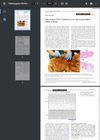 May 2024 in “Animal genetics”
 The researchers investigated a Maine Coon cat with suspected classical Ehlers-Danlos Syndrome and discovered a heterozygous deletion in the COL5A1 gene, underscoring the value of whole-genome sequencing for precise veterinary diagnostics.
7 citations
,
August 2008 in “Immunogenetics” A gene mutation in mice causes increased mast cells and disorganized hair follicles in their skin.
 August 2021 in “Research Square (Research Square)”
 In this study of clinical-grade ADMSCs, researchers found that cells expanded in PowerStem MSC1 media exhibited increased negative marker expression, chromosomal abnormalities, and signs of senescence compared to those cultured in StemMACS MSC Expansion Media, suggesting that the latter is more suitable for therapeutic applications.
 6 citations
,
September 2009 in “European journal of histochemistry”
6 citations
,
September 2009 in “European journal of histochemistry” This study found that CD90+ stem cells with fibroblast-like morphology are present in the lower part of the anagen hair follicle in dogs.
 6 citations
,
December 2004 in “Anais Brasileiros de Dermatologia”
6 citations
,
December 2004 in “Anais Brasileiros de Dermatologia” This study describes a family with loose anagen hair syndrome associated with macular dystrophy, suggesting this combination may represent a new disease entity among ectodermal dysplasias.
3 citations
,
December 2023 in “Aging” In liver cancer cells, this study found that upregulating hsa_circ_0002980 inhibits cell proliferation, metastasis, and EMT by modulating the miR-1303/CADM2 axis, suggesting it as a potential therapeutic target.
 3 citations
,
December 2021 in “Frontiers in endocrinology”
3 citations
,
December 2021 in “Frontiers in endocrinology” In this study, a novel DCAF17 gene mutation was identified in a Chinese family, suggesting a potential role in pancreatic β cell dysfunction and diabetes development in Woodhouse-Sakati syndrome.

In a case report, this study identified a new genetic variant in a six-year-old girl from Saudi Arabia with hypotrichosis and juvenile macular dystrophy, expanding the understanding of the genetic spectrum of this rare condition in the region.
 10 citations
,
January 2013 in “Stem Cells and Development”
10 citations
,
January 2013 in “Stem Cells and Development” This study suggests that dermal stem/progenitor cells can be enriched by intracellular granularity and display high proliferation and differentiation potential in vitro, distinguishing them from other fibroblasts and progenitors.