 4 citations
,
January 2024 in “Scientific Reports”
4 citations
,
January 2024 in “Scientific Reports” In this study, researchers examined chronic hepatitis B patients and found that those undergoing interferon therapy reported higher quality of life than those on non-antiviral or nucleoside/nucleotide analogue treatments, despite potential side effects.
September 1978 in “Journal of steroid biochemistry/Journal of Steroid Biochemistry” This review discusses the antimicrobial and protective effects of hesperidin and hesperetin against various toxicities, with potential mechanisms explored, but it reports no new research findings.
April 2021 in “Journal of Investigative Dermatology” New inhibitors may help treat hair loss by promoting fat cell growth in the skin.
6 citations
,
March 2023 in “Journal of Ethnopharmacology” In this mouse study, researchers found that the Jieduquyuziyin prescription may lessen lupus-like symptoms and atherosclerosis by inhibiting TLR9/MyD88 signaling and promoting cholesterol efflux.
 January 2026 in “Zenodo (CERN European Organization for Nuclear Research)”
 This study used molecular docking simulations to identify Adapalene, Diosmin, and Azelastine as promising drugs for repurposing against Onchocerciasis by targeting Onchocerca volvulus and its endosymbiont; further research is suggested to confirm their efficacy.
 October 2009 in “Reactions Weekly”
 A woman developed lupus after taking hydroxyurea for two years.
 January 2026 in “RSC Advances”
 This study used a zebrafish model and advanced mass spectrometry to identify 11 metabolites of epristeride, revealing significant effects on purine metabolism and aromatic amino acid biosynthesis, which may aid in developing anti-doping detection methods.
 6 citations
,
December 2020 in “Biological & Pharmaceutical Bulletin”
6 citations
,
December 2020 in “Biological & Pharmaceutical Bulletin” This study found that certain fatty acids and triterpenoid-glycosides from Eclipta prostrata L. leaves exhibit potent inhibitory effects on the protein tyrosine phosphatase 1B enzyme, suggesting potential anti-diabetic and anti-obesity benefits.
65 citations
,
September 2023 in “Cell Reports Medicine” This review examined the common side effects of FGFR inhibitors like erdafitinib, pemigatinib, and futibatinib, and detailed strategies for managing them, highlighting that proactive monitoring and appropriate interventions can effectively mitigate these toxicities.
 12 citations
,
February 2018 in “Scientific Reports”
12 citations
,
February 2018 in “Scientific Reports” This study demonstrated that pharmacologically mobilizing endogenous bone marrow stem cells with AMD3100 and low-dose FK506 can enhance liver regeneration and improve liver function in rats after extensive hepatectomy.
33 citations
,
May 2017 in “Journal of Clinical Oncology” This phase I study reported that ETC-159, targeting Wnt signalling, showed tolerable safety profiles at doses that inhibit its pathway, though bone turnover markers increased, warranting early and regular monitoring. No tumor responses were observed, but two patients achieved stable disease for several cycles.
 July 2026 in “Current Issues in Molecular Biology”
 This study found that Plerixafor, a CXCR4 antagonist, promotes melanogenesis in melanocytes by increasing MITF and tyrosinase expression and enhancing melanocyte migration, and it effectively restores pigmentation in a mouse depigmentation model without toxicity, highlighting its potential for treating pigmentary disorders.
14 citations
,
April 2022 in “Molecules” This study found that pulmonary delivery of cepharanthine significantly improved bioavailability and may provide protective effects against pulmonary fibrosis related to COVID-19 infection in a rat model.
 January 2023 in “Bioorganičeskaâ himiâ”
 This study found that a new deoxycholic acid derivative may offer a similar prostatoprotective effect to finasteride with lower toxicity in rat models.
October 2020 in “The American journal of gastroenterology” This case study reports a previously undescribed cause of drug-induced autoimmune hepatitis triggered by para-aminobenzoic acid (PABA), emphasizing the need for caution with this supplement.
February 2024 in “bioRxiv (Cold Spring Harbor Laboratory)” This study found that Pik3r1 Y657* mice, which model human SHORT syndrome, show increased energy expenditure despite insulin resistance, but this is not due to changes in locomotion, thermoregulation, or Ucp1-dependent thermogenesis, suggesting a different metabolic mechanism may protect against lipotoxicity.
 March 2021 in “Institutional Repositories DataBase (IRDB)”
 Heparin-functionalized nanofabrics help heal wounds effectively and safely without scars in 14 days.
 May 2018 in “International Journal of Advances in Medicine”
 This study reports the successful management of acute liver failure in a 25-year-old woman with concurrent Hepatitis B and autoimmune hepatitis, using a combination of steroids, azathioprine, and tenofovir disoproxil fumarate.
 13 citations
,
August 2007 in “Bioorganic & medicinal chemistry letters”
13 citations
,
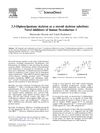
August 2007 in “Bioorganic & medicinal chemistry letters” This study developed a new competitive 5alpha-reductase inhibitor with an IC(50) of 0.84 microM using a novel chemical structure.
 15 citations
,
January 2014 in “Medicinal chemistry”
15 citations
,
January 2014 in “Medicinal chemistry” This study conducted molecular docking and ADME property analysis on 144 newly designed isatin analogs, suggesting they exhibit lead-like properties for targeting EGFR enzymes.
22 citations
,
January 2012 in “Mediators of inflammation” This review discusses the potential benefits of nonantibiotic macrolides for treating inflammatory skin disorders and reports no new clinical results.
 February 2026 in “Frontiers in Materials”
 In this study, researchers developed iron-curcumin-coordinated nanoparticles to enhance curcumin's bioavailability and therapeutic effects, finding that these nanoparticles accelerate wound healing in diabetic mice by reducing inflammation and oxidative stress more effectively than free curcumin.
 38 citations
,
March 2010 in “Medicine”
38 citations
,
March 2010 in “Medicine” In this study, researchers found that hepatitis C virus infection is a significant risk factor for sporadic porphyria cutanea tarda, suggesting familial cases might be more prevalent in areas with low hepatitis C infection rates.
 June 2026 in “Eurasian Journal of Medicine”
 Baricitinib effectively regrew hair in a woman with alopecia universalis after other treatments failed.

In this study, cepharanthine and tetrandrine demonstrated efficacy against SARS-CoV-2 in a cell-based infection assay, with cepharanthine showing a lower IC50 value.
 3 citations
,
March 2014 in “Annals of Hepatology”
3 citations
,
March 2014 in “Annals of Hepatology” This case report describes irreversible alopecia universalis following discontinuation of Peg-IFN/RBV treatment for chronic hepatitis C, highlighting potential autoimmune side effects of interferon-based therapies.
 April 2026 in “International Journal of Clinical Oncology”
 This review found that adding immune checkpoint inhibitors to cancer treatment regimens likely increases the incidence of specific drug-related skin toxicities in adult Asian patients, highlighting the need for careful monitoring and management strategies.
27 citations
,
September 2021 in “Microbiology Spectrum” This study found that multimetal starvation by the immune protein calprotectin triggers unique regulatory responses in Pseudomonas aeruginosa, beyond those seen with individual metal shortages.
 1 citations
,
December 2023 in “Curēus”
1 citations
,
December 2023 in “Curēus” This study observed that five out of fourteen individuals aged 13-16 years, who were homozygous for the p.C282Y mutation related to hemochromatosis, had increased liver and phlebotomy-mobilized iron levels.
13 citations
,
January 1997 in “Biochemical Pharmacology” This study found that human liver dehydroepiandrosterone sulfotransferase (DHEA ST) catalyzes the sulfate conjugation of minoxidil, indicating another pathway contributing to its metabolism in humans.