October 2025 in “Journal of the Endocrine Society” The researchers reported that individuals with non-alcoholic fatty liver disease and nutritional deficiency often exhibit iron and estrogen deficiencies, which may contribute to liver cell stress and fibrosis.
20 citations
,
November 2022 in “Nutrients” This review summarizes existing reports on placenta extract for treating liver injury and discusses its mechanisms but provides no new clinical results.
 1 citations
,
December 2004 in “Hepatology”
1 citations
,
December 2004 in “Hepatology” This study found that in lamivudine-resistant hepatitis B patients, tenofovir significantly reduced HBV DNA levels faster and more consistently than adefovir, reaching undetectable levels in all treated patients by 44 weeks.
 52 citations
,
October 2010 in “Antiviral Therapy”
52 citations
,
October 2010 in “Antiviral Therapy” This review discusses recent advances in monophosphate prodrug strategies for HCV drug discovery, aiming to enhance oral absorption and stability, and reports no new clinical results.
 12 citations
,
July 2025 in “Journal of Clinical and Translational Hepatology”
12 citations
,
July 2025 in “Journal of Clinical and Translational Hepatology” This review discusses how targeting TGF-β with specific inhibitors, including components from Traditional Chinese Medicine, may help reduce liver fibrosis by acting through various signaling pathways.
28 citations
,
December 2001 in “European Journal of Pharmacology” This study found that the compound M50054 inhibits apoptosis by blocking caspase-3 activation and may improve chemotherapy-induced alopecia and hepatitis symptoms.
 12 citations
,
February 2018 in “Scientific Reports”
12 citations
,
February 2018 in “Scientific Reports” This study demonstrated that pharmacologically mobilizing endogenous bone marrow stem cells with AMD3100 and low-dose FK506 can enhance liver regeneration and improve liver function in rats after extensive hepatectomy.
12 citations
,
November 2024 in “International Journal of Molecular Sciences” This study found that hydroxytyrosol significantly alleviated acute liver injury in mice by suppressing inflammation and targeting the TNF-α/PI3K/AKT signaling pathway.
 69 citations
,
February 2021 in “PLoS Computational Biology”
69 citations
,
February 2021 in “PLoS Computational Biology” This study found that securinine and ajmaline significantly inhibited hepatocellular carcinoma cell viability and induced apoptosis, with securinine showing lower toxicity to normal liver cells.
March 2016 in “International Journal of Infectious Diseases” This study reported that peginterferon alpha-2a showed high early and sustained virologic response rates in Albanian hemodialyzed patients with hepatitis C, despite causing several adverse effects.
245 citations
,
January 2010 in “Blood” This study suggests that antihepcidin antibodies may effectively treat inflammatory anemia by manipulating iron metabolism, based on experiments conducted in mouse models and hHepc knock-in mice.
 19 citations
,
October 1994 in “Tumori Journal”
19 citations
,
October 1994 in “Tumori Journal” This review discusses the current medical treatments for hepatocellular carcinoma, noting that while new local therapies show high response rates, their true impact on patient survival is uncertain.
44 citations
,
June 2015 in “British Journal of Pharmacology” This study found that betulinic acid inhibits hepatitis C virus replication by suppressing the NF-κB- and ERK1/2-mediated COX-2 pathway, suggesting its potential as a therapeutic supplement.
 1 citations
,
April 2025 in “Tropical Journal of Natural Product Research”
1 citations
,
April 2025 in “Tropical Journal of Natural Product Research” In this study, researchers using network pharmacology and molecular docking methods found that compounds from Avicennia Marina could inhibit hepatitis C virus infection by targeting key proteins such as AKT1 and TNF-α, showing potential for anti-HCV treatments.
12 citations
,
January 2016 in “Journal of clinical biochemistry and nutrition” In this study, combining deferasirox with sorafenib significantly reduced liver fibrosis and preneoplastic lesions in rats while also lessening adverse effects compared to sorafenib alone.
99 citations
,
February 2023 in “Cellular and Molecular Immunology”  September 2022 in “Ciencia Unemi”
 This review found that while many medicinal plants show potential antiviral and other therapeutic effects against COVID-19 based on prior studies, more rigorous clinical trials are needed to confirm their efficacy and safety.
 10 citations
,
October 2010 in “Hepatology”
10 citations
,
October 2010 in “Hepatology” This case study suggests that treatment with Pil-Food, intended for hair loss prevention, may have triggered postinfantile giant cell hepatitis with autoimmune characteristics, which showed a rapid and effective response to corticosteroid therapy.
 18 citations
,
February 2022 in “Cell Death Discovery”
18 citations
,
February 2022 in “Cell Death Discovery” In this study, researchers found that hair follicle-derived mesenchymal stem cells, modified to overexpress extracellular matrix protein 1, significantly improved liver function and reduced liver damage in cirrhotic mice by inhibiting hepatic stellate cell activation and TGF-β/Smad signaling.
 1 citations
,
September 2023
1 citations
,
September 2023 This study reported that the combination of tridax procumbens and ginger juice improved antioxidant activity and protected against liver damage induced by paracetamol in rats, suggesting a potent hepatoprotective effect.
 December 2023 in “Journal of Science Innovations and Nature of Earth”
 In this animal study on albino rats, researchers reported that Tribulus terrestris extract significantly reduced liver damage markers caused by cyproterone acetate, suggesting a protective effect on liver function against this drug's hepatotoxicity.
 176 citations
,
June 2016 in “PLoS ONE”
176 citations
,
June 2016 in “PLoS ONE” In these initial clinical studies, NAP monotherapy showed significant reductions in HBsAg levels among patients with chronic HBV, suggesting potential as part of future combination therapies.
 October 2022 in “Medičnì perspektivi”
 This article discusses two cases of follicular dyskeratosis (Darier-White disease), highlighting its rare occurrence, genetic basis, and the challenges in diagnosis and treatment; it presents no new experimental results.
January 2021 in “Universal Journal of Pharmaceutical Research” This study found that methanol extract of Russelia equisetiformis reduced liver damage from paracetamol overdose in rats, suggesting it has a protective effect against hepatic injury.
 January 2011 in “Annals of dermatology/Annals of Dermatology”
 During treatment with interferon/ribavirin for hepatitis C, this study observed significant and lasting improvement in a patient's psoriasis without additional psoriasis-specific therapies.
 139 citations
,
October 1999 in “Environmental Health Perspectives”
139 citations
,
October 1999 in “Environmental Health Perspectives” This article reviews the scientific exploration of Ayurvedic medicinal plants and discusses their modern applications, such as a drug developed from Commiphora wightti for lipid disorders, without reporting new clinical findings.
 9 citations
,
July 2002 in “Journal of the European Academy of Dermatology and Venereology”
9 citations
,
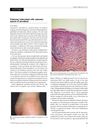
July 2002 in “Journal of the European Academy of Dermatology and Venereology” This article discusses multiple minute digitate hyperkeratosis in a dermatological context and reports no new clinical findings; the authors focus on a descriptive review.
 5 citations
,
May 2025 in “Scientific Reports”
5 citations
,
May 2025 in “Scientific Reports” This study found that extracts from Indian gooseberry leaves showed strong antimalarial activity against Plasmodium falciparum, with low cytotoxicity, suggesting potential for developing new antimalarial drugs.
 December 2025 in “International Journal of Ayurvedic Medicine”
 This review reports that Fenugreek seeds contain compounds like Galactomannan and Trigonelline, which show anti-diabetic and anti-hyperlipidemic effects, while Fenugreek leaves have high saponin content, contributing to their anti-microbial activities.
 September 2018 in “Asian journal of pharmacy and pharmacology”
 This review discusses the nutritional and therapeutic benefits of honey based on its botanical origin, and it reports no new clinical results, instead calling attention to its varied uses and potential health impacts.