 1 citations
,
February 2023 in “International journal of research - granthaalayah”
1 citations
,
February 2023 in “International journal of research - granthaalayah” This study reports that electromagnetic energy from a hydrocolloid wound dressing paste adversely affected human skin lipid droplets in vitro, but the implications, including potential cancer links, are unknown.
 1 citations
,
February 2018 in “British Journal of Dermatology”
1 citations
,
February 2018 in “British Journal of Dermatology” The CWARTS tool is a promising method for assessing warts and could improve treatment and research.
 June 2026 in “arXiv (Cornell University)”
 This study proposes a new test for genome-wide association studies that incorporates Hardy-Weinberg equilibrium into SNP analysis, demonstrating improved power and interpretability over traditional methods, as evidenced by simulations and an alopecia study dataset.
 1 citations
,
May 2019 in “Journal of The European Academy of Dermatology and Venereology”
1 citations
,
May 2019 in “Journal of The European Academy of Dermatology and Venereology” New method, hair distribution width (HDW), improves accuracy in diagnosing androgenetic alopecia (AGA).
2 citations
,
January 2016 in “Experimental Dermatology” This symposium updated participants on the latest advances in understanding and managing hidradenitis suppurativa, emphasizing the need for individualized treatment plans and highlighting recent progress in therapies and epidemiology.
3 citations
,
January 2013 in “Journal of cosmetics, dermatological sciences and applications” This study found that the new HCC additive enhances the permeation of pigments and active ingredients into hair, suggesting potential use in developing functional cosmetic hair products.
March 2026 in “Journal of Investigative Dermatology” This quality improvement initiative at Children’s Hospital of Orange County seeks to increase awareness and use of nonprofit pediatric wig programs by at least 50% over three months through educational interventions.
19 citations
,
November 2015 in “Radiation Oncology” This study found that hippocampus sparing whole brain radiation therapy (HS-WBRT) using multi-field intensity modulated radiation therapy prevents alopecia without compromising cognitive function compared to traditional whole brain radiation therapy.
1 citations
,
August 1983 in “PubMed” This study reported that VCP combination chemotherapy achieved a complete response in 53% of advanced non-Hodgkin's lymphoma patients, although more intensive treatment may be needed for improved outcomes.
 November 2023 in “International Journal of Cosmetic Science”
 This study found that a wheat polar lipid complex supplement significantly reduced hair loss and improved hair growth and volume in women experiencing acute hair shedding, including postmenopausal women.
 24 citations
,
June 2012 in “BMC Research Notes”
24 citations
,
June 2012 in “BMC Research Notes” This study outlines the Human Gene Correlation Analysis tool, which classifies human genes by coexpression levels and identifies overrepresented annotation terms in correlated gene groups, with no new clinical results reported.
 74 citations
,
September 2006 in “Cell Cycle”
74 citations
,
September 2006 in “Cell Cycle” This review examines the role of Hairless, a nuclear receptor corepressor, in regulating Wnt signaling during hair cycling and reports no new clinical results.
7 citations
,
January 2013 in “Supportive care in cancer” In this study, cross-section trichometry was found to be a precise method for measuring hair loss in chemotherapy patients, but marking the measurement site on the scalp is not always necessary.

This study demonstrated that the differential wetting characterization (DWC) method can effectively differentiate changes in the wetting properties of hair fibers after chemical or physical treatment.
 February 2026 in “Frontiers in Medicine”
 This study suggests that combining LMWHA solution and HCO might improve mild to moderate urinary incontinence in women with GSM, potentially offering benefits over HA therapy alone, but further research is needed.
 April 2010 in “The Journal of Urology”
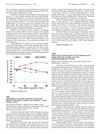
 Human prostate cells produce more WISP1/CCN4 when there's not enough oxygen.
 9 citations
,
November 2021 in “Current Opinion in Genetics & Development”
9 citations
,
November 2021 in “Current Opinion in Genetics & Development” This review discusses recent advancements in Wound Induced Hair Neogenesis in mice, emphasizing the potential of neogenic hair regeneration to enhance understanding of adult mammalian regeneration, but reports no new experimental results.
 1 citations
,
August 2021 in “Canadian journal of neurological sciences”
1 citations
,
August 2021 in “Canadian journal of neurological sciences” This article offers HTML content and a downloadable PDF but does not provide an abstract or new findings for summary.
 16 citations
,
November 2011 in “PubMed”
16 citations
,
November 2011 in “PubMed” This study found that a single intradermal injection of Hair Stimulating Complex significantly improved hair growth in men with androgenetic alopecia compared to placebo.
 November 2025 in “Clinical Cosmetic and Investigational Dermatology”
 LIPH mutations cause woolly hair in some Chinese people.
 April 2006 in “Dermatologic Clinics”
 This study found that white wax and its extract significantly promoted hair growth in a mouse model of androgenetic alopecia, outperforming finasteride by inhibiting 5α-reductase activity and enhancing cellular proliferation.
36 citations
,
September 2015 in “Orphanet Journal of Rare Diseases” This review discusses ichthyosis with confetti, highlighting its genetic basis, clinical features, diagnostic criteria, and current treatment options but reports no new clinical results.
 October 2025 in “International Journal of Homoeopathic Sciences”
 This non-randomized trial observed that Wiesbaden 30CH was more effective than supportive haircare for telogen effluvium, with 53.3% showing moderate improvement compared to 20% for haircare, although a notable portion in both groups saw no improvement.
1 citations
,
September 2021 in “Frontiers in genetics” This case report identifies a previously undocumented nonsense mutation in DCAF17 in a Chinese patient with Woodhouse-Sakati syndrome, inherited from consanguineous parents.
 July 2021 in “Scholars Journal of Medical Case Reports”
 In this report, a 16-year-old Saudi girl with Woodhouse-Sakati Syndrome exhibited unique findings, including hepatic hemangioma and low growth hormone, suggesting the importance of considering WSS in similar clinical presentations.
 April 2021 in “Journal of Investigative Dermatology”
 This trial found that intradermal injections of the Hair Stimulating Complex were well-tolerated and effectively stimulated hair growth and prevented hair loss in male pattern baldness participants over 18 weeks.
 August 2023 in “International Journal of Women's Dermatology”
 In this study, a case of a 70-year-old woman with central centrifugal cicatricial alopecia showed that using a high-quality hair prosthesis improved her quality of life and mood, as measured by PHQ-9 and Skindex-29 scores, though such wigs are rarely covered by insurance.
 14 citations
,
August 2009 in “Cancer epidemiology”
14 citations
,
August 2009 in “Cancer epidemiology” This study found that AHCC significantly reduced alopecia caused by Ara-C in neonatal rats and improved liver function affected by 6-MP and MTX in mice.
 September 2016 in “Journal of Dermatological Science”
 This study reports a case of GGCX syndrome in a 55-year-old Japanese male, characterized by PXE-like symptoms and coagulation deficiency, with an unreported phenotype of possible spinocerebellar degeneration.
November 2020 in “Journal of the American Academy of Dermatology” Intense pulsed light with radiofrequency showed mixed results in improving quality of life for hidradenitis suppurativa patients, with no clinical improvements.