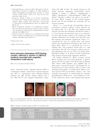
In this observational and interventional study conducted in Dhaka, Bangladesh, PRP treatment led to clinical improvements in hair count, thickness, and density among 20 out of 30 male patients with androgenetic alopecia, with significant statistical support (p-value 0.00) following 2-3 treatment sessions.
January 2023 in “Dermatologic Therapy” This study demonstrates a significant correlation between anxiety, depression, and reduced quality of life in individuals with androgenetic alopecia.
 11 citations
,
September 2011 in “British Journal of Dermatology”
11 citations
,
September 2011 in “British Journal of Dermatology” New ABCA12 gene mutations were linked to a skin condition with scaling and hair loss, and a treatment helped with hair loss in a related case.

Modern hair restoration techniques can effectively treat hair loss and provide natural-looking results.
 July 2026 in “International Journal of Advanced Research in Science Communication and Technology”
 In this study, the BaldGraphFormer framework, integrating visual and clinical data, outperformed unimodal baselines in early-stage androgenetic alopecia detection, achieving an F1-score of 97.62% and macro-average AUC of 0.992, suggesting its potential to support dermatological decision-making and early intervention.
 3 citations
,
January 2010 in “Elsevier eBooks”
3 citations
,
January 2010 in “Elsevier eBooks” The document describes various skin conditions, their features, and treatments but lacks detailed study size information.
 21 citations
,
May 1996 in “Current problems in dermatology”
21 citations
,
May 1996 in “Current problems in dermatology” This article reviews various causes and investigative techniques for different forms of alopecia and reports no new findings.
 51 citations
,
October 2012 in “International Journal of Immunopathology and Pharmacology”
51 citations
,
October 2012 in “International Journal of Immunopathology and Pharmacology” In this study, 68% of patients treated with finasteride showed improved hair growth in male androgenetic alopecia, compared to 38% with Serenoa repens, indicating finasteride's superior efficacy.
 219 citations
,
September 2009 in “European journal of epidemiology”
219 citations
,
September 2009 in “European journal of epidemiology” This article discusses the rationale, design, major findings, and updated objectives and methods of the ongoing Rotterdam Study on various diseases, without reporting new research results.
 40 citations
,
February 1990 in “Journal of The American Academy of Dermatology”
40 citations
,
February 1990 in “Journal of The American Academy of Dermatology” This study presents the first reported case of woolly hair nevus appearing during adolescence, with significant improvement observed 5 years later and structural changes in the hair documented.
 5 citations
,
May 2020 in “Diagnostics”
5 citations
,
May 2020 in “Diagnostics” This study involving male patients with androgenic alopecia found that a higher baseline zinc plasma level, specifically above 10 µmol/L, may predict the success of treatment with 5% topical minoxidil, correlating with increased hair density and diameter in the parietal area.
 5 citations
,
June 2016 in “TURKDERM”
5 citations
,
June 2016 in “TURKDERM” This review discusses various dermatological scoring systems used to objectively assess disease severity and guide treatment decisions, reporting no new clinical results.
 January 2024 in “Wiadomości Lekarskie”
 This study surveyed university students in ten Eastern European and Central Asian countries to assess their attitudes toward individuals using wheelchairs, finding generally neutral or negative attitudes, though Ukrainian students affected by conflict displayed more positive views.
 January 2026 in “Journal of Epidemiology”
 This cross-sectional study reported that adults with greater hair loss severity had significantly higher odds of hypertension, diabetes, and cardiometabolic multimorbidity, suggesting a possible link between hair loss and cardiometabolic health.
 266 citations
,
November 2013 in “European Journal of Epidemiology”
266 citations
,
November 2013 in “European Journal of Epidemiology” This article outlines the rationale and design of the Rotterdam Study, summarizes its major findings, and updates its objectives and methods; it reports no new research results.
 35 citations
,
May 2012 in “Cochrane Database of Systematic Reviews”
35 citations
,
May 2012 in “Cochrane Database of Systematic Reviews” This review found evidence supporting the effectiveness and safety of topical minoxidil for treating female pattern hair loss, though many included studies were at high risk of bias.
 September 2016 in “Springer eBooks”
 This review discusses the application of mesenchymal stem cells and their secretory factors for skin and hair regeneration and reports no clinical results; the authors highlight the progress and call for practical applications.
 January 2015 in “Springer eBooks”
 This chapter reviews the potential of adipose-derived stem cells for skin aging and hair loss treatments but reports no new experimental results; the authors highlight these stem cells as a promising regenerative resource.
 35 citations
,
March 2011 in “International Journal of Dermatology”
35 citations
,
March 2011 in “International Journal of Dermatology” This study concluded that patients with metabolic syndrome, regardless of androgenetic alopecia presence, were more insulin resistant than those with only androgenetic alopecia or healthy controls, indicating no true association between alopecia and insulin resistance.
 78 citations
,
September 2008 in “International Journal of Cosmetic Science”
78 citations
,
September 2008 in “International Journal of Cosmetic Science” This review outlines various clinical methods for assessing ageing skin and discusses their application in supporting the efficacy claims of anti-ageing treatments, but it reports no new clinical results.
 49 citations
,
July 2004 in “Anesthesiology”
49 citations
,
July 2004 in “Anesthesiology” This review discusses pharmacologic treatment options for muscle-related pain conditions and notes that there is strong evidence for the efficacy of tricyclic antidepressants and muscle relaxants in specific myofascial pain syndromes, but not universally.
 28 citations
,
September 2014 in “Journal of Clinical Oncology”
28 citations
,
September 2014 in “Journal of Clinical Oncology” This study observed that frontal plus moderate vertex baldness at age 45 was associated with a higher risk of aggressive prostate cancer in a large cohort.
 18 citations
,
November 2016 in “International clinical psychopharmacology”
18 citations
,
November 2016 in “International clinical psychopharmacology” This study found that in a 10-week trial, inositol did not significantly reduce trichotillomania symptoms compared to placebo, although 42.1% of inositol-treated patients felt 'much or very much improved' at the study's end.
 9 citations
,
September 2012 in “Clinical Endocrinology”
9 citations
,
September 2012 in “Clinical Endocrinology” This study found that over half of the patients experienced varying degrees of hair loss after acromegaly surgery, with female patients and those with severe postoperative growth hormone deficiency more commonly affected.
 January 2024 in “Wiadomości Lekarskie”
 This source analyzes linguistic difficulties faced by speakers of East Slavic languages learning Polish, emphasizing challenges in pronunciation, vocabulary, and grammar. It suggests that tailored educational materials comparing linguistic nuances can improve learning outcomes by highlighting important differences between the languages.
 October 2004 in “European Neuropsychopharmacology”
 This article reviews studies on younger men using finasteride for hair loss, finding persistent sexual and nonsexual side effects like erectile dysfunction and depression, and reports lower neurosteroid levels in affected individuals.
 March 2020 in “Journal of evolution of medical and dental sciences”
 In this study, the vertex type of male pattern baldness was associated with increased cardiovascular risk factors, suggesting it may serve as a marker for cardiovascular evaluation in men.
October 2025 in “Journal of Advanced Trends in Medical Research” This review highlights the potential of rosemary as a treatment for various types of alopecia, with effects possibly comparable to minoxidil and a favorable safety profile, though further large-scale studies are necessary to confirm these findings.
 19 citations
,
January 2017 in “International Journal of Trichology”
19 citations
,
January 2017 in “International Journal of Trichology” This study found that a standardized PRP application protocol was effective as a coadjuvant therapy in most patients with androgenetic alopecia who did not respond to minoxidil or finasteride, based on improvements in Ebling's scale.
16 citations
,
March 2025 in “International Journal of Molecular Sciences” This review analyzed 12 clinical studies on extracellular vesicle therapies, finding potential benefits for skin aging, acne scars, alopecia, and wound healing, but highlighted significant challenges like production standardization and lack of large-scale studies.