 13 citations
,
January 2018 in “Annals of Dermatology”
13 citations
,
January 2018 in “Annals of Dermatology” Alopecia areata and androgenetic alopecia affect quality of life similarly.
 9 citations
,
March 2018 in “Actas Dermo-Sifiliográficas”
9 citations
,
March 2018 in “Actas Dermo-Sifiliográficas” This study found that the Spanish version of the Hair Specific Skindex 29 (HSS29) is a reliable and valid tool for assessing the quality of life impact of female androgenetic alopecia.
 4 citations
,
August 2019 in “Actas Dermo-Sifiliográficas”
4 citations
,
August 2019 in “Actas Dermo-Sifiliográficas” This study evaluated the Spanish version of the Hair Specific Skindex-29 questionnaire and found it sensitive to changes in health-related quality of life among women with female-pattern hair loss.
 1 citations
,
November 2019 in “Actas Dermo-Sifiliográficas”
1 citations
,
November 2019 in “Actas Dermo-Sifiliográficas” This study found that the Spanish version of the hair-specific Skindex-29 questionnaire effectively detected changes in health-related quality of life among women with female-pattern hair loss, and the scores were significantly correlated with the SF-12 survey results after treatment with a 5 alpha-reductase inhibitor.
 May 2018 in “Actas Dermo-Sifiliográficas”
 This study validated a Spanish version of the Hair Specific Skindex 29 scale for assessing quality of life in women with female androgenetic alopecia, showing similar psychometric properties to the original.
 April 2016 in “Journal of The American Academy of Dermatology”
 This study found that patients with androgenetic alopecia reported worse symptom-related quality of life scores than those with alopecia areata, particularly influenced by age of onset, disease duration, and severity.
 15 citations
,
January 2018 in “Annals of Dermatology”
15 citations
,
January 2018 in “Annals of Dermatology” Wigs significantly improve the well-being of people with severe hair loss.
 March 2021 in “Journal of The European Academy of Dermatology and Venereology”
 Low quality of life and high HSS-29 scores increase risk of losing patients during treatment.
 101 citations
,
January 2012 in “Annals of Dermatology”
101 citations
,
January 2012 in “Annals of Dermatology” In this study, researchers found that androgenetic alopecia significantly harms quality of life, particularly in younger patients, those with more severe or long-term alopecia, and those who have sought non-medical hair care.
15 citations
,
July 2021 in “JAMA Dermatology” This study found that androgenetic alopecia is significantly associated with moderate impairment of health-related quality of life and emotions, but not with depressive symptoms.

This study found that 49% of female breast cancer patients treated with CDK4/6 inhibitors for at least three months developed alopecia, which significantly impacted their quality of life, with greater alopecia severity leading to worse emotional and functional well-being.
December 2021 in “Journal of BP Koirala Institute of Health Sciences” This study found that male patients with androgenetic alopecia experienced more emotional impact than symptomatic or functional effects, highlighting the importance of assessing quality of life in these individuals.
April 2022 in “Journal of the Medical Sciences” This study found a significant relationship between the severity of androgenetic alopecia in men and a negative impact on their quality of life.
30 citations
,
January 2019 in “International Journal of Trichology” This study observed that androgenetic alopecia significantly impacts the quality of life in males, with personal relationships being notably affected, based on Dermatology Life Quality Index and hair-specific Skindex-29 assessments.
 April 2016 in “Journal of The American Academy of Dermatology”
 AGA patients have a lower quality of life than AA patients.
 February 2022 in “Pakistan Armed Forces Medical Journal”
 This study concluded that androgenetic alopecia more severely impacts the quality of life of females compared to males among Pakistani patients, as measured by Skindex-29 scores.

This study found that low-intensity light therapy improved quality of life related to emotional, psychosocial, and symptom domains in individuals with androgenic alopecia, with a greater impact observed in women.

This study found that androgenic alopecia significantly impaired quality of life among men in the Eastern Province of Saudi Arabia, with younger males and those diagnosed by a doctor experiencing greater quality of life issues, particularly in the symptoms domain.
 4 citations
,
December 2020 in “Neuropsychiatric Disease and Treatment”
4 citations
,
December 2020 in “Neuropsychiatric Disease and Treatment” In this study, body dysmorphic disorder symptoms in dermatological patients were strongly linked to psychiatric issues and reduced quality of life, particularly among those with unclassified dermatoses.
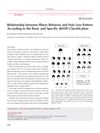 1 citations
,
January 2023 in “Annals of Dermatology”
1 citations
,
January 2023 in “Annals of Dermatology” The BASP classification helps predict patient behavior and improve treatment for hair loss.
 2 citations
,
February 2024 in “Journal of the European Academy of Dermatology and Venereology”
2 citations
,
February 2024 in “Journal of the European Academy of Dermatology and Venereology” This study resulted in a draft version of the Patient‐Reported Impact of Dermatological Diseases measure, PRIDD, which includes 27 items refined from patient consensus and is now undergoing psychometric testing.
 17 citations
,
July 2017 in “International Journal of Behavioral Medicine”
17 citations
,
July 2017 in “International Journal of Behavioral Medicine” This study validated the Egyptian Arabic version of the Skindex-16 and found that skin conditions significantly impacted patients' quality of life, particularly in the emotional domain.
 86 citations
,
May 2011 in “Journal of The American Academy of Dermatology”
86 citations
,
May 2011 in “Journal of The American Academy of Dermatology” This study found that patients with alopecia perceive their hair loss as more severe than dermatologists do, and their own ratings of hair loss severity better reflect their quality of life impacts.
 25 citations
,
December 2015 in “Journal of the European Academy of Dermatology and Venereology”
25 citations
,
December 2015 in “Journal of the European Academy of Dermatology and Venereology” This study found that alopecia areata negatively affects patients' quality of life, though less severely than psoriasis, atopic dermatitis, and onychomycosis.
 6 citations
,
December 2016 in “Journal of Dermatology”
6 citations
,
December 2016 in “Journal of Dermatology” The source does not provide an abstract for this letter to the editor, so specific results regarding the long-term efficacy and safety of dutasteride for male androgenetic alopecia are not reported.
29 citations
,
January 2023 in “Journal of Clinical Medicine” This review discusses psychological treatments for alopecia, finding limited but positive effects on mental health, quality of life, and possibly hair growth; however, more research is needed to establish intervention efficacy.
 1 citations
,
September 2020 in “Cochrane library (CD-ROM)”
1 citations
,
September 2020 in “Cochrane library (CD-ROM)” This Cochrane Review protocol aims to evaluate the effectiveness and safety of various treatments for alopecia areata through a network meta-analysis, but no specific study findings are reported yet.
 67 citations
,
March 2021 in “Dermatology and Therapy”
67 citations
,
March 2021 in “Dermatology and Therapy” This review discusses the substantial impact of alopecia areata on patients' health-related quality of life, highlighting issues such as personality changes, emotional and social difficulties, and a common occurrence of alexithymia, and emphasizes the need for more specific assessment tools.
 196 citations
,
September 2016 in “JCI insight”
196 citations
,
September 2016 in “JCI insight” This study explored the effectiveness of the oral JAK1/2 inhibitor ruxolitinib in treating patients with moderate-to-severe alopecia areata, building on prior success with JAK inhibitors in mice, but results are not reported in this abstract.
June 2026 in “Journal of Cosmetic Dermatology” In this study, digital treatment for androgenetic alopecia over six months led to significant improvements in quality of life among Brazilian men, particularly for those with consistent program adherence, although the absence of an in-person comparator limits causal conclusions.