 September 2020 in “Current Enzyme Inhibition”
 In this study, researchers found that steroidal 17β-carboxamides 1-4 significantly inhibited 5α-reductase enzyme activity and reduced prostate weight more effectively than finasteride in a hamster model, without toxic side effects, suggesting potential for treating benign prostatic hyperplasia.
441 citations
,
May 1996 in “Journal of Cell Science” This study found that keratin 19 may be a marker for skin stem cells, helping to characterize these cells in different conditions and potentially explaining variations in healing rates between children and adults.
 405 citations
,
May 2007 in “Journal of The American Academy of Dermatology”
405 citations
,
May 2007 in “Journal of The American Academy of Dermatology” This review discusses the profound impact of obesity on skin physiology and dermatologic conditions and reports no new experimental results, recommending awareness and treatment strategy development for obesity-associated dermatoses.
227 citations
,
February 1989 in “The Journal of Comparative Neurology” This study found that calcitonin‐gene‐related peptide immunoreactive sensory axons in rats are predominantly involved in tissue maintenance rather than nociceptive functions.
 216 citations
,
October 1997 in “American Journal of Ophthalmology”
216 citations
,
October 1997 in “American Journal of Ophthalmology” This study found that unilateral topical latanoprost use for glaucoma was associated with hypertrichosis and increased pigmentation of eyelashes in the treated eye compared to the untreated eye.
 208 citations
,
July 2001 in “Journal of The American Academy of Dermatology”
208 citations
,
July 2001 in “Journal of The American Academy of Dermatology” This review discusses the classification and diagnosis of pregnancy-related skin conditions and reports no new clinical findings.
149 citations
,
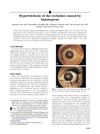
March 1981 in “American Journal of Ophthalmology” This study found that Demodex folliculorum and Demodex brevis mites can cause eyelid follicular and glandular changes, potentially contributing to ocular disease in humans.
 96 citations
,
April 2007 in “Journal of Investigative Dermatology”
96 citations
,
April 2007 in “Journal of Investigative Dermatology” In this study, co-grafting human keratinocytes with murine dermal papilla-enriched cells produced hair follicle-like structures, but without regular hair formation, suggesting anomalous folliculogenesis.
73 citations
,
August 2008 in “Chinese Journal of Traumatology” This review outlines recent advances in using stem cells for skin repair and regeneration, suggesting potential for complete skin and appendage regeneration after severe burns, but presents no new clinical findings.
71 citations
,
January 2012 in “PloS one” This study observed that after hair cell loss in the mouse cochlea, supporting cells were replaced by migrating non-specialised cells, with genetic background affecting the rate of tissue re-organization.
 71 citations
,
February 2006 in “Clinics in Dermatology”
71 citations
,
February 2006 in “Clinics in Dermatology” This review discusses the physiological skin changes during pregnancy and reports no new clinical results, emphasizing the importance of distinguishing these changes from pathological conditions.
71 citations
,
December 1987 in “Journal of animal science/Journal of animal science ... and ASAS reference compendium” This review highlights the challenges of using hair mineral analyses as precise indicators of mineral status due to various influencing factors, suggesting they may be informative when combined with other indicators.
 65 citations
,
November 2004 in “Journal of the American Academy of Dermatology”
65 citations
,
November 2004 in “Journal of the American Academy of Dermatology” This article reports a case where the IOP-lowering drug bimatoprost was associated with eyelash hypertrichosis.
55 citations
,
March 2018 in “Journal of pharmacy & pharmaceutical sciences” This article reviews the applications of microneedle technology in drug delivery, dermatology, and cosmetics, but it presents no new experimental or clinical findings.
 45 citations
,
July 2002 in “The Neurologist”
45 citations
,
July 2002 in “The Neurologist” This article reviews the challenges of using disease-modifying therapy for multiple sclerosis and offers strategies to improve treatment adherence and manage adverse effects, but reports no new clinical findings.
 41 citations
,
October 2017 in “International Journal of Women's Dermatology”
41 citations
,
October 2017 in “International Journal of Women's Dermatology” This review provides an overview of the physiologic skin changes during pregnancy but reports no new findings, emphasizing the need for physicians to distinguish between benign and potentially pathological conditions.
 39 citations
,
April 2001 in “Journal of The American Academy of Dermatology”
39 citations
,
April 2001 in “Journal of The American Academy of Dermatology” This article reviews the side effects of topical latanoprost therapy, particularly the hypertrichosis and pigmentation changes of eyelashes and nearby skin, and reports no new clinical results.
 39 citations
,
April 1992 in “Development”
39 citations
,
April 1992 in “Development” In this study, researchers detailed how hair follicles regenerate after microsurgical amputation, observing a wound reaction involving dynamic dermal-epidermal interactions and changes in extracellular matrix components.
 31 citations
,
October 2012 in “Archives of ophthalmology”
31 citations
,
October 2012 in “Archives of ophthalmology” Laser hair reduction near the eyebrows can cause serious eye injuries even with safety measures.
25 citations
,
January 2013 in “Journal of Cell Science” This study suggests that glycoproteins tenascin-C and tenascin-W may influence the migration and proliferation of CD34-positive stem cells in mouse whisker follicles.
 24 citations
,
March 2022 in “Frontiers in plant science”
24 citations
,
March 2022 in “Frontiers in plant science” This review discusses the roles of phytohormones like auxin and ethylene in regulating root hair growth and development in plants, but it reports no new experimental results.
 24 citations
,
September 2008 in “Clinical and experimental dermatology”
24 citations
,
September 2008 in “Clinical and experimental dermatology” Repigmentation in vitiligo may come from melanocyte stem cells in the skin.
![Influence of FHIT on Benzo[a]pyrene-Induced Tumors and Alopecia in Mice: Chemoprevention by Budesonide and N-Acetylcysteine](/images/assets/f8f56777-f891-4879-8c45-c87d6aa82563/small/35499.jpg) 24 citations
,
May 2006 in “Proceedings of the National Academy of Sciences of the United States of America”
24 citations
,
May 2006 in “Proceedings of the National Academy of Sciences of the United States of America” This study reported that heterozygosity for FHIT affects mice's susceptibility to spontaneous alopecia areata and to certain preneoplastic lesions induced by benzo[a]pyrene, but does not change how they respond to budesonide and N-acetyl-L-cysteine.
 20 citations
,
May 1985 in “British journal of nutrition”
20 citations
,
May 1985 in “British journal of nutrition” This study found that in genetically diabetic mice, supplementation with safflower or evening primrose oil prevented the decrease in certain fatty acids and improved skin conditions, but increased plasma glucose levels.
 20 citations
,
September 2006 in “The Veterinary clinics of North America. Small animal practice/Veterinary clinics of North America. Small animal practice”
20 citations
,
September 2006 in “The Veterinary clinics of North America. Small animal practice/Veterinary clinics of North America. Small animal practice” This article reviews new drug therapies for endocrine disorders, discussing specific treatments such as trilostane for hyperadrenocorticism and various insulins for diabetes mellitus, but it reports no new clinical findings.
20 citations
,
January 2003 in “Dermatology online journal” This review discusses the potential of prostaglandin analogs for hair growth and forms of alopecia, and reports no new clinical results.
 20 citations
,
March 1990 in “JAMA”
20 citations
,
March 1990 in “JAMA” This report from the National Registry of Drug-Induced Ocular Side Effects identifies 56 cases of alopecia associated with the use of topical ophthalmic β-blockers.
20 citations
,
February 1977 in “The anatomical record” This study found that excess vitamin A in organ cultures of mouse embryos led to significant changes in epidermis and hair follicles, altering morphogenesis and polysaccharide distribution.
 18 citations
,
January 2006 in “Analytical Sciences”
18 citations
,
January 2006 in “Analytical Sciences” This study found that the FIA-amperometric method for minoxidil quantification in pharmaceutical preparations provided accurate results comparable to the conventional UV technique, indicating no systematic errors.
18 citations
,
October 1978 in “The journal of investigative dermatology/Journal of investigative dermatology” This study found that excess vitamin A induced stable glandular morphogenesis and mucous metaplasia in embryonic mouse vibrissa follicles, even after switching to standard medium.