2 citations
,
May 2024 in “International journal of medicine and psychology.” This study found that personal and professional qualities affecting motivation in female municipal servants are systematically organized yet differ quantitatively and qualitatively from those in the general sample, highlighting the importance of considering gender differences when improving motivation for local self-government tasks.
5 citations
,
May 2025 in “Chemical and Biological Technologies in Agriculture” This study found that purified humic acids from oxidized coal enhance plant growth by modulating oxidative stress and influencing photobiological processes, with improved root growth and enzyme activity linked to antioxidant and pro-oxidant properties.
This study introduced a rapid rehydration approach for creating customizable, multifunctional hydrogel sensors, enabling precise detection of surface deformations and easy integration of layers, highlighting its potential for standardized and adaptable manufacturing of wearable devices.
7 citations
,
April 2025 in “Science Advances” This study suggests that a biomaterial-based approach using microneedles and ion solutions to deliver SiO3 2− ions may disrupt inflammatory cycles and improve outcomes in inflammatory dilated cardiomyopathy (iDCM).
 2 citations
,
March 2023 in “European Polymer Journal”
2 citations
,
March 2023 in “European Polymer Journal” This study developed multifunctional nanofiber wound dressings that significantly reduced bacteria and promoted healing in a mouse wound model by incorporating antibacterial and growth-promoting agents.
14 citations
,
April 2015 in “Stem Cell Research & Therapy” This study found that dermal stem cells from granulation tissue promoted wound healing and reduced fibrosis in a combined radiation and skin wound mouse model.
 49 citations
,
April 2003 in “Biomaterials”
49 citations
,
April 2003 in “Biomaterials” In this study, BS and BO combined showed a synergistic effect in enhancing wound healing in rat skin lesions compared to using either alone or Flamazine®.
April 2024 in “Molecules/Molecules online/Molecules annual” The researchers reported that sulfated chitosan-containing sponges can modulate macrophage activity in diabetic wounds, reducing inflammation and promoting angiogenesis and tissue regeneration, which may enhance wound healing outcomes.
83 citations
,
September 2021 in “Advanced functional materials” This study introduced a multifunctional DNA hydrogel dressing that may enhance wound healing by promoting tissue regeneration, nerve repair, and immune response in diabetic infectious wounds.
 April 2021 in “Journal of Investigative Dermatology”
 This study found that multicomponent microarray patches for SARS-CoV-2 vaccination produced stronger immune responses and fewer side effects in mice compared to traditional intramuscular injection.
September 2025 in “OPAL (Open@LaTrobe) (La Trobe University)” This study developed a novel hydrogel combining Chlorella extracellular polysaccharide–selenium nanoparticles (EPS-SeNPs) with biocompatible components, which demonstrated strong antibacterial and anti-inflammatory effects, significantly accelerating wound healing in an infected rat model, and enabling pH-based monitoring of healing.

In this study, researchers developed a multifunctional hydrogel for wound healing, incorporating antibacterial and antioxidant properties that demonstrated significant inflammation reduction and tissue regeneration in animal models, with high antibacterial efficacy against E. coli and S. aureus.
14 citations
,
March 2021 in “Regenerative Biomaterials” This study found that incorporating cell-adhesive ligands into 3D peptide hydrogels supports the survival and osteogenic differentiation of human amniotic mesenchymal stem cells.
 40 citations
,
June 2013 in “Molecular Pharmaceutics”
40 citations
,
June 2013 in “Molecular Pharmaceutics” This study demonstrates that transfected epidermal stem cells using a novel 3D transfection system significantly enhanced wound healing and may serve as an effective therapeutic agent and gene delivery method for wound treatment.
1 citations
,
October 2025 This source describes wound healing as a complex biological process that requires precise regulation and coordination among various cells, cytokines, and signaling pathways to achieve tissue repair, although specific findings or results are not provided in the abstract.
3 citations
,
May 2025 in “Lasers in Surgery and Medicine” This study suggested that MRF may support skin regeneration and rejuvenation by promoting collagen synthesis and regulating factors involved in fibroblast activation and ECM remodeling, with preliminary findings indicating ADSCs might aid these processes.
 May 2024 in “European Journal of Immunology”
 This review discusses the potential of targeting Coenzyme A metabolism to restore metabolic balance, reduce chronic inflammation, and enhance immune function, particularly by modulating Vitamin B5 pathways involved in Th17-mediated inflammation and CD8-dependent anti-tumor immunity.
This study found that platelet-rich plasma might support brain health by enhancing glial cell function and modulating immune responses in inflammation, indicating potential as a treatment for brain disorders.
3 citations
,
December 2025 in “Biomaterials Research” In this study, researchers developed a new hydrogel incorporating fibroblast growth factor 21 that improved wound healing in diabetic mice by reducing inflammation and enhancing skin repair, suggesting strong potential for future clinical application in diabetic wound management.
 9 citations
,
December 2024 in “Nano Research”
9 citations
,
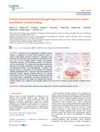
December 2024 in “Nano Research” In a study on diabetic mice, researchers developed a protein-based hydrogel that leverages zinc ions and the natural compound phellopterin to promote cutaneous nerve regeneration, angiogenesis, and tissue remodeling in diabetic wounds, highlighting its potential for advanced wound therapy.
 November 2025 in “Nanoscale Advances”
 This review highlights the potential of inorganic nanoparticle-based scaffolds as innovative tools for advanced wound care, emphasizing their ability to provide antimicrobial action and regenerative support, while also discussing fabrication strategies and challenges in optimizing their clinical application.
 1 citations
,
January 2025 in “The Journal of the American Board of Family Medicine”
1 citations
,
January 2025 in “The Journal of the American Board of Family Medicine” In this narrative, Dr. Angela Rodgers shares her experience at Baldie Con 2023, highlighting how attending a community-focused conference helped her understand the psychosocial impacts of chronic illness and the importance of connecting with others who share similar experiences.
July 2026 in “Macromolecular Bioscience” In this study on wound healing, sulfated glycosaminoglycans from sturgeon cartilage enhanced fibroblast cell proliferation, migration, and collagen deposition, significantly accelerating wound closure and promoting re-epithelialization in both in vitro and in vivo tests.
This review summarizes the current applications and mechanisms of self-assembled peptide hydrogels in promoting skin, bone, and nerve regeneration, highlighting their potential due to their biocompatibility and supportive role in tissue healing.
 March 2026 in “Molecules”
 This review reports that Dang Gui (Radix Angelica sinensis) possesses bidirectional immunoregulatory effects, enhancing immune cell proliferation and function, and may benefit immune-related diseases such as cancer and anemia. It also evaluates regulatory and safety aspects, aiming to guide future research and clinical use.
 3 citations
,
September 2023 in “Advanced science”
3 citations
,
September 2023 in “Advanced science” Researchers demonstrated that a new vaccine platform using antigen-loaded hydrogels enhanced humoral immune responses in mice, producing stronger antigen-specific antibody levels compared to the conventional adjuvant Alum, and offering promising protective capabilities against influenza virus.
November 2025 in “Advanced Healthcare Materials” This study found that incorporating CTA2-BADG, a modified hair-rebonding compound, into damaged hair significantly improved surface morphology and tensile strength by using charge-conversion chemistry to enhance penetration into the hair shaft.
 8 citations
,
January 2007 in “Hair transplant forum international”
8 citations
,
January 2007 in “Hair transplant forum international” This abstract reviews recent findings on the biology of isolated micrografts in hair restoration, emphasizing factors that enhance micrograft viability, but it does not report new experimental results.
15 citations
,
June 2023 in “Molecules” This study focused on developing agarose/fucoidan hydrogels for the encapsulation of pancreatic cells, reporting that these materials supported cell viability and self-organization into pseudo-islets over 7 days, highlighting potential for diabetes treatment applications.
 April 2026 in “bioRxiv (Cold Spring Harbor Laboratory)”
 This study introduced hydrogel microneedles loaded with palladium nanoparticles, which utilize the inherent cytotoxicity of polyethyleneimine to enhance the effectiveness of doxorubicin in treating melanoma, achieving a tumor inhibition rate of up to 98% in a murine model.