 16 citations
,
February 2010 in “Journal of the European Academy of Dermatology and Venereology”
16 citations
,
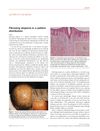
February 2010 in “Journal of the European Academy of Dermatology and Venereology” This article is a letter to the editor about fibrosing alopecia in a pattern distribution and reports no new research findings.
 1 citations
,
January 2020 in “Skin appendage disorders”
1 citations
,
January 2020 in “Skin appendage disorders” Finasteride may help treat frontal fibrosing alopecia, but more research is needed.
 35 citations
,
January 2002 in “Scandinavian Journal of Urology and Nephrology”
35 citations
,
January 2002 in “Scandinavian Journal of Urology and Nephrology” This study found that finasteride treatment decreased VEGF expression in the prostate tissue of patients with benign prostatic hyperplasia, although it did not affect vascular density or serum VEGF levels.
June 2025 in “British Journal of Dermatology” This report describes two unusual cases of frontal fibrosing alopecia in men, highlighting potential vaccine-related immune triggers and genetic factors, especially regarding the pronounced facial papular phenotype observed.
2 citations
,
July 2025 in “Journal of the European Academy of Dermatology and Venereology” This study involved 69 hair experts using a Delphi process to achieve consensus on treating frontal fibrosing alopecia, finding strong agreement on disease monitoring but less on physical and systemic therapies, indicating the need for more research.
January 2006 in “Zhongguo yaoke daxue xuebao” This study established a simple and accurate LC-MS method for quantifying vinflunine in Beagle dog plasma, supporting pharmacokinetic research in this context.
1 citations
,
May 2021 in “Clinical Nuclear Medicine” In this study, 18F-FDG PET/CT revealed increased FDG uptake in the scalp of a woman after platelet-rich plasma therapy, indicating potential inflammatory changes.
 11 citations
,
January 2011 in “Journal of Cutaneous and Aesthetic Surgery”
11 citations
,
January 2011 in “Journal of Cutaneous and Aesthetic Surgery” This study on a 30-year-old male reported that single-hair follicular unit transplant effectively repigmented a stable vitiligo patch, achieving complete pigmentation in 8 weeks with no recurrence after 6 months.
 January 2024 in “Authorea (Authorea)”
 In this retrospective study of 1,415 male hair transplant patients, punch technology improvements for the FUE method were associated with an increased number of total grafts and multi-hair follicular units over time, making FUE a preferred choice for hair transplantation.
54 citations
,
November 2007 in “Actas Dermo-Sifiliográficas” Early diagnosis of frontal fibrosing alopecia is crucial to prevent permanent hair loss.
 8 citations
,
September 2015 in “Hair transplant forum international”
8 citations
,
September 2015 in “Hair transplant forum international” This article highlights the significant hair transplant results achieved with the potentially obsolete FUT technique and includes varied expert opinions on its efficacy, but it reports no new clinical findings.
 4 citations
,
January 2013 in “Dissolution Technologies”
4 citations
,
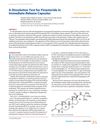
January 2013 in “Dissolution Technologies” This study optimized and validated a dissolution test method for immediate-release finasteride capsules, highlighting the need for an official standard due to variability in commercial products.

This report details a refined hair transplantation method called direct no-shave follicular unit excision (DNS FUE), which avoids donor-site shaving and minimizes follicular trauma while yielding high patient satisfaction.
October 2025 in “Clinical and Experimental Dermatology” Among patients with biopsy-proven FAPD in specialized hair clinics, this study found the condition is common in females around 52.5 years old, with treatment generally stabilizing or slightly improving hair loss, despite challenges in differentiating FAPD from androgenetic alopecia.
January 1999 in “대한피부과학회지” This study found that VEGF, produced by human dermal papilla cells, can promote hair growth in vitro without increasing the proliferation of dermal papilla cells.
7 citations
,
July 2021 in “The Journal of Dermatology” This study in Asian females found that higher use of moisturizers and sunscreen among FFA patients may reflect appearance concerns rather than indicating a direct link to the disease mechanism.
 July 2004 in “Hair transplant forum international”
 This report describes an extremely rare case of arteriovenous fistula appearing after hair restoration surgery, observed in just one instance.
 July 2015 in “Journal of the Dermatology Nurses’ Association”
 This review covers the clinical presentation and challenges in treating frontal fibrosing alopecia in postmenopausal women and concludes that more research is needed to understand its etiology and develop effective treatments.
 April 2017 in “The Journal of Urology”
 This study found that patients with BPH who received finasteride before TURP experienced reduced intraoperative blood loss and improved quality of life one month after surgery compared to those who did not.
8 citations
,
September 2023 in “Skin Research and Technology” This study found that combining high-frequency ultrasound with clinical examination significantly improved the diagnostic accuracy of invisible subcutaneous lesions from 47.3% to 80.8%, especially for conditions like epidermoid cysts and lipomas, although it was less effective for rarer lesions such as dermatofibromas.
 15 citations
,
August 2019 in “Dermatologic Therapy”
15 citations
,
August 2019 in “Dermatologic Therapy” This letter details a case report on platelet-rich plasma treatment for a patient with treatment-resistant frontal fibrosing alopecia, but it does not provide new clinical results.
January 2009 in “International Journal of Pathology and Clinical Medicine” This article reviews the role of VEGF in hair follicle growth and cycle modulation but concludes that its specific molecular mechanisms in hair follicle growth remain unclear.
 5 citations
,
January 2020 in “Bioscience Reports”
5 citations
,
January 2020 in “Bioscience Reports” This meta-analysis suggests that certain VEGF gene polymorphisms may be linked to polycystic ovary syndrome risk, potentially serving as early detection biomarkers.
July 2017 in “DOAJ (DOAJ: Directory of Open Access Journals)” In this patient series, researchers observed that subcutaneous scalp injections of adipose tissue enriched with stem cells showed potential as a safe and promising treatment for early genetic hair loss in men and women, based on photographic and quantitative assessments.
 5 citations
,
February 2004 in “Clinical and Experimental Ophthalmology”
5 citations
,
February 2004 in “Clinical and Experimental Ophthalmology” This study presents two cases correlating the clinical appearance of adult-onset foveomacular vitelliform dystrophy with optical coherence tomography findings, describing the location of the yellow vitelliform material.
 September 2017 in “Springer eBooks”
 FUE hair transplants have improved to give more natural results with less scarring and pain.
 May 2019 in “Anais brasileiros de dermatologia/Anais Brasileiros de Dermatologia”
 This study reviewed 38 cases of frontal fibrosing alopecia, observing that diagnosis often occurs years after onset and is more prevalent in postmenopausal women.
 May 2025 in “Journal of Clinical Images and Medical Case Reports”
 The study observed that patterned fibrosing alopecia, a type of scarring hair loss, appears in some patients after hair transplants, facelifts, and other surgical interventions, sharing features with lichen planopilaris and androgenetic alopecia.
 5 citations
,
February 2015 in “Dermatologica Sinica”
5 citations
,
February 2015 in “Dermatologica Sinica” In this study, a computer-aided imaging system accurately measured the width of balding areas in female pattern hair loss, correlating strongly with clinical staging severity.
17 citations
,
September 2022 in “Biomaterials Research” This study found that the film-trigger applicator system enhanced drug delivery efficiency and skin penetration of dissolving microneedles compared to traditional patch systems in both lab and animal models.