 2 citations
,
January 2023 in “Curēus”
2 citations
,
January 2023 in “Curēus” In this study, low-dose naltrexone significantly reduced erythema in patients with frontal fibrosing alopecia and lichen planopilaris after one year, but no significant improvements were seen in other symptoms.
 7 citations
,
January 2021 in “Cureus”
7 citations
,
January 2021 in “Cureus” This case report describes a 27-year-old woman who experienced facial swelling due to allergic contact dermatitis from using minoxidil 5% foam.
 16 citations
,
January 2007 in “JEADV. Journal of the European Academy of Dermatology and Venereology/Journal of the European Academy of Dermatology and Venereology”
16 citations
,
January 2007 in “JEADV. Journal of the European Academy of Dermatology and Venereology/Journal of the European Academy of Dermatology and Venereology” A man had an allergic reaction to minoxidil, which stopped after he discontinued use and started corticosteroids.
 1 citations
,
April 2020 in “Asian Journal of Medicine and Biomedicine”
1 citations
,
April 2020 in “Asian Journal of Medicine and Biomedicine” This article reports a case of hair tourniquet syndrome in a child's toe, successfully treated surgically, and emphasizes the need for healthcare providers to be aware for early detection and treatment.
 11 citations
,
April 2009 in “Pharmacotherapy”
11 citations
,
April 2009 in “Pharmacotherapy” Minoxidil can cause deadly skin reaction; monitor patients closely.
 January 1994 in “JAPANESE JOURNAL OF CLINICAL PHARMACOLOGY AND THERAPEUTICS”
 Testosterone and fleece-flower root affect mouse hair growth.
 January 2024 in “Figshare”
 This study suggests that a turpentine ointment may be an effective and safe treatment for acute folliculitis, as it showed improvements over placebo in lesion evolution, responder rate, and patient assessments.
 August 2018 in “Reactions Weekly”
 A woman had an allergic skin reaction to a hair loss treatment called minoxidil.
 April 2016 in “Journal of Investigative Dermatology”
 This study found that administering botulinum toxin A via Flex-PADs to mouse footpads inhibited sweating similarly to traditional injections, suggesting a promising patient-friendly delivery method for hyperhidrosis treatment.
3 citations
,
March 2025 in “Arthritis Research & Therapy” This study found that combining high-density fat grafting with botulinum toxin A significantly improved symptoms of Raynaud’s phenomenon, including reducing pain and cold sensitivity, speeding up ulcer healing, and enhancing blood perfusion, compared to fat grafting alone.
September 2019 in “Ukrainian Journal of Dermatology Venerology Cosmetology” In this study, 90 pediatric patients with scalp microsporia were treated with a combination of griseofulvin, Antral, sertaconazole nitrate cream, and Bion 3 Kid, resulting in complete recovery, reduced treatment duration, and prevention of disease recurrence and colds, with high drug tolerability.
32 citations
,
January 2012 in “Chinese Medicine” In this study, a hydro-alcoholic extract of Urtica dioica demonstrated in vitro antioxidant activity, potentially linked to its ferulic acid content.
 April 2026 in “Al-Mustaqbal Journal of Pharmaceutical and Medical Sciences”
 In this study using a mouse model, researchers observed that topical nifedipine cream at 0.3% concentration promoted hair growth more effectively than 2% minoxidil solution, suggesting that nifedipine may have potential as a hair growth treatment.
 3 citations
,
August 2020 in “Journal of Cosmetic Dermatology”
3 citations
,
August 2020 in “Journal of Cosmetic Dermatology” In this study, topical nitroglycerine spray successfully prevented impending necrosis in 94% of hair transplant cases showing signs of vascular distress.
 January 2024 in “Figshare”
 This study concluded that an ointment containing pine turpentine oil, larch turpentine, and eucalyptus oil was an effective and safe treatment for folliculitis, showing improvement over placebo in lesion evolution, responder rate, and patient assessment.

Minoxidil sulfate, delivered through iontophoresis, can be used to treat hair loss.
January 2026 in “Updates in clinical dermatology” August 2026 in “PLoS ONE” This study will evaluate the clinical efficacy, patient-reported outcomes, and economic impact of the PAXMAN® PSCS 2 automated scalp cooling system versus standard cold-cap therapy to prevent chemotherapy-induced hair loss in women with localized breast cancer during anthracycline and taxane treatment.
 5 citations
,
November 2002 in “Aesthetic Plastic Surgery”
5 citations
,
November 2002 in “Aesthetic Plastic Surgery” This study observed that micrografts stored at -20°C maintained their morphological structure better than those stored at 4°C, potentially allowing for more efficient hair transplantation procedures.
59 citations
,
January 2003 in “Phytomedicine” This study found that a cream containing 2% Fennel extract reduced hair diameter in idiopathic hirsutism patients more effectively than a cream with 1% Fennel or a placebo.
July 2026 in “Journal of Drug Delivery Science and Technology”  December 2025 in “npj Systems Biology and Applications”
 This study found that cold exposure disrupts the circadian rhythm in cultured human cells by reducing oscillation amplitude, which is restored upon rewarming, while human hair follicle cells showed minimal amplitude sensitivity to temperature changes, suggesting an evolutionary advantage related to Hopf bifurcation dynamics.
115 citations
,
December 2019 in “The Plant Journal” This study found that nitrate, rather than ammonium, significantly enhances phosphate starvation responses in plants through a regulatory cascade involving NIGT1, SPX, and PHR1 proteins.
6 citations
,
July 2004 in “JDDG Journal der Deutschen Dermatologischen Gesellschaft” This case report documents two postmenopausal women with frontal fibrosing alopecia whose hair loss stabilized after treatment with topical corticosteroids, one also using minoxidil.
September 2024 in “Dermatology Online Journal” This report describes a case where a 24-year-old woman developed severe ear and face hypertrichosis after using 5% topical minoxidil, which resolved three months after discontinuation.
 1 citations
,
January 2018 in “Eastern Journal Of Medicine”
1 citations
,
January 2018 in “Eastern Journal Of Medicine” In this case report, a 9-year-old girl using topical minoxidil for alopecia experienced a 6-second asystole with syncope, suggesting careful cardiac monitoring may be needed for minoxidil users.
February 2025 in “Actas Dermo-Sifiliográficas” This study found that oral minoxidil can improve hair and eyebrow growth and increase the density of the frontotemporal hairline in patients with FFA, though adverse effects were reported by a third of participants.
 9 citations
,
July 2002 in “Journal of the European Academy of Dermatology and Venereology”
9 citations
,
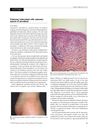
July 2002 in “Journal of the European Academy of Dermatology and Venereology” This article discusses multiple minute digitate hyperkeratosis in a dermatological context and reports no new clinical findings; the authors focus on a descriptive review.
 March 2024 in “Korean Journal of Pharmacognosy”
 This study found that Nymphaea caerulea flower extract may improve scalp condition by reducing sebum production, inhibiting inflammation and microbial factors, and decreasing cortisol and vascular permeability.
 11 citations
,
January 2014 in “Indian journal of dermatology, venereology, and leprology”
11 citations
,
January 2014 in “Indian journal of dermatology, venereology, and leprology” This report describes three cases of white piedra of scalp hair, identifying Trichosporon inkin and Trichosporon mucoides as the fungi responsible, which are uncommon causes of this condition.