 109 citations
,
January 2011 in “Frontiers in Systems Neuroscience”
109 citations
,
January 2011 in “Frontiers in Systems Neuroscience” The researchers reported that differences in brain functional connectivity between unmedicated seasonal affective disorder patients and healthy controls vary with ICA model order, peaking in volume at model order 70.
 15 citations
,
January 2017 in “Experimental Neurology”
15 citations
,
January 2017 in “Experimental Neurology” This study found that finasteride significantly reduced levodopa-induced dyskinesia in both male and female rats without diminishing l-DOPA's motor benefits, indicating potential for clinical trials in Parkinson's patients.
January 2024 in “Revista Dermatológica Centro Uraga” This report describes two male patients with frontal fibrosing alopecia, a lymphocytic scarring hair loss condition often seen in postmenopausal women, highlighting its occurrence in men and its manifestation around the frontal hairline and other body areas.
July 2025 in “Reactions Weekly”  3 citations
,
September 2023 in “International journal of impotence research”
3 citations
,
September 2023 in “International journal of impotence research” The authors concluded that finasteride and dutasteride might have serious side effects, including persistent sexual dysfunction for some, necessitating further research and vigilant risk-benefit analysis.

This study found that neonatal administration of finasteride reduced sensitivity to alcohol's motor-stimulating effects and increased preference for novelty and initial alcohol consumption in rats, suggesting a role in alcohol vulnerability.
April 2016 in “ValpoScholar (Valparaiso University)” This paper reviews the potential link between finasteride's adverse effects and factors like hand preference and sexual orientation, emphasizing the need for personalized therapeutic approaches in treating male androgenic alopecia.
1 citations
,
November 2022 in “Journal of the Academy of Consultation-Liaison Psychiatry” This case study reports on a 44-year-old male exhibiting persistent neuropsychiatric symptoms described as Post-Finasteride Syndrome after discontinuing long-term finasteride use, highlighting the ongoing debate regarding its classification as a true disease process.
10 citations
,
April 2022 in “BMJ Open” This study found that lower urinary tract symptoms were linked to reduced functional ability in older adults, with distinct associations for nocturia in men and frequency, urgency, and overactive bladder in women.
 November 2015 in “European journal of dermatology/EJD. European journal of dermatology”
 This report describes a 55-year-old African woman with a 4-year history of frontotemporal alopecia and total eyebrow loss, who experienced scalp itching and had unsuccessfully undergone hair transplantation.
6 citations
,
July 2004 in “JDDG Journal der Deutschen Dermatologischen Gesellschaft” This case report documents two postmenopausal women with frontal fibrosing alopecia whose hair loss stabilized after treatment with topical corticosteroids, one also using minoxidil.
98 citations
,
July 2006 in “Neuropsychopharmacology”  9 citations
,
July 2020 in “Journal of Dermatology”
9 citations
,
July 2020 in “Journal of Dermatology” This study found that diffuse and pseudo-fringe sign patterns are common in Asian patients with frontal fibrosing alopecia, and that treatments combining antiandrogens or antimalarials with topical therapy are effective.
 11 citations
,
August 2015 in “PLOS ONE”
11 citations
,
August 2015 in “PLOS ONE” This study found that finasteride has selective effects on oxidative stress and acetylcholinesterase activity in different brain regions in rats with thioacetamide-induced hepatic encephalopathy.
 June 2022 in “Revista del Hospital Italiano de Buenos Aires”
 This case report describes a 58-year-old male patient with alopecia frontal fibrosante in areas also affected by vitiligo, highlighting a possible association with autoimmune disorders.
 100 citations
,
July 2004 in “The Journal of Sexual Medicine”
100 citations
,
July 2004 in “The Journal of Sexual Medicine” This article reviews how various hormones may affect female sexual function and provides recommendations for diagnosing and treating endocrinologic sexual difficulties, but it reports no new clinical results.
 59 citations
,
November 2018 in “Psychoneuroendocrinology”
59 citations
,
November 2018 in “Psychoneuroendocrinology” This study suggests that cerebrospinal fluid levels of the neurosteroids allopregnanolone and pregnanolone correlate negatively with PTSD and negative mood symptoms, with potential sex-specific differences in synthesis enzyme blocks.
4 citations
,
June 2017 in “Annales de dermatologie et de vénéréologie” This prospective study in Morocco reported on 20 cases of frontal fibrosing alopecia, finding that dermoscopy played a key role in diagnosing and managing the condition, which can increasingly affect premenopausal women.
 1 citations
,
August 2022 in “Biomedicines”
1 citations
,
August 2022 in “Biomedicines” This review assesses the potential of dutasteride as a promising treatment for ALS due to its reported neuroprotective, antioxidant, and anti-inflammatory effects, but emphasizes that clinical studies are needed for confirmation.
54 citations
,
November 2007 in “Actas Dermo-Sifiliográficas” Early diagnosis of frontal fibrosing alopecia is crucial to prevent permanent hair loss.
 2 citations
,
May 2022 in “Acta dermato-venereologica”
2 citations
,
May 2022 in “Acta dermato-venereologica” In this study, patients with frontal fibrosing alopecia showed more actinic damage than control subjects, suggesting sunscreen use by these patients may be a consequence rather than a cause of the condition.
18 citations
,
August 2011 in “Medical Hypotheses” This article discusses the relationship between sedentary behavior and chronic disease, proposing that "physical inactivity disease" may be a non-permissive brain disorder with various physiological effects, but it reports no new research results.
34 citations
,
August 2015 in “Frontiers in Behavioral Neuroscience” This study found that augmenting or reducing allopregnanolone activity in the BNST affected contextual fear expression in rats, suggesting sex differences in anxiety may be linked to neuroactive steroid regulation.
 10 citations
,
June 2011 in “Movement Disorders”
10 citations
,
June 2011 in “Movement Disorders” THAP1 gene changes do not affect DYT1 dystonia; finasteride may help reduce tics and OCD in Tourette syndrome.
22 citations
,
April 2012 in “Informa Healthcare eBooks” This study reports two cases of frontal fibrosing alopecia in postmenopausal women, suggesting it as a variant of lichen planopilaris due to similar histological findings yet distinct clinical presentation.
 October 2022 in “Rheumatology (Bulgaria)”
 This case report details the challenging diagnostic journey of a 50-year-old woman with progressive supranuclear palsy, highlighting the disease's complex and variable clinical presentation.
 31 citations
,
April 2010 in “British journal of dermatology/British journal of dermatology, Supplement”
31 citations
,
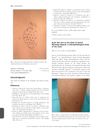
April 2010 in “British journal of dermatology/British journal of dermatology, Supplement” This report describes two patients with frontal fibrosing alopecia who developed acute hair loss on their limbs, revealing that the limb alopecia had similar histological features to scalp alopecia.
 14 citations
,
October 2016 in “Psychoneuroendocrinology”
14 citations
,
October 2016 in “Psychoneuroendocrinology” This study identified significant changes in the expression of nine proteins in the nucleus accumbens of rats treated with finasteride, suggesting potential novel targets for its neuropsychiatric effects.
June 2025 in “Annals of the Rheumatic Diseases” This study reported that "brain fog" was experienced by 41.7% of systemic lupus erythematosus patients, identified as one of their most concerning and least addressed symptoms in treatment plans, underscoring a need for better symptom management.
 1 citations
,
July 2020 in “Benha Journal of Applied Sciences”
1 citations
,
July 2020 in “Benha Journal of Applied Sciences” This study identified that trichoscopy can effectively diagnose frontal fibrosing alopecia by highlighting specific scalp abnormalities in postmenopausal women.