 3 citations
,
September 2024 in “Frontiers in Bioscience-Scholar”
3 citations
,
September 2024 in “Frontiers in Bioscience-Scholar” This study reported that Pantaneiro sheep from the Pantanal region of Brazil exhibit greater genetic variability and adaptability compared to the commercial Texel breed, highlighting their potential for further research and importance in Brazilian sheep farming.
February 2018 in “Zenodo (CERN European Organization for Nuclear Research)” This study observed that administering 1000 mg/kg of LSFP significantly reduced serum FSH and LH levels and testicular index in male Wistar rats, while lower doses showed no such effect.
 August 2018 in “Journal of The American Academy of Dermatology”
  63 citations
,
October 2011 in “Archives of Dermatology”
63 citations
,
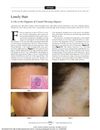
October 2011 in “Archives of Dermatology” Isolated long hairs at the original hairline can help diagnose Frontal Fibrosing Alopecia.
 June 2025 in “International Journal of Dermatology”
 This review discusses the impact of performance-enhancing substances, like androgenic steroids, on female athletes, particularly focusing on female pattern hair loss and associated physical and psychosocial issues, and highlights the need for further research.

This study examined data from the FDA Adverse Event Reporting System and found that finasteride use is linked with both known and previously unlisted adverse events, such as erectile dysfunction and post-5α reductase inhibitor syndrome, with variations observed by age and sex.
 May 2025 in “The Journal of Rheumatology”
 This study reports that even minimal improvements in SLE-related fatigue and skin symptoms are meaningful to patients, supporting the content validity of the FACIT-Fatigue scale for measuring these effects.
 November 2021 in “CRC Press eBooks”
 This article reviews the characteristics and presentation of fibrosing alopecia in a pattern distribution, a form of scarring alopecia similar to androgenetic alopecia and lichen planopilaris, but provides no new clinical findings.
 41 citations
,
July 2017 in “Journal of The American Academy of Dermatology”
41 citations
,
July 2017 in “Journal of The American Academy of Dermatology” This study observed that frontal fibrosing alopecia also occurs in men, with clinical features and areas of involvement similar to those seen in women, but often affecting sideburns and facial hair.
 March 2026 in “Frontiers in Pharmacology”
 The study concluded that the Exprecell™ device for preparing anticoagulant-free f-PRF increases volume yield and simplifies the process while maintaining biological activity comparable to conventional methods, suggesting potential clinical utility.
May 2023 in “Zenodo (CERN European Organization for Nuclear Research)” This study highlights the potential of forensic DNA phenotyping using Next Generation Sequencing to predict eye, hair, and skin color, aiding criminal investigations, though adoption faces challenges due to incomplete genetic understanding and ethical, social, and legal concerns.
In this study, researchers used the CRISPR/Cas9 system to edit the FGF5 gene in Dorper sheep, observing increased density and finer wool, along with changes in cortisol levels and antioxidant enzyme activity linked to hair follicle development.
5 citations
,
January 2011 in “Der Pharmacia Lettre” This study validated a precise and sensitive reverse phase high performance liquid chromatographic method for determining Finasteride and Tamsulosin concentrations in bulk and tablet forms, with satisfactory accuracy and reproducibility.
20 citations
,
January 2014 in “International Journal of Oral and Maxillofacial Surgery” This study found that using superficial temporal fascia as an interposition barrier is effective in reducing the incidence of Frey syndrome following superficial parotidectomy, compared to no barrier.
24 citations
,
July 2018 in “British Journal of Dermatology” Contact allergies might contribute to frontal fibrosing alopecia.
 4 citations
,
September 2010 in “Journal of Dermatological Science”
4 citations
,
September 2010 in “Journal of Dermatological Science” This article reviews keratosis follicularis squamosa, a keratinizing disorder predominantly found in the Japanese population, but reports no new clinical results.
February 2026 in “Small Ruminant Research” This study found that specific genetic variations in the IRF2BP2 gene influence fleece structure in sheep, with one variant completely determining coat type and another significantly modifying fiber characteristics, providing valuable insights for improving fleece quality through selective breeding.
September 2025 in “Brazilian Journal of Health Review” This review highlights increased cases of alopecia frontal fibrosante among Black women, emphasizing the need for ethnically diverse research and culturally sensitive management practices, but reports no new clinical findings.
 February 2011 in “Journal of the American Academy of Dermatology”
 This study found that polycystic ovary syndrome was the most common cause of hirsutism among premenopausal women in Algeria.
12 citations
,
July 2020 in “Actas Dermo-Sifiliográficas” This study found that facial papules and rosacea in patients with frontal fibrosing alopecia were linked to a greater need for oral treatment, with most cases involving postmenopausal women.
January 2015 in “Spectrum Research Repository (Concordia University)” This study confirmed that porcine platelet-rich plasma could commercially replace fetal bovine serum due to its higher growth factor levels and effectiveness as a hair growth promoter comparable to existing serum.
 November 2022 in “International Journal of General Medicine”
 This study found that non-alcoholic fatty pancreas disease is significantly more prevalent in women with polycystic ovary syndrome, and is associated with metabolic syndrome, insulin resistance, and hyperandrogenism.
 May 2012 in “CRC Press eBooks”
 Some patients on anti-TNF drugs experience a type of hair loss called TAIAPA.
 177 citations
,
December 2002 in “The Lancet”
177 citations
,
December 2002 in “The Lancet” In this study, single fibrinogen/LDL apheresis showed a significant improvement in speech perception for patients with plasma fibrinogen concentrations over 295 mg/dL compared to standard treatment for sudden sensorineural hearing loss.
 58 citations
,
April 2017 in “The Journal of Steroid Biochemistry and Molecular Biology”
58 citations
,
April 2017 in “The Journal of Steroid Biochemistry and Molecular Biology” This study found that patients with post-finasteride syndrome exhibited major depressive disorder, severe erectile dysfunction, and neuropathy, alongside altered neuroactive steroid levels in cerebrospinal fluid.
 9 citations
,
July 2020 in “Journal of Dermatology”
9 citations
,
July 2020 in “Journal of Dermatology” This study found that diffuse and pseudo-fringe sign patterns are common in Asian patients with frontal fibrosing alopecia, and that treatments combining antiandrogens or antimalarials with topical therapy are effective.
12 citations
,
September 2012 in “Computer Graphics Forum” This study developed a method that combines image-based and simulation techniques to improve the reconstruction of hair dynamics from multi-view videos, enabling accurate hair motion representation and animation.
2 citations
,
July 2021 in “The Journal of Sexual Medicine” This study found significant differences in gene expression, particularly in androgen receptor activity, between men with post-finasteride syndrome and healthy controls, suggesting a potential biological basis for the syndrome.
11 citations
,
January 1987 in “Australian Journal of Experimental Agriculture” In this study, Australian cashmere goats receiving protein supplements maintained their weight and showed increased fleece growth, though cashmere growth was largely unaffected.